Why a Screen-Free Morning Routine Changes Everything
A screen-free morning routine sounds like a minor tweak, but it changes the entire chemistry of your day, and the reason comes down to sequencing. The first thing you focus on after waking sets the attentional tone for hours afterward. Open a phone within five minutes of waking and you hand that first, most impressionable window to whatever algorithm, notification, or stranger's opinion happens to be loudest that morning.
This is not about digital minimalism as an aesthetic. It is about protecting a narrow, biologically real window where your brain is unusually receptive to calm, focused input, and unusually vulnerable to reactive, scattered input. Three deliberate, screen-free steps in that window can measurably shift your mental clarity for the rest of the day, and none of them require more than 20 extra minutes total. Think of it less as a rule about phones and more as a design decision about which voice gets to speak first in your head each day, yours, or whichever app happens to load fastest.
The Neuroscience of Your First Waking Minutes
In the first 20 to 30 minutes after waking, your brain is still transitioning out of a slower-wave state, and cortisol is naturally rising as part of what researchers call the cortisol awakening response. This surge is meant to help you feel alert and oriented for the day ahead. Flooding that same window with a phone screen's rapid-fire notifications and blue-toned light competes directly with that natural process.
Checking a phone first thing also triggers what psychologists call attention residue: fragments of every notification, headline, or message linger in working memory long after you have put the phone down. Stack ten of those in one morning and you start your actual work already partially distracted, before you have done a single meaningful task. A neuro-regulated workspace later in the day only helps if the morning hasn't already fractured your attention. Sleep researchers studying the cortisol awakening response have found this hormonal rise is largely complete within the first half hour after waking, which is exactly the window a screen-free morning routine is designed to protect, rather than compete against with an entirely separate, artificial source of alertness.
Step One: Ten Minutes of Natural Light and Movement
The first step of a genuinely effective screen-free morning routine is light, not caffeine. Within 15 minutes of waking, get outside, or at minimum near a window, for 10 minutes. Natural light exposure this early helps anchor your circadian rhythm, which governs alertness, mood, and eventually your sleep quality that same night. This single habit is a cornerstone of broader circadian rhythm habits that support energy across the whole day.
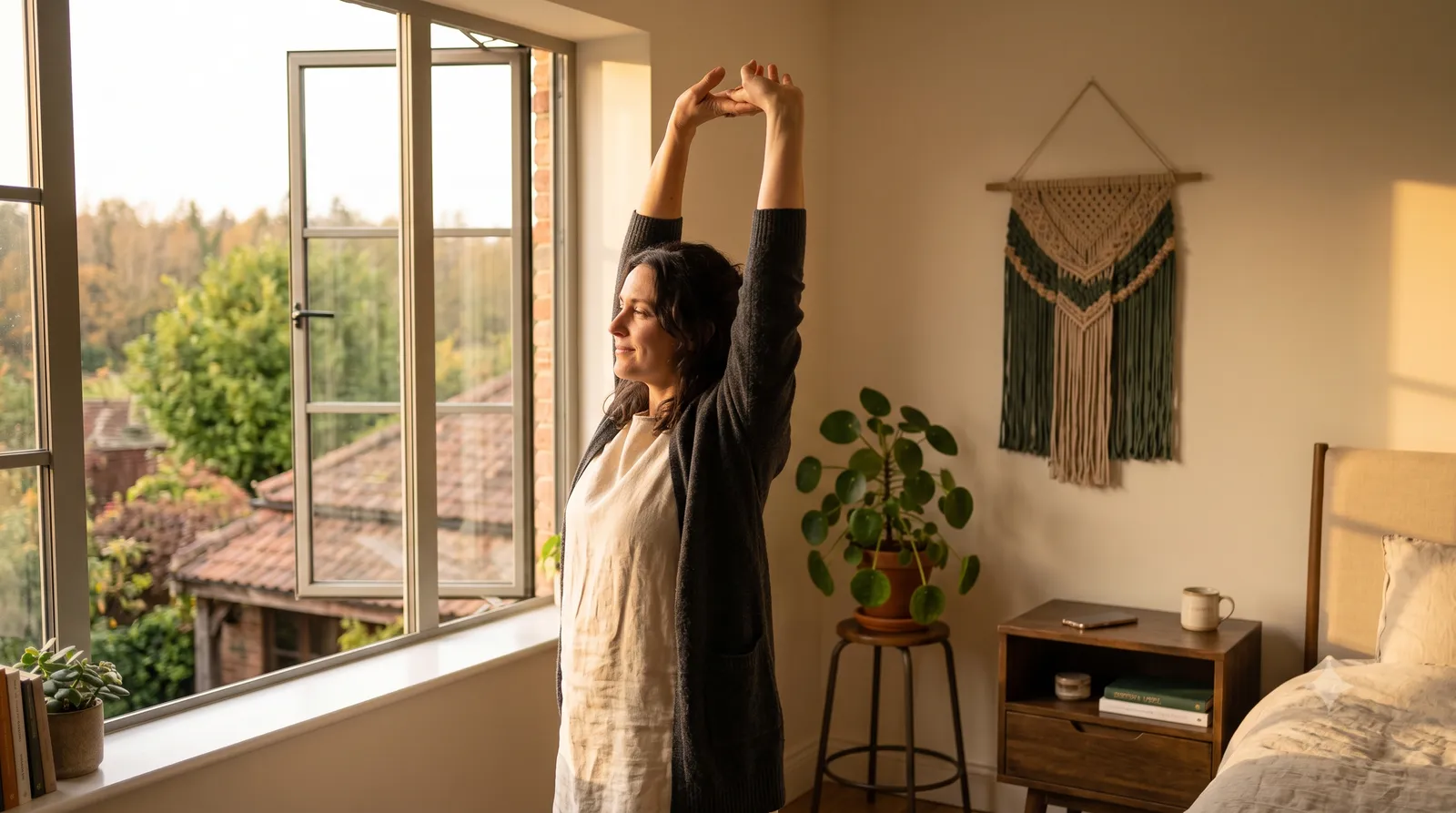
Pair the light exposure with light movement rather than sitting still. A slow walk, a few minutes of stretching, or even just standing on a balcony while you breathe deeply is enough. You are not trying to exercise hard here. You are trying to physically signal to your nervous system that the day has started, without a screen doing that signaling for you.
- Step outside or near a window within 15 minutes of waking
- Spend 10 minutes in natural light, ideally without sunglasses
- Add light movement: walking, stretching, or slow breathing
- Leave your phone in another room during this step

Step Two: Five Minutes of Analog Reflection
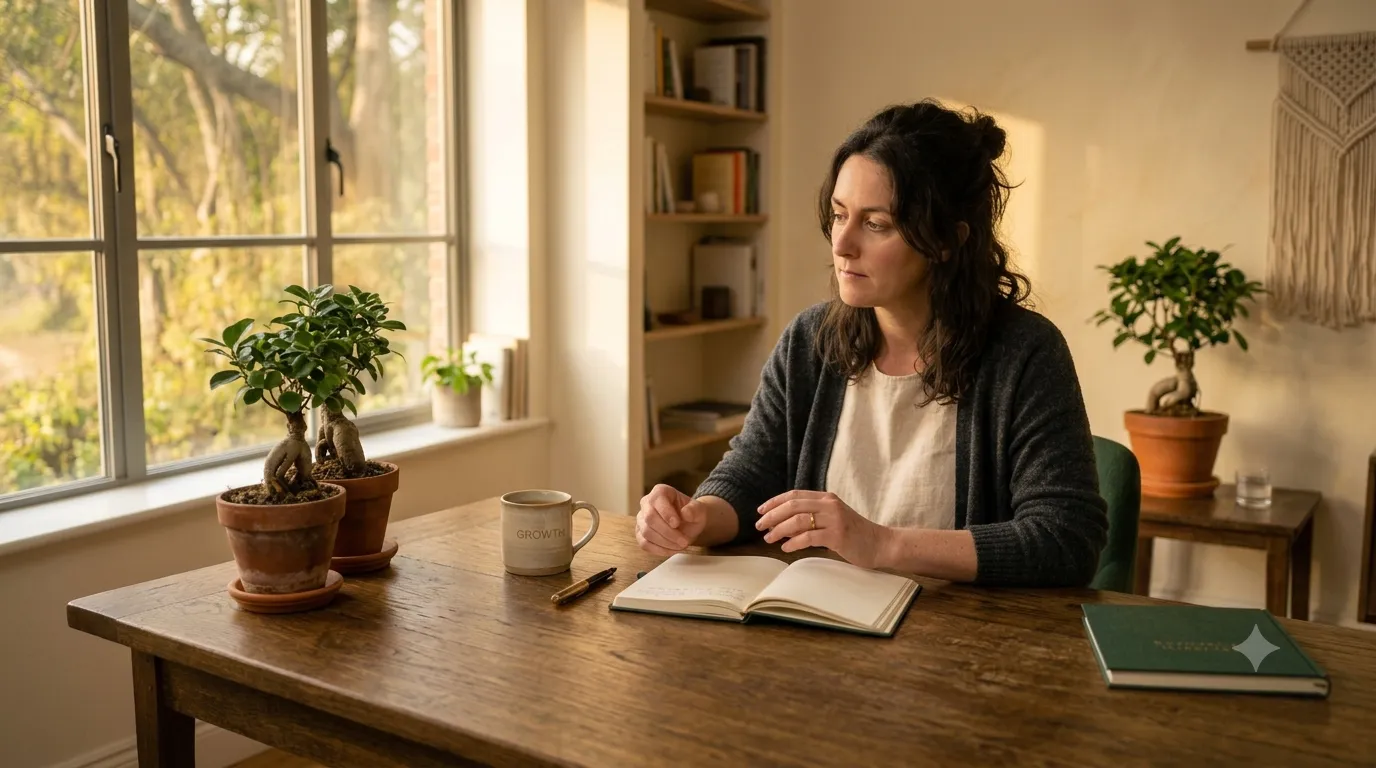
After the light and movement step, spend five minutes with pen and paper, not an app. Write down three things: how you actually feel, one thing you are looking forward to, and the single most important task for the day. This is a stripped-down version of the frameworks covered in our guide to reflective journaling frameworks, simplified so it takes under five minutes and requires zero screen.
When I tested this step myself, I resisted it for the first week because it felt slower than just checking my task app. But by day ten, I noticed I was walking into my workday with a clear top priority already decided, instead of discovering it reactively once I opened my inbox. That shift alone was worth the five minutes, every single day since.
Step Three: One Deliberate Decision Before Any Input
The third and final step is the one people skip most often: make one small, deliberate decision before you consume any external input at all. This could be choosing your outfit, deciding your first work task, or picking what you will eat for breakfast. The specific decision matters less than the order of operations.
Deciding something before scrolling, emailing, or reading the news trains your brain to lead with intention rather than reaction, first thing, every day. Over weeks, this compounds into a noticeably calmer, more agentic default mode, closely related to the mindset shift described in calm assertiveness and reactivity, just applied at the very start of the day instead of mid-conversation. It helps to pick a decision you can make in under 10 seconds, since the goal is establishing the pattern of deciding-before-consuming, not adding a new source of morning friction; something as small as choosing your first task or your breakfast is entirely sufficient, and far more sustainable long-term than trying to make a bigger decision every single morning.
A Sample Screen-Free Morning Timeline, Minute by Minute
To make this concrete, here is what a full twenty-minute screen-free morning routine actually looks like in practice, using a 6:00 a.m. wake time as the reference point. The exact clock times matter far less than the order: light and movement first, reflection second, one deliberate decision third, and only then does a screen enter the picture at all.
By 6:20, all three steps are finished and your phone still has not been touched once. Compare that to the far more common pattern of reaching for a phone within sixty seconds of the alarm, which front-loads the entire day with reactive, borrowed attention before you have even swung your legs out of bed. That nine-minute difference in when the phone first appears is, in practice, the entire mechanism behind this routine's effect on mental clarity.
- 6:00-6:02 — Turn off the alarm, sit up, phone stays untouched
- 6:02-6:12 — Step outside or to a window; 10 minutes of light plus gentle movement
- 6:12-6:17 — Five minutes of pen-and-paper reflection: feeling, highlight, top task
- 6:17-6:20 — One deliberate decision made before any input: outfit, breakfast, or first task
- 6:20 onward — Phone comes out, but you are leading the day instead of reacting to it
Common Obstacles and How to Actually Solve Them
The most common objection to a screen-free morning routine is "I use my phone as my alarm." The fix is a $15 analog alarm clock, full stop. Keeping your phone out of the bedroom entirely removes the single biggest source of relapse, because the temptation to "just check one notification" evaporates when the device is physically in another room.
The second obstacle is family or work demands that genuinely require early screen contact, such as caring for a child or covering an early shift. In that case, protect a smaller, non-negotiable core: even three minutes of light and one deliberate decision before opening any app is enough to preserve most of the benefit. Perfection is not the goal; sequencing is.
- Replace your phone alarm with a basic analog clock
- Charge your phone outside the bedroom overnight
- If time is tight, protect at least 3 minutes of light + one decision
- Tell household members about the routine so they respect the window
What Changes After Thirty Days
Most people report the sharpest change in mental clarity somewhere between day 10 and day 21, once the routine stops requiring conscious effort. Reported effects commonly include fewer racing thoughts in the first work hour, steadier mood through mid-morning, and a subjective sense of having "more time," even though the clock has not changed at all. One reader who tracked her mornings in a simple notebook for six weeks noted that her self-rated "morning anxiety" score dropped from an average of 7 out of 10 in week one to a 3 out of 10 by week five, without changing anything else about her schedule.
This lines up with broader research on attention and cognitive control summarized in the American Psychological Association's resources on stress and attention: reducing early, involuntary attention hijacks measurably improves sustained focus later in the day. A screen-free morning routine is essentially attention hygiene, applied at the most sensitive possible moment.
Building the Routine Into a Lasting Habit
Do not try to install all three steps on day one if you have never done anything like this before. Start with just the light and movement step for one week. Once that feels automatic, add the five-minute reflection. Add the third step, the deliberate decision, only in week three. Layering it this way dramatically increases the odds it survives past the first busy or stressful morning. If you slip on a given day, for instance a chaotic travel morning or a sick child, simply resume the layer you were on the next day rather than starting the whole sequence over from week one; a missed morning is a single data point, not a failed routine.
If you want the routine to actually stick long-term rather than fading after a good intention, connect it to your identity rather than a checklist, an approach detailed further in identity-based habit building strategies. You are not someone "trying to avoid their phone." You are someone who protects their first hour on purpose.
Frequently Asked Questions
What exactly counts as a screen-free morning routine?
It means avoiding phones, tablets, TVs, and computers for a defined window after waking, typically 20 to 30 minutes, and replacing that time with natural light, light movement, and analog reflection instead. The goal is protecting your first attentional window from reactive digital input.
How long should a screen-free morning routine be?
Even 15 to 20 minutes delivers most of the benefit. The three-step version in this guide, light and movement, brief reflection, and one deliberate decision, typically takes 20 minutes total and can be shortened to as little as five minutes on busy days without losing the core effect.
Can I still drink coffee during a screen-free morning routine?
Yes, coffee is fine and unrelated to the screen-free principle. Many people simply delay their first sip by 60 to 90 minutes after waking to let natural cortisol do its job first, but this is optional and separate from avoiding screens.
What if my job requires checking messages first thing in the morning?
Protect whatever small window you can, even three to five minutes of light exposure and one deliberate decision before opening messages. Partial implementation still reduces the reactive tone that early screen use sets, even if you cannot avoid screens entirely.
How soon will I notice mental clarity benefits?
Most people notice subtle changes within the first week, such as feeling less rushed, with more consistent benefits, like sustained focus and steadier mood, emerging between day 10 and day 21 as the routine becomes automatic rather than effortful.