

What a Precision Nutrition Blueprint Actually Means
A precision nutrition blueprint is a way of eating that targets your brain chemistry specifically, rather than following generic advice about calories or macros. Instead of asking 'is this food healthy in general,' it asks a more useful question: 'what does this food do to my dopamine, serotonin, and blood sugar in the next two hours?' That shift in framing changes almost everything about how you plan meals.
As a certified nutrition coach, I've watched clients white-knuckle their way through calorie-counting apps for months with barely any change in how they actually feel day to day. The moment we switched the goal from weight management to steady, predictable brain chemistry, adherence improved almost overnight, because the payoff — noticeably sharper focus, fewer 3pm crashes — showed up within days instead of months.
None of this requires supplements, elaborate meal prep, or an expensive nutritionist. A precision nutrition blueprint is really just a small set of consistent rules applied to the meals you're already eating, built around how specific nutrients influence the chemical messengers running your mood and focus. It also isn't about eliminating entire food groups or chasing the latest trend — I've seen far more lasting results from clients who simply added protein to breakfast than from anyone who attempted an elaborate elimination diet.
How Food Shapes Your Brain Chemistry Hour by Hour
Roughly 90% of your body's serotonin and a significant share of your dopamine are produced with raw materials that come directly from food, largely by way of the gut-brain axis — the constant two-way signaling between your digestive system and your brain. A meal heavy in refined carbohydrates spikes blood sugar quickly, triggers a matching insulin spike, and leaves you with a crash roughly 90 minutes later that feels indistinguishable from low motivation or brain fog.
Protein and fat, by contrast, slow that whole process down. Amino acids from protein are the literal building blocks for dopamine and serotonin, while dietary fat supports the neuron membranes that let those chemical signals travel efficiently in the first place. This is why a blueprint built around protein, fat, and fiber at every meal produces such a different afternoon than one built around toast and coffee.
Timing matters almost as much as composition. Eating the exact same foods but spaced unpredictably across the day, sometimes skipping meals and sometimes eating three close together, still produces unstable blood sugar and inconsistent energy. A precision nutrition blueprint pays attention to both what you eat and roughly when, since your brain chemistry responds to rhythm as much as to raw nutrient content.
The 4 Neurotransmitters Worth Eating For
You don't need to memorize biochemistry to apply a precision nutrition blueprint — you just need to know which foods support which chemical messenger, and build your plate around the state you want. These four cover the vast majority of day-to-day energy and mood complaints I hear from clients.
Think of these less as strict prescriptions and more as a mental checklist. If you're dragging through the afternoon, ask which of the three you're missing that day, then adjust your next meal or snack accordingly rather than reaching automatically for caffeine or sugar.
- Dopamine (drive and motivation): tyrosine-rich foods like eggs, chicken, almonds, and pumpkin seeds provide the raw material dopamine is built from.
- Serotonin (calm and mood stability): tryptophan-rich foods like turkey, oats, and dairy, paired with a small amount of carbohydrate, help transport tryptophan into the brain.
- GABA (calm, non-jittery focus): fermented foods like yogurt, kefir, and sauerkraut support the gut bacteria that manufacture much of your body's GABA supply.
- Acetylcholine (mental clarity): choline-rich foods like eggs and cruciferous vegetables such as broccoli support the neurotransmitter most tied to sharp, sustained attention.
Building Your Personal Precision Nutrition Blueprint
Rather than a rigid meal plan, think of your blueprint as four rules applied consistently across whatever food you already enjoy. This is deliberately flexible because a plan you'll actually follow for months beats a perfect plan you abandon after a week.
Introduce these rules one at a time rather than all at once. Add the protein rule for a full week before layering in the carbohydrate-pairing rule, and so on. This staged approach mirrors how successful long-term habit change generally works, and it keeps the blueprint from feeling like an overwhelming overhaul of your entire diet overnight.
- Anchor every meal with 20-30 grams of protein — this alone flattens most of the blood sugar swings that drive energy crashes.
- Pair any carbohydrate with fat or fiber, never eaten alone, to slow the glucose spike that follows it.
- Eat within 90 minutes of waking to stabilize cortisol and prevent the mid-morning crash that starts a day of chasing energy with caffeine.
- Include one fermented or fiber-rich food daily to support the gut bacteria that manufacture a meaningful share of your neurotransmitter supply.
- Stop eating roughly 2-3 hours before bed where possible, since late, heavy meals can interfere with the nighttime processes that consolidate mood-related neurotransmitters.
A Sample Day of Brain-First Eating
Here's what applying the blueprint looks like across an ordinary day, using foods that are inexpensive and available at any standard grocery store, not a specialty health shop. Adjust portions to your own needs, but keep the structure intact.
Notice that nothing here requires a special shopping trip or an unfamiliar ingredient. That's intentional — a precision nutrition blueprint you can shop for at any regular grocery store on a normal week is one you'll actually follow past the first exciting month.
- Breakfast: two eggs, a handful of spinach, and a slice of whole-grain toast with avocado — protein, fat, and fiber together.
- Mid-morning: plain Greek yogurt with a small handful of walnuts, supporting both GABA and steady energy until lunch.
- Lunch: a grain bowl with chicken or lentils, mixed vegetables, and olive oil dressing, built around the protein-first rule.
- Afternoon: an apple with natural peanut butter instead of a sugary snack, preventing the 3pm crash before it starts.
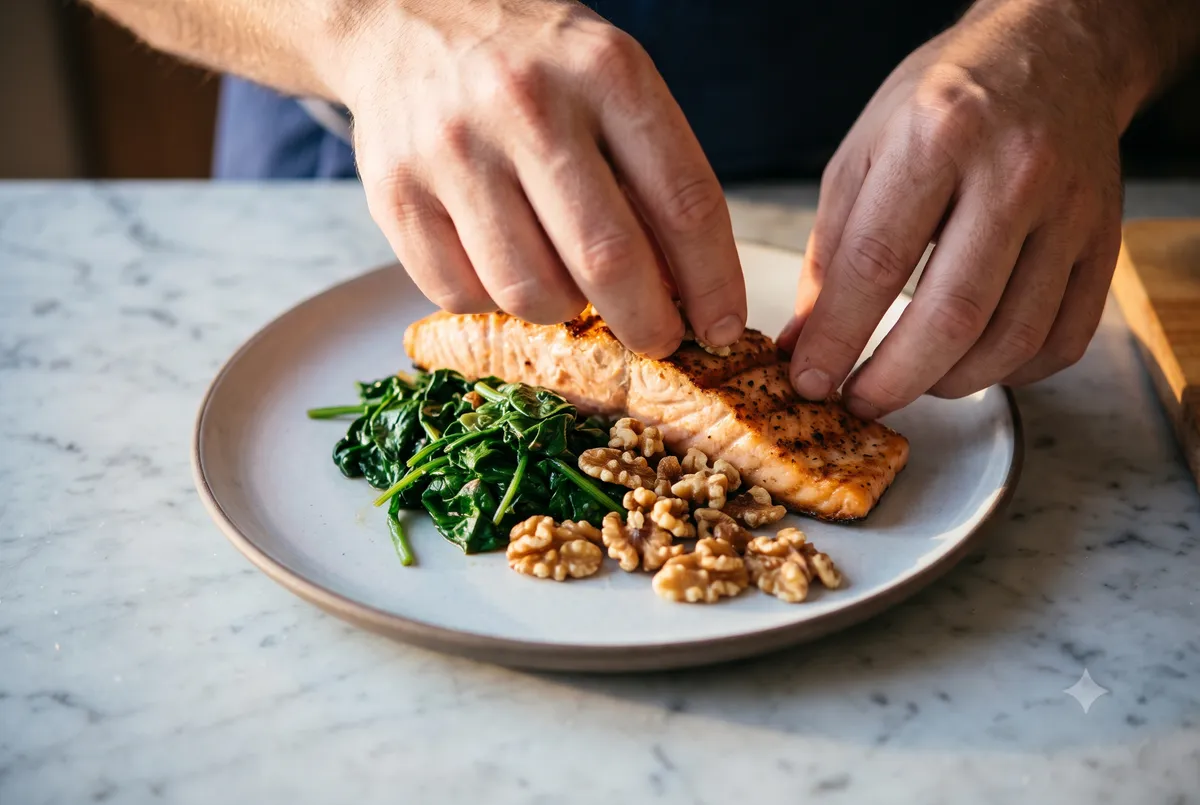
- Dinner: salmon or another fatty fish with roasted vegetables, supporting the omega-3s that neuron membranes depend on.
- Evening (optional): a small square of dark chocolate or a cup of chamomile tea, both of which support a calm transition into a low-stimulation evening.
What to Avoid: Common Blueprint Mistakes
The most common mistake is skipping breakfast entirely, then wondering why focus collapses by 10am. Your brain chemistry doesn't run on willpower alone; it needs the actual raw materials, and going four or five hours without them after a night's fast is one of the most reliable ways to sabotage an otherwise solid plan.
The second mistake is treating this as a short-term fix rather than a lasting shift in how you eat. Brain chemistry responds to consistency over weeks, not a single well-planned day. If you're also struggling with sleep, it's worth pairing this with sleep optimization habits, since poor sleep and poor nutrition amplify each other's negative effects on mood and focus far more than either does alone.
A third, quieter mistake is over-restricting carbohydrates entirely in an attempt to avoid crashes. Cutting carbs too aggressively can blunt serotonin production, since carbohydrate intake helps transport tryptophan into the brain. The goal isn't zero carbohydrates, it's pairing them intelligently with protein, fat, or fiber so they support rather than sabotage your energy.
Budget-Friendly Swaps That Still Work
A precision nutrition blueprint doesn't require salmon three times a week or expensive supplements. Canned sardines, eggs, frozen vegetables, dried lentils, and plain yogurt deliver nearly identical neurotransmitter-supporting nutrients at a fraction of the cost of trendy superfoods, and frozen produce retains most of its nutritional value while cutting food waste dramatically.
If cost is the main barrier, prioritize the protein-at-every-meal rule first, since it has the largest single effect on stabilizing energy and mood, then add the fermented-food and fiber rules once that first habit feels automatic. Sequencing the rules this way keeps the whole approach affordable and sustainable rather than overwhelming from day one.
Buying dried legumes and grains in bulk, freezing portions of protein when they're on sale, and keeping a rotating stock of frozen vegetables can cut a weekly grocery bill significantly compared to fresh, out-of-season produce, without sacrificing any of the nutritional targets this blueprint is built around.
How to Know Your Blueprint Is Working
Most people notice the first shift within three to five days: fewer sharp energy crashes, less desperate reaching for a third coffee, and a steadier mood through the afternoon. These early wins are the fastest feedback loop precision nutrition offers, and they're what keeps the habit sticking past the first difficult week.
Deeper changes, like more stable long-term mood and sharper sustained focus, tend to build over four to six weeks as your gut bacteria composition shifts and adapts to the new pattern of eating. If you want to track your overall cognitive trajectory over time rather than just day-to-day energy, this blueprint pairs naturally with broader lifespan brain health strategies aimed at protecting long-term mental sharpness.
A simple way to track progress without overcomplicating things is a nightly one-line note: your energy level from 1-10, and whether you hit the protein-at-every-meal rule that day. After two weeks, the pattern between the two columns is usually obvious enough to convince even a skeptical brain that the blueprint is doing real work.
Frequently Asked Questions
What is a precision nutrition blueprint, in simple terms?
It's an approach to eating that targets specific brain chemicals like dopamine and serotonin rather than general calorie or macro goals. Meals are built around protein, healthy fat, and fiber at consistent times to keep blood sugar and neurotransmitter production stable throughout the day.
Do I need supplements to follow a precision nutrition blueprint?
No. The blueprint is built entirely around whole foods you can find at any grocery store, such as eggs, yogurt, fish, and legumes. Supplements are not required and won't substitute for the consistent meal structure the approach relies on.
How quickly will I notice a difference in mood or focus?
Most people notice steadier energy and fewer afternoon crashes within three to five days of consistently applying the protein-first rule. Deeper mood and cognitive improvements tend to develop over four to six weeks as gut bacteria adjust.
Can this approach help with anxiety or low mood?
It can meaningfully support mood stability by improving blood sugar regulation and neurotransmitter raw materials, but it is not a replacement for therapy or medical treatment for clinical anxiety or depression. Use it as a supportive daily habit alongside professional care when needed.
Is this diet expensive to follow?
No. Affordable staples like eggs, canned fish, frozen vegetables, dried lentils, and plain yogurt provide nearly all the same brain-supporting nutrients as expensive specialty foods, making the blueprint realistic on an ordinary grocery budget.