
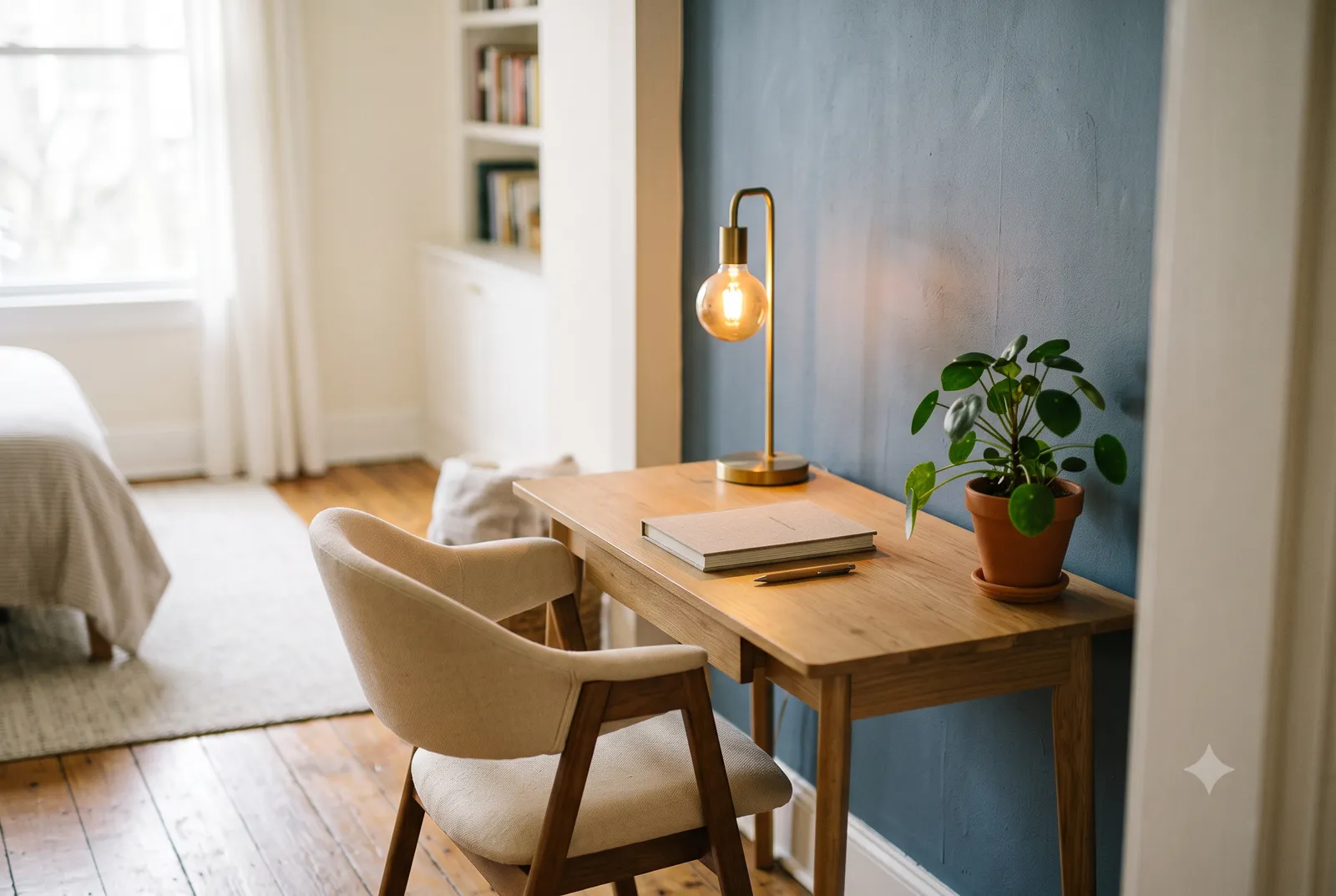
What Is a Neuro-Regulated Workspace?
A neuro regulated workspace is a home workstation deliberately designed to keep your nervous system in a calm, alert state rather than a subtly stressed one, so deep focus becomes the default instead of the exception. Most home offices are optimized for looks or storage, not for how they make your body feel — and your nervous system is reading that environment constantly, whether you notice it or not.
The concept borrows from environmental psychology and interior design research showing that lighting, sound, clutter, and even air quality directly influence cortisol levels and cognitive performance. When your workspace triggers low-grade threat signals — harsh light, visual clutter, jarring notification sounds — your brain diverts resources to managing that background stress instead of the task in front of you.
The term itself borrows from how physical therapists talk about a 'regulated' nervous system: one that shifts smoothly between alert and calm states rather than staying stuck in high alert. Applied to a workspace, that means every element in the room, from the chair to the wall color to where your phone sits, is chosen specifically because it helps your body settle rather than stay braced, even subtly, for the next interruption.
The Nervous System Science of Your Environment
Your environment is processed largely by the autonomic nervous system before conscious thought even kicks in, through a process researchers call neuroception. A cluttered desk, flickering overhead light, or constant notification pings keep your body scanning for threat at a low level, which taxes your prefrontal cortex — the exact brain region responsible for the sustained attention deep work requires.
This is why two people can work in objectively similar rooms and have completely different focus outcomes. One room signals safety (soft light, order, quiet); the other signals low-grade alarm (glare, chaos, noise). Building a neuro regulated workspace means intentionally tilting every design choice toward the first signal.
This isn't just theory — it shows up in measurable performance differences. Research on open-plan offices and high-clutter environments consistently finds elevated cortisol and reduced task accuracy compared to calmer, more ordered spaces, even when the actual work demands are identical. Your brain is always partly occupied with reading the room for safety, and a well-designed space quietly answers that question so the rest of your attention is free for the task itself.
5 Core Elements of a Neuro-Regulated Workspace
You don't need an expensive redesign to build this. Most of these changes cost under $50 combined and can be implemented in a single weekend.
These five elements were chosen because each one targets a different sensory channel your nervous system monitors constantly: sight, sound, spatial awareness, and even smell and touch through clutter and texture. Addressing only one, like lighting alone, still leaves the others quietly working against you, which is why the biggest shifts in focus tend to come from stacking two or three elements together rather than perfecting a single one in isolation.
- Lighting: Use warm (2700-3000K) light sources and avoid overhead fluorescents. A desk lamp angled away from direct eye line reduces cortisol reactivity compared to harsh overhead lighting.
- Sound: Replace notification pings with silence or low, steady background sound (pink noise or instrumental music at 60-70 dB) to prevent your amygdala from triggering on every ping.
- Sightlines: Position your desk so you can see the room entrance, not have your back to it. This satisfies a deep evolutionary need for felt safety and measurably reduces background vigilance.
- Clutter control: Clear everything from your desk except what you're using for the current task. Visual clutter competes for the same limited attentional resources as your actual work.
- Nature elements: Add one real plant or a view of greenery if possible. Even brief exposure to natural elements lowers physiological stress markers within minutes.

A Step-by-Step Setup You Can Do This Weekend
Here's the order I recommend tackling this in, since some changes make the next one easier to notice and evaluate.
Doing the changes in this specific sequence matters more than it might seem. Clearing clutter first gives you a clean baseline to judge every subsequent change against, and testing a focus block only at the end means you're evaluating the combined effect of all five changes together, which is closer to how you'll actually experience the space day to day rather than judging any single element in isolation.
- Day 1 morning: Clear your desk completely, then add back only what you use daily, resisting the urge to immediately refill the empty space.
- Day 1 afternoon: Swap or reposition lighting to warm, indirect sources, testing a few angles before settling on one.
- Day 1 evening: Turn off all non-essential notifications on your work device, leaving only calls and true emergencies enabled.
- Day 2 morning: Reposition your desk for a better sightline to the door if possible, even if it means a less conventional layout.
- Day 2 afternoon: Add one plant and one textured, calming object (a stone, a small blanket, a candle you don't light during work).
- Day 2 evening: Test a 25-minute focus block and note how your body feels compared to before, paying attention to tension in your shoulders and jaw.
How This Supports Longer Focus Sessions
When your environment stops triggering low-grade stress responses, you free up the mental bandwidth that was previously spent on background vigilance. In my own coaching sessions, clients who rebuild their workspace along these lines often report their first uninterrupted 90-minute focus block in months — not because their discipline suddenly improved, but because their environment stopped fighting against it.
This pairs naturally with structured time-management approaches. If you've struggled to protect long blocks of attention, combining a neuro regulated workspace with daily time blocking and a 3-priority rule gives you both the environment and the schedule structure deep work actually requires.
It's worth being honest that the environment alone won't fix every focus problem. If your calendar is packed with back-to-back meetings or your task list has no clear priorities, no amount of desk redesign will create the long, uninterrupted blocks deep work needs. Think of the workspace as removing friction, not as a substitute for also protecting time on your calendar.
Digital Elements of a Calm Workspace
Physical design is only half the equation — your digital environment is just as capable of triggering nervous-system alarm as a cluttered desk. Constant badge notifications, open browser tabs, and a chaotic desktop create the same low-grade threat signal digitally that clutter creates physically.
If you haven't already, pairing your physical redesign with a mindful tech stack that limits which apps can interrupt you creates a fully coherent calm environment, physical and digital together, rather than fixing one while the other still quietly undermines your focus.
Even something as small as your phone's physical position matters more than most people realize. Research on visible phones shows that simply having your device within eyesight, even face-down and silenced, measurably reduces available cognitive capacity, because part of your attention stays quietly allocated to monitoring it. Moving it to another room during focus blocks is one of the highest-leverage, zero-cost changes in this entire guide.
Maintaining the Space Long-Term
A neuro regulated workspace degrades quickly if you don't build in maintenance habits — clutter and notification creep return within days without a system. Set a two-minute end-of-day reset: clear the desk surface, close unused tabs, and silence notifications before you finish work, so tomorrow's session starts from a calm baseline rather than yesterday's mess.
It also helps to plan for the seasons and life changes that inevitably shift your setup. A new desk chair, a change in daylight hours, or simply a new project with different tools will all quietly reshape what your workspace needs. Treat the redesign as a living system you revisit periodically rather than a one-time project you complete once and never think about again.
- End each workday with a 2-minute desk and tab reset.
- Do a monthly audit of what's accumulated on and around your desk.
- Revisit lighting seasonally, since natural light changes shift what your space needs.
Frequently Asked Questions
What makes a workspace neuro regulated versus just organized?
Organization is about tidiness and efficiency, while a neuro regulated workspace is specifically designed around nervous-system science, targeting lighting, sound, sightlines, and clutter to actively reduce background stress signals your body picks up before you're consciously aware of them.
How much does it cost to build a neuro regulated workspace?
Most of the core changes, like decluttering, repositioning your desk, and silencing notifications, cost nothing. A warm desk lamp and a plant typically bring the total budget under $50 for a full setup.
Can a neuro regulated workspace help with anxiety, not just focus?
Yes, because the same environmental cues that support deep focus also reduce background cortisol and threat signaling, many people notice reduced general anxiety while working, not just improved concentration.
Does lighting really make that much difference to focus?
Lighting is one of the most researched environmental factors in cognitive performance. Harsh, cool, overhead lighting has been linked to increased stress reactivity, while warm, indirect lighting supports calmer, more sustained attention.
How long does it take to notice a difference after redesigning my workspace?
Many people notice a subjective difference in stress and ease of focus within the first few work sessions, though the full benefit builds over one to two weeks as your nervous system adapts to the new consistent cues.