What Micro-Movements for Desk Workers Actually Are
Micro-movements for desk workers are short, deliberate bursts of physical activity, usually 30 to 90 seconds long, spaced throughout a seated workday to counteract the effects of prolonged stillness. They're not a workout, and they're not meant to replace exercise. They're a maintenance practice, closer to blinking than to going for a run, designed to keep blood flowing, joints lubricated, and your nervous system out of the sluggish, foggy state that hours of sitting reliably produces.
I started prescribing these to clients years before I fully understood why they worked, simply because the ones who did five or six a day reported noticeably steadier afternoon energy than the ones relying on coffee and willpower alone. The mechanism turned out to be straightforward: movement, even brief movement, pumps blood back toward your heart and brain far more effectively than sitting motionless ever will.
Unlike a gym session, micro-movements require zero equipment, no change of clothes, and no more than a minute of your attention. That's precisely why they succeed where bigger fitness resolutions often fail — the barrier to doing one is almost nonexistent, so they actually happen on your busiest, most distracted days instead of only on the days you feel motivated. You also don't need to plan them the night before or block calendar time — the best ones simply slot into gaps that already exist, like the ninety seconds between hanging up a call and opening your next task.
Why Sitting Still Drains Your Energy, Not Just Your Back
Most people blame afternoon fatigue on lunch, or on simply not getting enough sleep. In reality, a huge share of that 2pm slump is caused by a sedentary posture sustained for hours without a break. When your large leg muscles stay inactive, circulation slows, blood pools in your lower body, and less oxygenated blood reaches your brain — which reads, subjectively, exactly like tiredness.
There's a secondary effect that's easy to miss: sustained stillness also dulls proprioception, your brain's sense of where your body is in space, which contributes to the mentally foggy, disconnected feeling many desk workers describe by late afternoon. Reintroducing movement, even briefly, sharpens that sense back up almost immediately, which is part of why a short walk to the printer can feel disproportionately refreshing.
None of this means sitting is inherently dangerous in small doses. The problem is duration without interruption — ninety minutes to two hours of continuous stillness is the threshold where most of these effects start compounding, according to research on prolonged sedentary behavior. It's worth separating this from general fitness level, too: even people who exercise regularly outside of work still experience this circulatory slowdown, a pattern researchers sometimes call the 'active couch potato' effect, since a solid morning workout doesn't cancel out eight hours of continuous stillness afterward.
The Science of Movement Snacks and Sustained Energy
Researchers studying sedentary behavior have coined the term 'movement snacks' for exactly this kind of brief, frequent activity, and the findings are consistent: short bouts of movement spread across the day improve blood sugar regulation, circulation, and mood more effectively than a single long workout followed by hours of stillness. This matters because your energy across a workday is heavily influenced by how stable your blood glucose stays, and standing or walking briefly after eating measurably blunts the glucose spikes that cause energy crashes.
This is also why micro-movements for desk workers pair so well with other energy-management habits. If you're already working on a circadian rhythm approach to steady energy, movement snacks are one of the easiest levers to add, because they reinforce your body's natural alertness rhythm instead of fighting against an afternoon dip with more caffeine.
There's a mood benefit layered on top of the metabolic one. Even brief movement triggers a small release of endorphins and improves circulation to the prefrontal cortex, the brain region responsible for focus and decision-making. That's a large part of why a short walk can shift your mood noticeably even when nothing about your actual workload has changed in the meantime.
5 Micro-Movements You Can Do at Your Desk
These five movements were chosen specifically because they require no equipment, don't draw attention in an open office, and take under 90 seconds each. Rotate through two or three of them per day rather than trying to do all five every single time — variety keeps the habit from feeling like a chore.
Aim to spread these across the day rather than clustering them all in one burst. Two done mid-morning, one after lunch, and two more in the afternoon does far more for sustained energy than doing all five back-to-back and then sitting still for the next six hours.
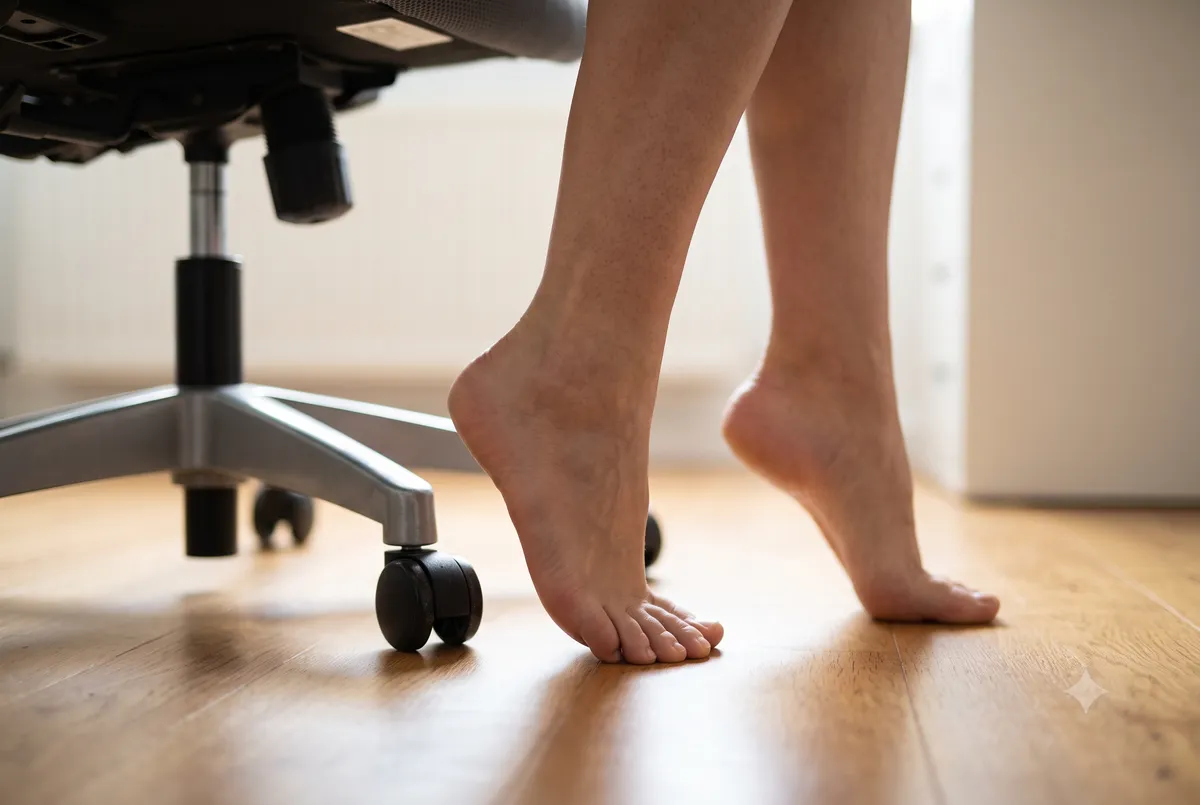
- Calf raises (60 seconds): Stand behind your chair and rise onto your toes 20 times. This activates your 'second heart,' the calf muscle pump that helps return blood from your legs.
- Seated spinal twist (30 seconds): Sitting tall, rotate your torso gently to each side, holding a chair armrest for leverage, to release tension that builds up in the mid-back.
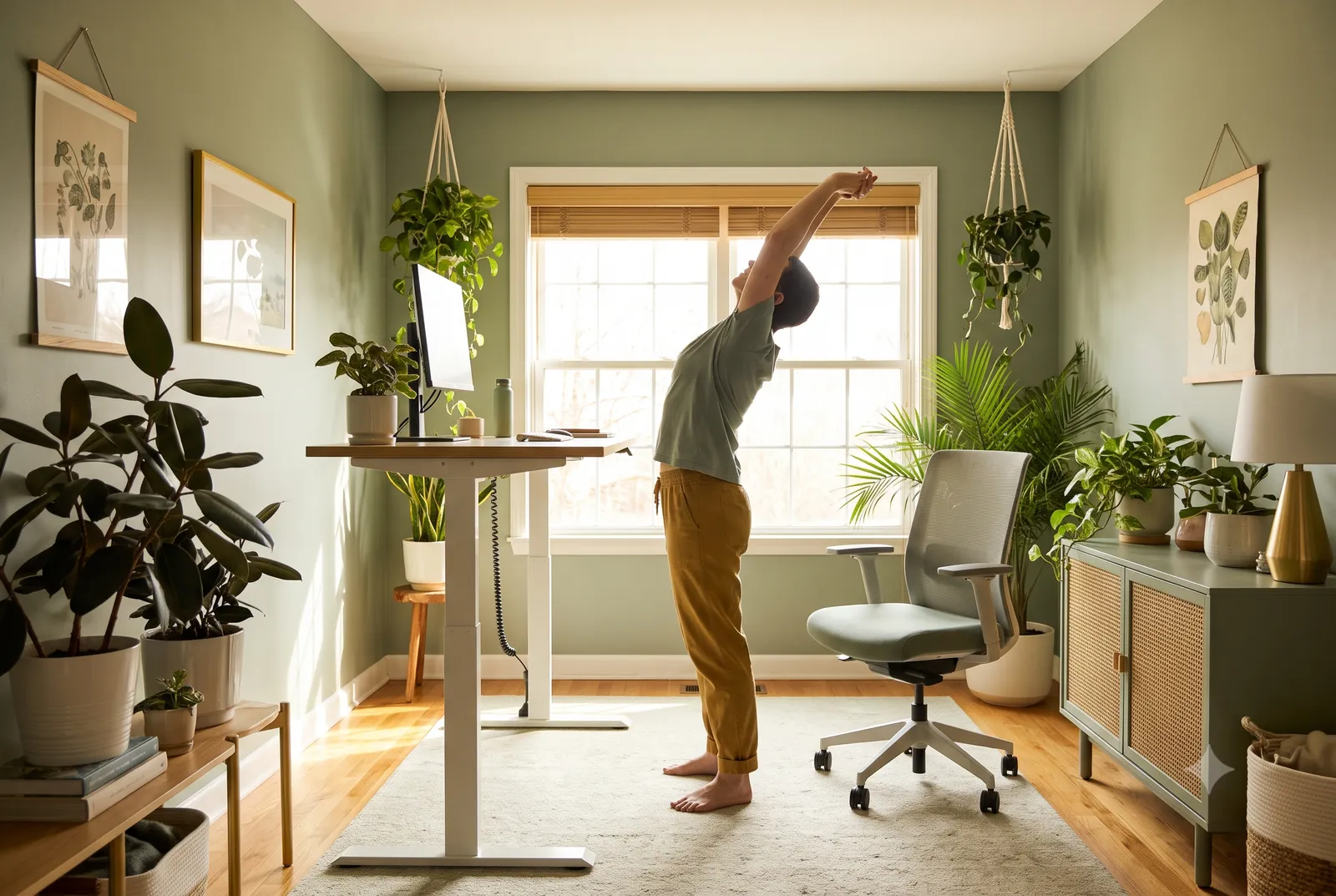
- Desk push-away stretch (30 seconds): Push your chair back, place both hands on the desk edge, and lean your weight back to stretch your shoulders and open your chest after hours of hunching forward.
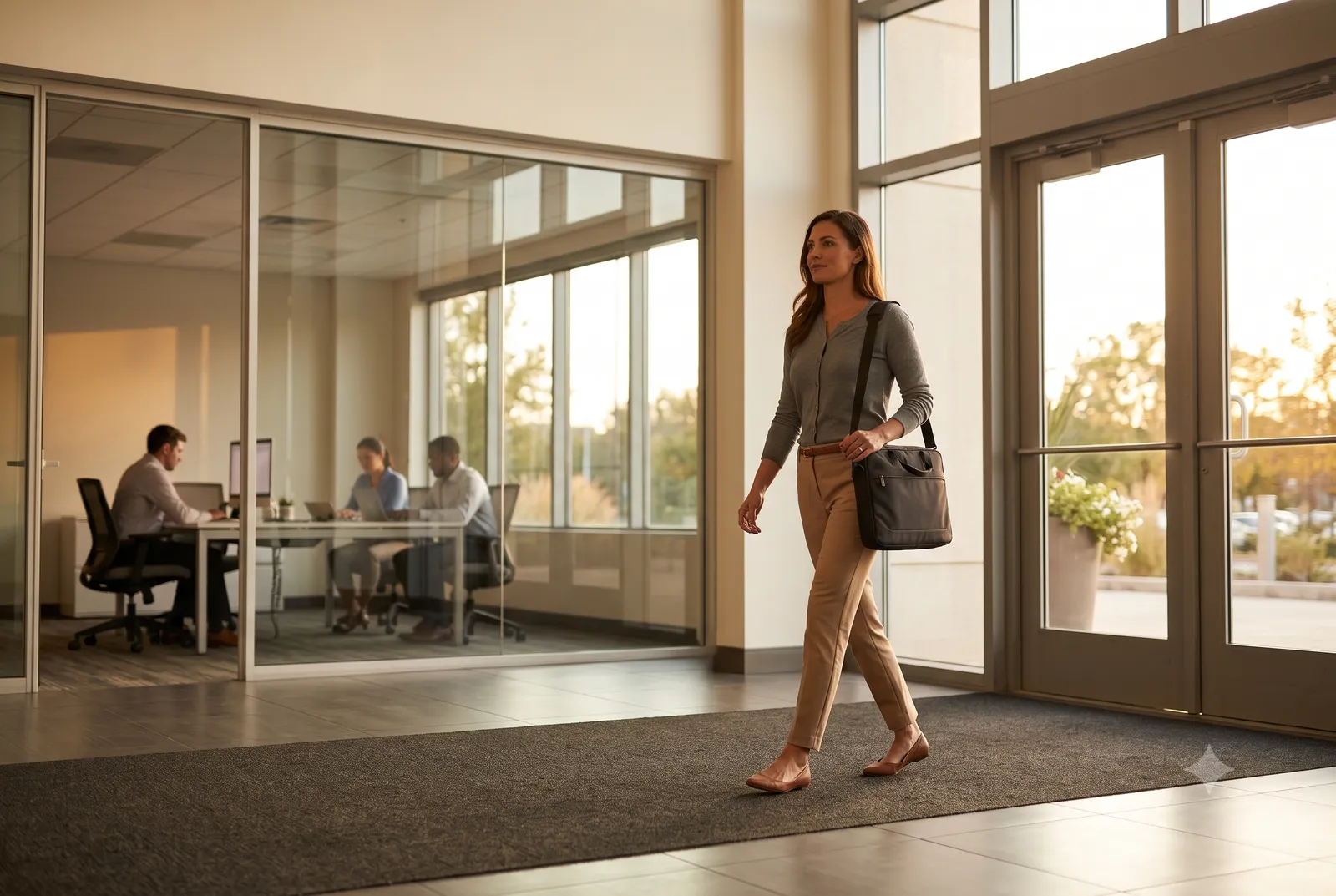
- Walking lap (90 seconds): Walk to the farthest bathroom, water station, or stairwell on your floor instead of the nearest one, turning an unavoidable trip into a real movement snack.
- Ankle circles and toe spreads (45 seconds): Slip your shoes off under the desk and rotate each ankle 10 times in both directions to counteract the numbness that builds from stillness, paired with a few shoulder blade squeezes to counter the rounded posture that builds up from typing.
Building a Movement Trigger System That Sticks
The single biggest reason micro-movement habits fail isn't lack of belief in the benefits — it's forgetting to actually do them once the workday gets busy. The fix isn't more discipline; it's attaching each movement to a trigger that already happens automatically throughout your day, so you don't have to rely on remembering.
This is the same principle behind most successful identity-based habit building strategies: habits that are anchored to existing routines survive busy weeks, while habits that depend on remembering rarely do. Set the system up once, and it runs largely on autopilot from there.
Write your triggers down somewhere visible for the first week, whether that's a sticky note on your monitor or a recurring calendar block labeled simply 'move.' After about seven to ten days most people stop needing the visual reminder entirely, because the trigger itself, not the note, has become the cue.
- Trigger: every video call that ends. Action: 60 seconds of calf raises before opening your next task.
- Trigger: every time you refill your water bottle. Action: one lap to the farthest water station on the floor.
- Trigger: your phone's lunch reminder. Action: a 90-second walk before you eat, not after.
- Trigger: closing your laptop at the end of the day. Action: the desk push-away stretch, marking a clean mental transition out of work mode.
- Trigger: an hourly chime or silent phone vibration. Action: a quick shoulder blade squeeze or ankle circles, whichever you haven't done yet that day.
What to Do in Open Offices and on Video Calls
Privacy concerns are the most common objection I hear, so it helps to know that most effective micro-movements are genuinely invisible or unremarkable to coworkers. Ankle circles under a desk, a seated spinal twist, or subtle isometric squeezes of your glutes and calves draw zero attention while still delivering real circulatory benefit.
On video calls, camera-off moments are an easy opportunity — stand up and do calf raises while listening rather than speaking. If your camera stays on throughout, a seated posture reset every 15 minutes (rolling your shoulders back, lengthening your spine, unclenching your jaw) provides a smaller but still meaningful dose of the same benefit, and nobody on the call will notice a thing.
If you're worried about how movement looks to a manager or teammates, remember that the goal is subtlety, not performance. Nobody needs to know you're doing anything at all — the value comes from the movement itself, not from anyone else's awareness of it, so there's no need to explain or justify what you're doing.
Common Mistakes That Make Micro-Movements Fail
The most common mistake is waiting for a natural pause to remember to move, rather than scheduling it. Busy days have no natural pauses, which is exactly when you need the habit most and exactly when it's most likely to get skipped without an external trigger or reminder.
The second mistake is treating micro-movements as a replacement for real exercise rather than a complement to it. They meaningfully reduce the harm of prolonged sitting, but they don't build strength or cardiovascular fitness on their own. If you're rebuilding a broader fitness habit, pairing this with a sustainable, no-gym approach to fitness covers both the daily maintenance and the longer-term conditioning side of the equation.
A third mistake is giving up after a single forgotten day. Consistency here works the same way it does with any other habit — a missed day is simply a missed day, not evidence the system doesn't work. Resume the next trigger you encounter rather than waiting for a fresh start tomorrow morning.
How Long Until You Feel the Difference
Most people notice a difference in afternoon energy within the first three to five days of consistent practice, well before any measurable fitness change occurs. That's because the primary benefit is circulatory and immediate, not something that requires weeks of adaptation the way strength training does.
Give the full system, movements plus triggers, about two weeks before judging whether it's working. By then the triggers should feel automatic rather than effortful, and you should notice you're reaching for that third afternoon coffee less often, replaced instead by a minute of movement that does the same job without the crash that follows.
Beyond energy, many people also notice fewer tension headaches and less end-of-day stiffness in the neck and lower back within the first month. These physical improvements tend to reinforce the habit on their own, since the benefit becomes something you can feel directly rather than something you have to take on faith.
Frequently Asked Questions
How often should desk workers do micro-movements during the day?
Aim for one short movement every 45 to 90 minutes of continuous sitting, roughly five to eight times across an eight-hour workday. Consistency spread throughout the day matters more than the length of any single movement.
Can micro-movements really replace regular exercise?
No. Micro-movements reduce the specific harms of prolonged sitting, such as poor circulation and blood sugar spikes, but they don't build meaningful strength or cardiovascular fitness on their own. Think of them as damage control that works alongside, not instead of, regular exercise.
What if my job doesn't allow me to stand up often?
Many effective micro-movements, such as ankle circles, seated spinal twists, and isometric muscle squeezes, can be done fully seated and are invisible to anyone nearby. Even without standing, these still improve circulation meaningfully compared to complete stillness.
Will micro-movements help with lower back pain from sitting?
For pain caused by prolonged static posture rather than an underlying injury, frequent brief movement often reduces stiffness and discomfort noticeably within one to two weeks. Persistent or worsening pain should still be evaluated by a medical professional.
Is it better to do a few long breaks or many short micro-movements?
Research on movement snacks generally favors frequency over duration for offsetting sedentary time, meaning eight 60-second movements spread across the day outperform one 15-minute break for circulation and blood sugar regulation.