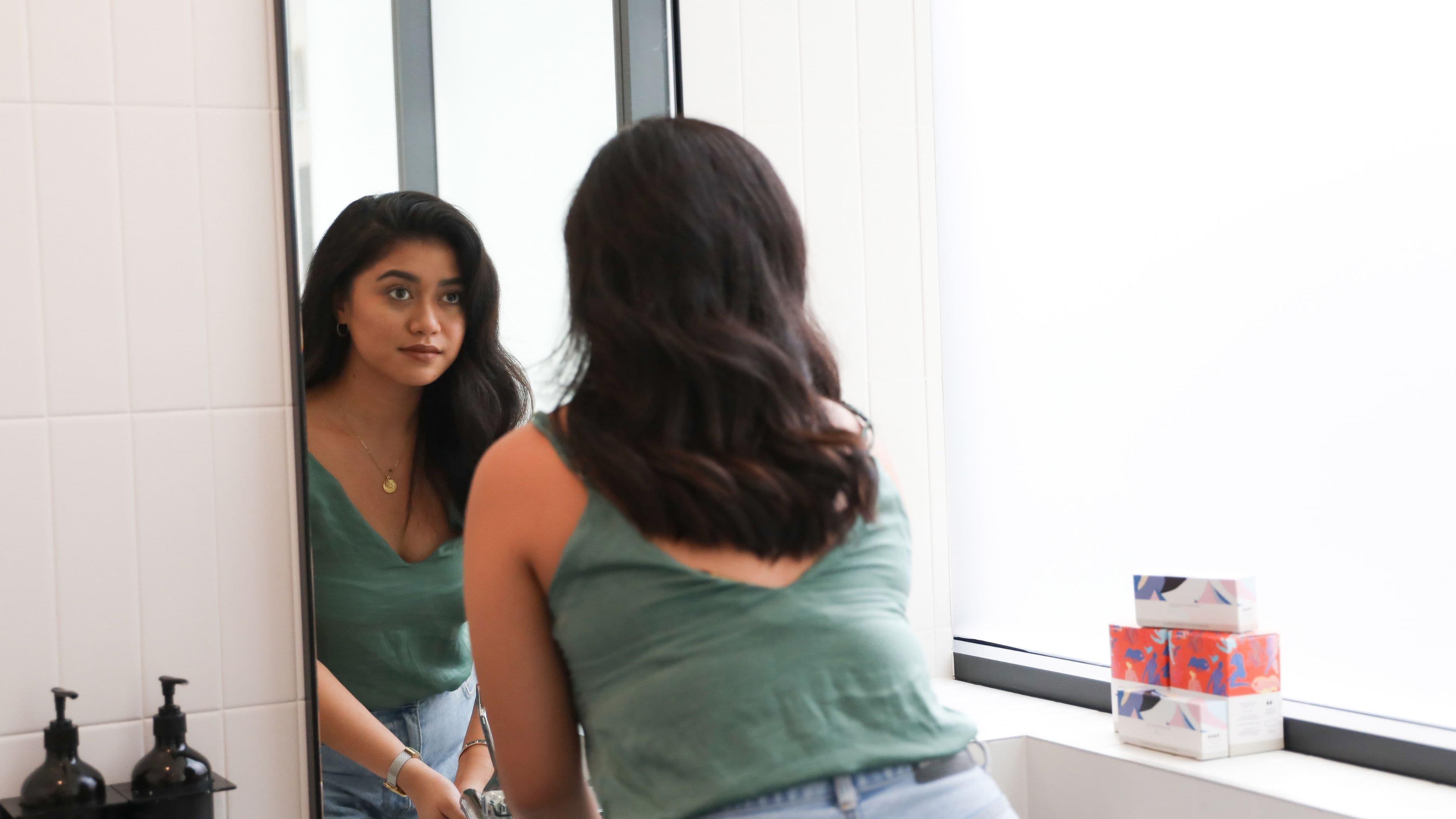
That's not a character flaw. That's what happens when self-protection becomes a permanent setting instead of a temporary one. And the way back isn't to suddenly expose your deepest fears to strangers – it's to treat vulnerability as a learnable skill, practice it in small ways, and build capacity for it over time the same way you'd build any other skill.
Why Vulnerability Gets a Bad Reputation
The word itself puts people off. Vulnerability sounds like weakness, exposure, risk. Like something that happens to you when your defenses fail rather than something you choose deliberately. That framing is almost entirely wrong, but it's deeply embedded in how most people were raised.
Think about the messages most people absorb growing up: don't be too sensitive, toughen up, don't let them see you cry, keep your personal life private, don't air your dirty laundry, don't give people ammunition against you. Some of those messages come from genuinely protective instincts – the adults teaching them had their own reasons for learning to close up. But the cumulative effect is a generation of adults who are highly skilled at self-concealment and significantly less skilled at genuine connection.
Research by social scientist Brené Brown, who spent over a decade studying vulnerability, shame, and human connection, found consistently that vulnerability – the willingness to show up as you are without certainty of outcome – is not the opposite of strength. It's the birthplace of meaningful connection, creativity, and belonging. The people who experienced the strongest sense of love and belonging in her research were the ones who believed they were worthy of it and allowed themselves to be truly seen. Not the ones who had it all together. The ones who showed up anyway.
What Vulnerability Actually Is (and Isn't)
Vulnerability is often misunderstood as oversharing, emotional dumping, or performing openness for attention. That's not what it is. Real vulnerability is specific, intentional, and proportionate to the relationship and the context.
It's telling a friend that you're struggling instead of saying you're fine. It's admitting to a partner that something they said hurt you, even though bringing it up feels awkward. It's asking for help when you need it instead of quietly managing alone until you're at capacity. It's saying "I care about this and I'm afraid it won't work out" instead of pretending you don't care so there's nothing to lose.
What vulnerability is not: sharing things you're not ready to share, disclosing personal information to people who haven't earned your trust, or performing emotional openness to seem relatable. Boundaries and vulnerability coexist. You can be both appropriately private and genuinely open – they're not opposites. The difference is whether your privacy is a choice or a defense mechanism operating automatically regardless of circumstances.
Why It's Hard – and Why That's Normal
Vulnerability requires tolerating uncertainty, and most people aren't good at that. When you share something real about yourself, you can't control how it will be received. The other person might respond poorly. They might not reciprocate. They might use what you've shared in ways you didn't intend. Those are real risks, and they're reasonable to be aware of.
The problem is that the brain tends to treat social risk and physical risk similarly – with the same threat-detection machinery that kept ancestors alive in genuinely dangerous situations. A moment of emotional exposure registers as potentially dangerous before you've consciously assessed whether it actually is. Your heart rate rises slightly. You find a way to walk back what you just started to say. You make a joke to deflect. This isn't weakness; it's your nervous system doing what it was designed to do. Recognizing it for what it is gives you a bit more choice about whether to follow that impulse or work through it.
The other reason vulnerability is hard is that it requires you to believe, at some level, that you're worth knowing as you actually are – not as you perform yourself to be. For many people, that belief is shaky. There's a background worry that if people saw the unfiltered version, they would be disappointed. Vulnerability, practiced over time, tends to correct that worry, because the experience of being genuinely seen and not rejected is the most effective antidote to shame that exists. But you have to take the small risk first to get the data.
Building the Skill: Small Steps That Actually Work
Like most skills, vulnerability is built incrementally. You don't go from emotionally closed to radically open overnight, and trying to do that would be both uncomfortable and counterproductive. Here's how to start building in a way that feels manageable.
Notice when you're performing "fine." Most people default to "I'm good, you?" on autopilot, which is fine as small talk but worth noticing when it's covering something real in a relationship where you'd normally go deeper. You don't have to share everything, but noticing the habit of automatic concealment is the starting point.
Start small with trusted people. The entry point for practicing vulnerability isn't dramatic disclosures to acquaintances. It's slightly more honest responses to people who have already demonstrated they're safe. Saying "honestly, it's been a rough week" to a close friend instead of "I'm okay" is a small act of vulnerability that's low-stakes and usually feels better than you expect.
Name what you're feeling instead of explaining it away. There's a significant difference between "I've been stressed because work has been really busy and I haven't been sleeping well and there's a lot going on" (explaining) and "I've been feeling overwhelmed and a bit lost lately" (naming). The first one keeps you at arm's length. The second one lets someone in. Practice the second one in low-stakes moments.
Let people help you. Accepting help is a form of vulnerability that's often overlooked. If you reflexively say you're fine when someone offers assistance, or if asking for help feels profoundly uncomfortable, that's useful information about where your edges are. Letting someone bring you dinner when you're sick, or asking a colleague to cover something when you're stretched, or saying "I could really use some advice" to a friend – these are small practices in the larger skill of being human in front of other people.
Share process, not just outcome. One accessible form of vulnerability is talking about things while they're still uncertain rather than only after they're resolved. "I'm trying to figure out whether to make a career change and I'm not sure" is more vulnerable than "I changed careers last year and here's how it went." The uncertainty is the vulnerable part. Letting someone into your uncertainty, rather than presenting them with a finished, edited version, is a genuine form of showing up.
What Changes When You Practice This
The changes that come from building vulnerability as a skill aren't dramatic or immediate. They accumulate slowly, the way most meaningful things do.
Relationships tend to deepen. When you let people see more of you, you stop relating to them across a managed surface and start actually connecting. People who know the curated version of you can offer curated care in return; people who know the real version can offer something that actually fits.
You spend less energy. Emotional management is tiring. Monitoring what you're revealing, tracking what different people know about you, maintaining the performance of having it together – all of that takes cognitive resources that get freed up when you're more consistently honest. People who've built genuine vulnerability often report feeling lighter, not more exposed.
You become more comfortable with other people's vulnerability. When you've practiced being seen, you're better at being present when others are. You're less likely to deflect, fix, or make the other person feel worse for having opened up. This matters for every relationship in your life.
Your relationship with yourself tends to improve. Shame shrinks in direct proportion to how much you allow yourself to be seen without the roof falling in. Every small act of authentic self-disclosure that's received with acceptance – even just neutral acceptance, not profound validation – quietly tells the part of you that's been hiding that it doesn't have to hide quite so much.
What to Avoid
Using vulnerability as a performance. Sharing things that feel vulnerable without actually being in a vulnerable state – to seem relatable, to get attention, to fill silence – tends to backfire. It doesn't build genuine connection and often leaves you feeling worse afterward. Real vulnerability involves actual uncertainty about how you'll be received.
Treating every person as equally safe. Vulnerability doesn't mean sharing equally with everyone. Part of the skill is calibrating what you share based on what the relationship has demonstrated it can hold. Early in a relationship, smaller things. Over time, as trust builds, deeper things. The calibration is an ongoing skill in itself.
Expecting immediate reciprocity. When you open up, the other person doesn't always match the moment. Sometimes they're not in a place to, sometimes they need time to respond, sometimes they respond in a way that feels inadequate. That's not always a signal that you've made a mistake – sometimes it's just the normal unevenness of how humans respond to each other.
Waiting until you're ready. Readiness in the context of vulnerability is a bit of a myth. You'll rarely feel completely ready to say the true thing, ask the real question, or admit the actual feeling. Most of the time, you do it slightly before you're ready, and then it turns out to have been the right call more often than not.
FAQ
Isn't vulnerability risky? What if people take advantage of it? Yes, there's genuine risk in vulnerability, and not everyone is a safe audience for everything. Part of developing this skill is also developing judgment about who to be vulnerable with and in what contexts. The goal isn't to be open with everyone about everything – it's to stop being closed with everyone about everything out of habit.
What if I'm a private person by nature? Do I need to change that? Being private isn't the same as being closed. Some people are naturally more reserved and share themselves selectively – that's not a problem. The question is whether your privacy is a genuine preference or a protective mechanism that's now limiting your connections in ways you don't actually want. Only you can answer that.
How do I know if I'm being vulnerable or oversharing? A rough guide: vulnerability is sharing something real in a context where it fits the relationship and the moment. Oversharing is disclosing more than the relationship has established it can hold, usually driven by a need for immediate relief rather than genuine connection. If you often feel exposed and regretful after opening up, it's worth looking at the context in which you're sharing – not at whether you're sharing at all.
Does vulnerability get easier with practice? Yes, meaningfully. The discomfort doesn't fully disappear, but the relationship between discomfort and avoidance changes. Over time, the evidence accumulates that being seen is survivable – usually more than survivable – and the threat response settles somewhat. It becomes a different kind of challenge rather than the same overwhelming one.
What's the fastest way to start? Pick one relationship where you already trust the person and have one more honest conversation than you'd normally have. Not a dramatic disclosure – just a slightly truer answer to how you're doing, or a small thing you've been holding back. See what happens. That's the practice.
📚 Sources
Brené Brown – The Power of Vulnerability (TED Talk): https://www.ted.com/talks/brene_brown_the_power_of_vulnerability
Greater Good Science Center – Why Vulnerability Matters: https://greatergood.berkeley.edu/article/item/why_vulnerability_is_the_key_to_connection
Psychology Today – The Real Meaning of Vulnerability: https://www.psychologytoday.com/us/blog/the-empathy-gap/202105/the-real-meaning-of-vulnerability
American Psychological Association – The Science of Emotional Expression: https://www.apa.org/topics/emotions/expression
Greater Good Science Center – How to Open Up to Others: https://greatergood.berkeley.edu/article/item/how_to_open_up_to_others
Harvard Health – The Health Benefits of Strong Social Connections: https://www.health.harvard.edu/newsletter_article/the-health-benefits-of-strong-relationships