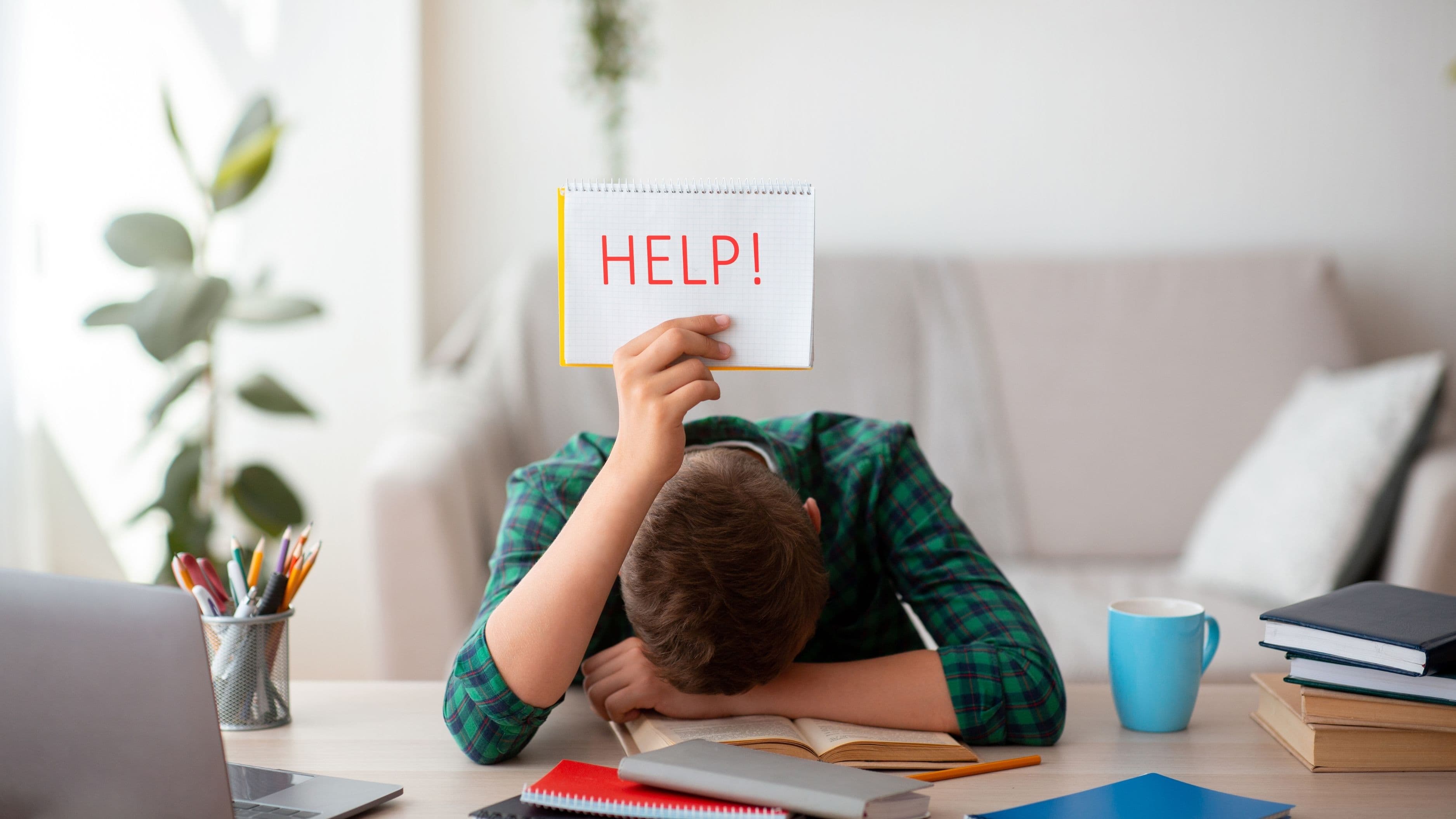

Burnout is not just tiredness. It's a specific kind of depletion that shows up physically, emotionally, and mentally, and it doesn't respond to the things that fix regular exhaustion. Understanding what's actually happening – and what actually helps – makes a real difference in how well you can show up for your partner without burning yourself out in the process.
What Burnout Actually Looks Like in a Partner
Burnout doesn't always announce itself clearly. It can look like irritability, emotional flatness, chronic physical fatigue, withdrawal from things they used to enjoy, difficulty making even small decisions, or a kind of low-level numbness that's hard to put into words. Your partner might not even recognize it as burnout – they might just feel like they're failing at everything and don't know why.
The World Health Organization classifies burnout as an occupational phenomenon characterized by feelings of energy depletion or exhaustion, increased mental distance from one's job, and reduced professional efficacy. But in practice, burnout from work bleeds into every other area of life – relationships, health, motivation, and sense of self. When your partner is burned out at work, they don't leave it at the office. It comes home.
Recognizing these signs isn't about diagnosing your partner. It's about giving yourself an accurate picture of what they're dealing with so you can respond in ways that actually help rather than ways that feel helpful but don't land.
Start With Listening, Not Fixing
The instinct when someone you love is struggling is to fix it. Offer solutions, research options, suggest changes, provide perspective. This instinct comes from care, but in the early stages of burnout support, it almost always makes things worse. A burned-out person doesn't need more to think about or more decisions to make. They need to feel heard.
The most useful thing you can do first is ask open questions and then actually listen to the answers without steering toward solutions. "What's been the hardest part?" instead of "Have you tried talking to your manager?" Listening without an agenda – without preparing your response while they're still talking – is harder than it sounds. But it creates the kind of safety where your partner can actually say how they're feeling rather than managing your reaction to it.
You don't need to have the right thing to say. "That sounds really hard" or "I'm glad you told me" is often more helpful than a perfectly reasoned response. The goal in these early conversations is connection, not resolution.
Take Things Off Their Plate Without Making It a Big Deal
One of the most practical and underrated ways to support a burned-out partner is to quietly reduce their cognitive and logistical load. Not by announcing you're doing it, not by expecting gratitude for each thing, but by noticing what usually falls to them and handling it. Dinner, a bill that needs paying, a phone call that needs making, the social plans that need canceling or organizing – whatever the small administrative weight of daily life that they're currently carrying.
This matters because burnout is partly a depletion of decision-making capacity. Every small task requires mental energy that they currently don't have. When you absorb some of that load without making it an event, you're returning capacity to them without adding another thing they have to manage – including the emotional labor of feeling grateful or guilty about being helped.
The key is doing this consistently and without scorekeeping. Not as a favor they'll owe you later, but as a temporary shift in who carries what while they rebuild. That framing – temporary, not transactional – makes it sustainable for you and easier for them to receive.
Protect Their Rest Without Policing Their Recovery
Rest is one of the primary things a burned-out person needs, and it's also one of the things burnout makes hardest to access. The mental loop of exhaustion, guilt about the exhaustion, anxiety about everything not getting done, and the inability to actually switch off is a cycle that makes rest feel impossible even when the opportunity is there.
You can help break that loop by protecting low-stimulation time without making your partner feel managed. Agreeing to a quiet evening with no plans and no pressure. Keeping the shared environment calm when they need it. Gently discouraging the kind of obligations that your partner tends to say yes to out of habit even when they're depleted. These aren't large gestures, but they create the conditions where recovery can actually happen.
What doesn't help is monitoring their recovery or expressing frustration that they're not bouncing back faster. Burnout recovery is nonlinear and unpredictable. Some days your partner will seem much better; other days they'll slide back. That's normal, and treating it as failure – explicitly or through subtle impatience – adds shame to depletion, which is the worst possible combination.
Encourage Professional Support Without Pressuring
Burnout that's significant enough to affect your relationship and your partner's daily functioning is often beyond what love and practical support can fix on its own. A therapist, a doctor, or an employee assistance program can provide tools and perspective that you can't. Gently raising this option – once, clearly, without pressure – is a reasonable thing to do.
The framing matters. "I think you might need more support than I can give you, and that's not a failure – it's just the reality" is very different from "You need to see someone." One acknowledges the limits of what a relationship can carry and offers professional support as a resource. The other can read as a rejection or a directive. Bring it up once, express your care and your concern, and then let your partner make the decision. Continuing to push if they're not ready creates resistance rather than openness.
If your partner does engage with professional support, your role shifts slightly – you're no longer the primary resource, which is actually good for both of you. You can still be present and caring without being their sole support system, which has limits.
Take Care of Yourself Too
This is the part that often gets left out of conversations about supporting a struggling partner, but it matters enormously. You cannot sustain genuine, patient support if you're depleted yourself. And supporting a burned-out partner over an extended period – weeks or months, not just a hard week – has a real cumulative effect on your own energy, mood, and sense of connection in the relationship.
Build in your own recovery. Keep the things that restore you. Talk to a friend or a therapist about how you're finding this period, not to vent in ways that might get back to your partner, but to process your own experience with someone who can actually hold it. Notice if you're starting to feel resentful, exhausted, or like the relationship has become entirely one-directional – these are signals that something needs to shift, not moral failings on your part.
You also have needs in the relationship that don't disappear because your partner is struggling. Those needs can be expressed gently and without blame: "I know things are hard right now, and I want to keep supporting you. I also want to check in about us when you have some capacity." That kind of communication keeps the relationship a two-person system even during an unequal period.
What to Avoid
Minimizing what they're going through. "Everyone feels tired sometimes" or "At least you have a good job" is not comfort – it's dismissal. Even if you're trying to offer perspective, it communicates that what they're feeling isn't real or valid enough to take seriously. Take it seriously.
Making their recovery about your timeline. Burnout doesn't recover on a schedule that's convenient for you. Asking "are you feeling better yet?" regularly or expressing frustration that things haven't returned to normal adds pressure to an already exhausted system. Recovery happens faster without that pressure, not with it.
Taking their withdrawal personally. Burnout often causes emotional numbing and reduced capacity for connection. Your partner may seem less present, less affectionate, less interested in things you usually do together. This is a symptom, not a statement about your relationship or their feelings for you. Trying not to interpret their withdrawal as rejection – while also acknowledging honestly to yourself that it's hard – is one of the more emotionally complex parts of this.
Trying to fix the cause of the burnout before they're ready. You might see clearly that their job is unsustainable, or that certain relationships are draining them, or that specific habits are making things worse. Waiting until they're ready to look at those things themselves – rather than pushing your analysis of what's wrong – respects their agency and avoids adding more mental load during the depletion phase.
A Simple 30-Day Framework for Support
If you want a loose structure to guide the first month of supporting a burned-out partner, here's a simple week-by-week approach that prioritizes the right things in the right order.
Week 1 – Listen and lighten the load. Focus on listening without solving. Quietly absorb more of the practical daily tasks. Reduce social obligations where you can do so without drama. Create calm in the shared space.
Week 2 – Protect recovery conditions. Protect low-stimulation evenings. Discourage over-commitment. Begin gently asking what feels restorative for them and make space for those things. Take care of your own energy.
Week 3 – Check in on what's actually helping. Have a gentle conversation about what's been useful and what hasn't. Ask if there's anything they need that they haven't had. Raise professional support if you haven't already, once and without pressure.
Week 4 – Assess and adjust. Reflect on how the month has gone. If things are improving, name it – positive feedback on recovery progress matters. If things aren't improving, this is a good moment to gently revisit the question of professional support or to have a more direct conversation about what's needed.
This isn't a cure or a program – it's a directional guide for prioritizing the right things while you navigate a genuinely difficult period together.
FAQ
How long does burnout recovery usually take? It varies significantly depending on severity, the source of the burnout, and whether the underlying conditions change. Mild burnout with a period of genuine rest and reduced pressure can improve in weeks. Significant burnout, especially when the source hasn't changed, can take months. Trying to rush recovery tends to extend it.
What if my partner won't talk about it? Some people in burnout shut down rather than open up. If your partner isn't communicating about what they're going through, the most useful thing you can do is keep your offers of support open and consistent without applying pressure. Something like "I'm here when you're ready" – and meaning it – is more useful than repeated attempts to draw out a conversation they're not ready for.
Is it normal to feel frustrated or resentful during this period? Yes, completely. Extended periods of one-sided support in a relationship are genuinely hard, and frustration is a natural response to an imbalanced dynamic even when you understand why it's happening. Those feelings are worth processing – ideally with someone outside the relationship – rather than suppressing until they spill over.
When should I be more concerned than just "burnout"? If your partner is showing signs of depression (sustained low mood, loss of interest in almost everything, changes in sleep or appetite, hopelessness), or if they're expressing thoughts of harming themselves, the situation goes beyond burnout support and needs professional attention as soon as possible. Trust your instincts if something feels more serious than exhaustion.
Can supporting a burned-out partner affect my own mental health? Yes. Emotional labor over extended periods has a real cost. Keeping your own mental health supported during this time – through your own connections, activities, and professional support if needed – isn't selfish. It's what makes sustained support sustainable.
📚 Sources
World Health Organization – Burn-Out an Occupational Phenomenon: https://www.who.int/news/item/28-05-2019-burn-out-an-occupational-phenomenon-international-classification-of-diseases
American Psychological Association – Understanding Burnout: https://www.apa.org/topics/burnout
Greater Good Science Center – How to Help a Partner Who Is Burned Out: https://greatergood.berkeley.edu/article/item/how_to_help_a_burned_out_partner
Psychology Today – Supporting a Partner Through Burnout: https://www.psychologytoday.com/us/blog/in-it-together/202209/how-to-support-a-partner-through-burnout
Harvard Business Review – Burnout Is About Your Workplace, Not Your People: https://hbr.org/2019/12/burnout-is-about-your-workplace-not-your-people
MentalHealth.gov – Caring for Your Mental Health: https://www.mentalhealth.gov/basics/what-is-mental-health