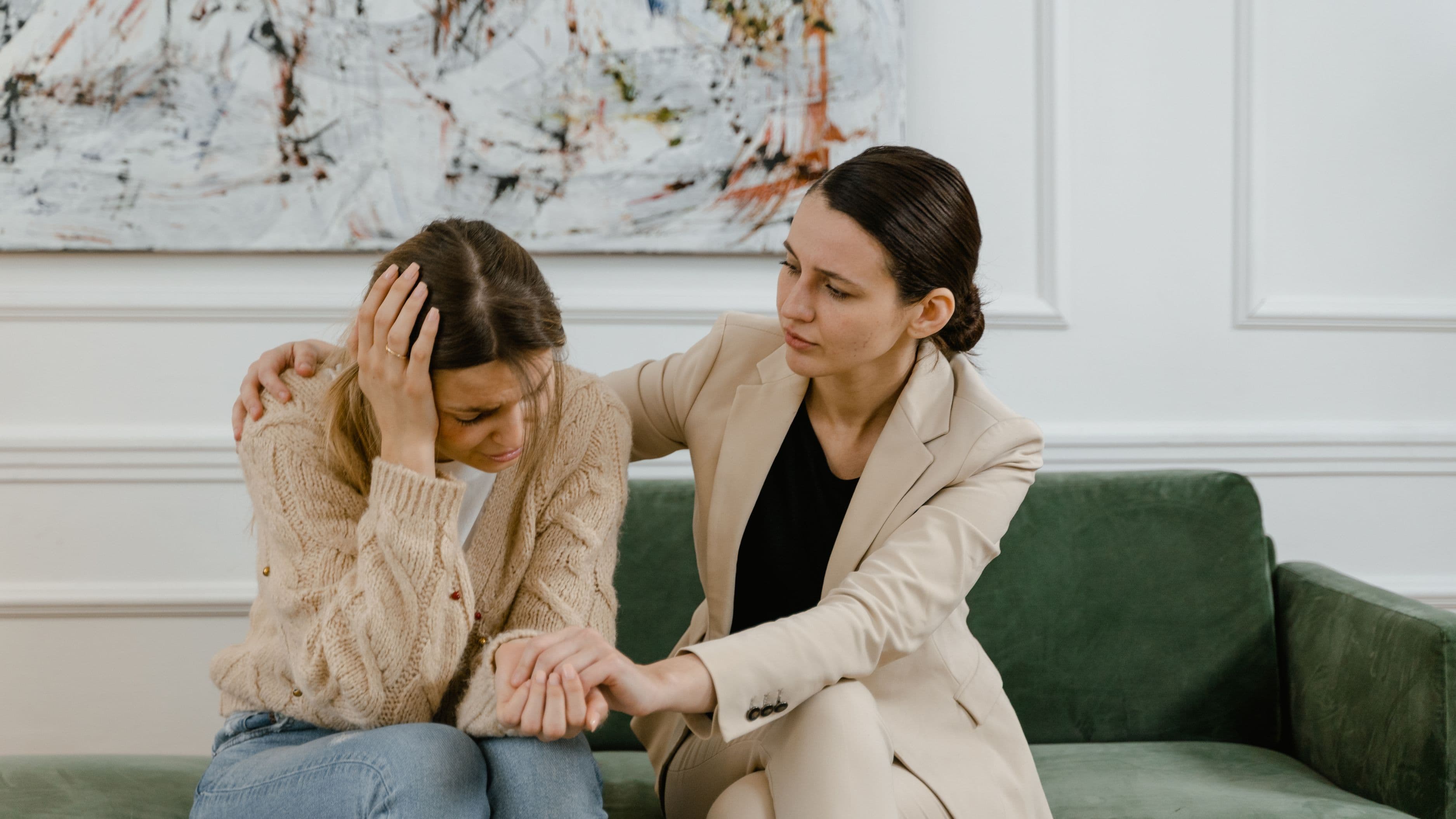

That feeling has a name: a relationship rut. And the fact that you're noticing it at all is actually a good sign. Most couples in a genuine rut aren't oblivious to it — they just don't know what to do with the awareness. The good news is that most ruts are fixable, and they rarely mean what people fear they mean.
What a Relationship Rut Actually Is
A relationship rut is different from a relationship problem. It's not about lack of love or incompatibility — it's about routine that has crowded out connection. When life gets busy and stable, couples naturally fall into patterns: the same conversations, the same evenings, the same dynamics. These patterns are comfortable, and comfort isn't a bad thing. But over time, predictability without intentional connection can create a kind of emotional distance that accumulates slowly and becomes hard to ignore.
The tricky thing about a rut is that it tends to feel like something is wrong with the relationship, when it's really just something that's been missing from it — novelty, genuine attention to each other, the kind of interaction that reminds you both why you chose each other. That's a meaningful distinction, because it means the solution is about adding something back, not fixing something that's broken.
Signs You Might Be in a Rut
A few things that show up consistently for couples who are in a rut — not as a diagnostic checklist, but as patterns worth recognizing.
Your conversations have become mostly logistical. When most of what you talk about is the schedule, the finances, the kids, or household coordination — and rarely about ideas, feelings, plans you're excited about, or each other specifically — the conversational texture of the relationship has narrowed. You're functioning as partners without connecting as people.
You feel more like roommates than a couple. You coexist comfortably, but there's not much happening between you beyond the practical. Time together passes without real interaction — phones out, watching separate shows, going through the motions of an evening.
You've stopped doing things specifically for each other. The small gestures — noticing when the other person needs something, making an effort with a surprise, expressing appreciation for ordinary things — have quietly disappeared. Not because of resentment, just because life absorbed them.
Physical intimacy has declined noticeably. This isn't about frequency alone — it's about whether the physical connection between you feels present and mutual, or whether it's become perfunctory or largely absent. Both are common in a rut, and both are worth addressing.
You feel slightly bored, but also guilty about feeling bored. This one is important. Boredom in a long-term relationship is normal and doesn't mean your partner is boring or that you're wrong for each other. It means the relationship needs some intentional energy put into it — which is true for almost every relationship at some point.
What a Rut Is Not
Before getting into what to do, it helps to be clear about what a rut isn't. A rut is not the same as a fundamentally incompatible relationship. It's not the same as falling out of love — feelings that have gone quiet in a rut tend to return when the relationship gets the attention it needs. And it's not evidence that you made the wrong choice or that things will never be different.
A rut is also different from a serious relationship issue that requires more than just effort and intention to address — things like ongoing conflict patterns, unprocessed resentment, or situations where one or both people have genuinely checked out. If your gut is telling you it's something more significant than a rut, that's worth taking seriously and exploring with a therapist or counselor. But for the ordinary flattening that happens to good relationships that have gotten too routine, the things that follow tend to help.
Step 1: Name It Together — Without Making It Heavy
The most important first step is bringing it up with your partner in a way that's honest but doesn't feel like an accusation or a crisis. The framing matters here. "I feel like we've gotten into a bit of a rut and I miss feeling closer to you" lands very differently from "Something is wrong with us and I've been feeling disconnected for months." Both might be true, but one opens a conversation and the other opens a defensive reaction.
The goal of naming it isn't to analyze every problem — it's to create shared awareness that both of you can work from. Most couples, when one person gently raises this, discover that the other has been feeling it too and didn't know how to bring it up. That shared recognition is itself a kind of connection, and it makes everything that follows easier.
Step 2: Start With Small Changes, Not Grand Gestures
A common response to feeling stuck in a rut is to plan something big — a vacation, a special date night, a major change. These things can help, but they also create performance pressure and only address the symptom rather than the pattern. A week away together is wonderful, and then you come home to the same routines.
The changes that actually shift a relationship rut tend to be small and consistent, not large and occasional. A 10-minute phone-free conversation before bed. A genuine compliment that's specific rather than generic. Asking "what's been on your mind this week?" and actually listening to the answer rather than waiting for your turn. Doing one small thing to make the other person's day easier without being asked. These don't feel dramatic, and that's exactly the point — they're sustainable, and they gradually rebuild the texture of a connected relationship rather than just punctuating the routine with occasional big events.
Step 3: Introduce Something New — Together
One of the most effective ways to break a rut is to create shared novel experiences, even small ones. Novelty doesn't require a lot of money or planning — it just requires some departure from the usual. A new restaurant instead of your regular order-in. A walk in a neighborhood you've never explored. Starting a show neither of you has seen before, but actually watching it together rather than separately on different nights. Taking a class, joining something, trying something neither of you is good at.
The research behind why this works is well-established: couples who engage in novel activities together report higher relationship satisfaction than those who stick to familiar routines, because novelty generates a mild excitement that the brain associates with the person you're experiencing it with. You're essentially recreating some of the chemistry of early relationship stages, where everything was new and that newness produced energy. You can't fully replicate that, but you can approximate it in doses.
The key is choosing something you'll both actually engage with rather than something one person is lukewarm about but agreeing to for the sake of trying. Real engagement is what produces the shared experience — going through the motions of novelty doesn't have the same effect.
Step 4: Reclaim One-on-One Time With Intention
For couples with kids, demanding jobs, or heavy social schedules, genuine one-on-one time can become surprisingly rare. You're in the same house, but you're not really with each other. Making a regular, protected slot for just the two of you — even 90 minutes, even once a week — and treating it as non-negotiable tends to have an outsized effect on how connected you feel.
This time doesn't need to be elaborate. It needs to be real: phones away, attention on each other, something you're both actually present for. A long dinner, a walk, a game you both like, a conversation about something that isn't logistics. The ritual of it — knowing it's coming, knowing it's yours — does something that sporadic date nights can't quite replicate.
Step 5: Be Curious About Each Other Again
One of the quiet losses in a long-term relationship is the assumption that you already know everything important about the other person. You stop asking certain kinds of questions because you think you know the answers. But people continue to evolve — their perspectives shift, their desires change, their inner life moves on — and a relationship where both people are genuinely curious about each other tends to stay alive in a way that a relationship running on assumptions doesn't.
Try approaching your partner with some genuine curiosity in the next few weeks. Not interrogation, not a structured interview — just the kind of open questions that invite something beyond a surface answer. "What's been the best part of your week?" "Is there anything you've been thinking about lately?" "What would you want more of right now?" You might be surprised by what you didn't know, and by how much being genuinely asked makes the other person feel seen.
What to Avoid
Don't ignore it and hope it resolves on its own. Ruts tend to deepen over time without any intervention. The longer the pattern goes unaddressed, the more it starts to feel like just how things are.
Don't compare your relationship to its early stages. The chemistry and effortlessness of a new relationship is partly neurochemical and partly situational — it's not a standard your current relationship is failing to meet. What a long-term relationship can have is deeper, more durable, and built on real knowledge of each other. That's actually better, even if it feels less exciting sometimes.
Don't make your partner feel like they're the problem. A rut is a shared pattern, not one person's fault. Framing it as something you're both in and both working on together creates collaboration rather than defensiveness.
Don't wait for a perfect time to address it. There's never an ideal moment to bring up that you've been feeling a bit disconnected. A quiet evening where you're both relatively relaxed is close enough. Waiting for the perfect conditions is just a form of avoidance.
FAQ
How long does it take to get out of a relationship rut? It depends on how long the rut has been building and how consistently you both engage with changing it. Small, regular efforts over 3–4 weeks typically produce a noticeable shift. Give it a genuine month of consistent effort before reassessing. Progress is rarely linear, but you'll usually feel something moving.
What if my partner doesn't think we're in a rut? Start by sharing how you've been feeling from your own perspective — not as a complaint about the relationship, but as an honest expression of what you're experiencing. Many partners who initially don't recognize a rut become more open to it when the conversation is framed around one person's feelings rather than a diagnosis of the relationship. If there's persistent mismatch in perception, a few sessions with a couples therapist can help.
Is wanting more excitement in a relationship a sign of immaturity? Not at all. Wanting to feel engaged and alive in a relationship is completely normal and healthy. The goal isn't to chase constant excitement — it's to have enough intentional energy in the relationship that it feels alive and worth investing in. That's not immaturity; it's recognizing that good relationships require some active tending.
Should we try couples therapy even if nothing is seriously wrong? Absolutely. Therapy isn't just for crisis — it can be genuinely useful for couples who are doing fine but want to communicate better, understand each other more deeply, or break patterns before they become entrenched. Many couples find a few sessions with a good therapist more useful than a year of muddling through something on their own.
Can a rut lead to something more serious if it's ignored? It can. An unaddressed rut creates emotional distance that gradually increases over time, and eventually that distance can lead to one or both partners feeling truly disconnected rather than just temporarily flat. Addressing it early, while there's still warmth and goodwill to work with, is much easier than addressing it after resentment or resignation has set in.
📚 Sources
The Gottman Institute – Rekindling Connection in Long-Term Relationships – https://www.gottman.com/blog/gottman-love-notes-rekindling-romance/
Psychology Today – Breaking Out of a Relationship Rut – https://www.psychologytoday.com/us/blog/why-bad-looks-good/201609/breaking-out-relationship-rut
Aron A, et al. – Couples' Shared Participation in Novel and Arousing Activities and Experienced Relationship Quality. Journal of Personality and Social Psychology (2000) – https://psycnet.apa.org/record/2000-15601-005
Greater Good Science Center, UC Berkeley – How to Keep Love Alive – https://greatergood.berkeley.edu/article/item/how_to_keep_love_alive
Harvard Health – The Importance of Emotional Connection in Relationships – https://www.health.harvard.edu/mind-and-mood/can-relationships-boost-longevity-and-well-being