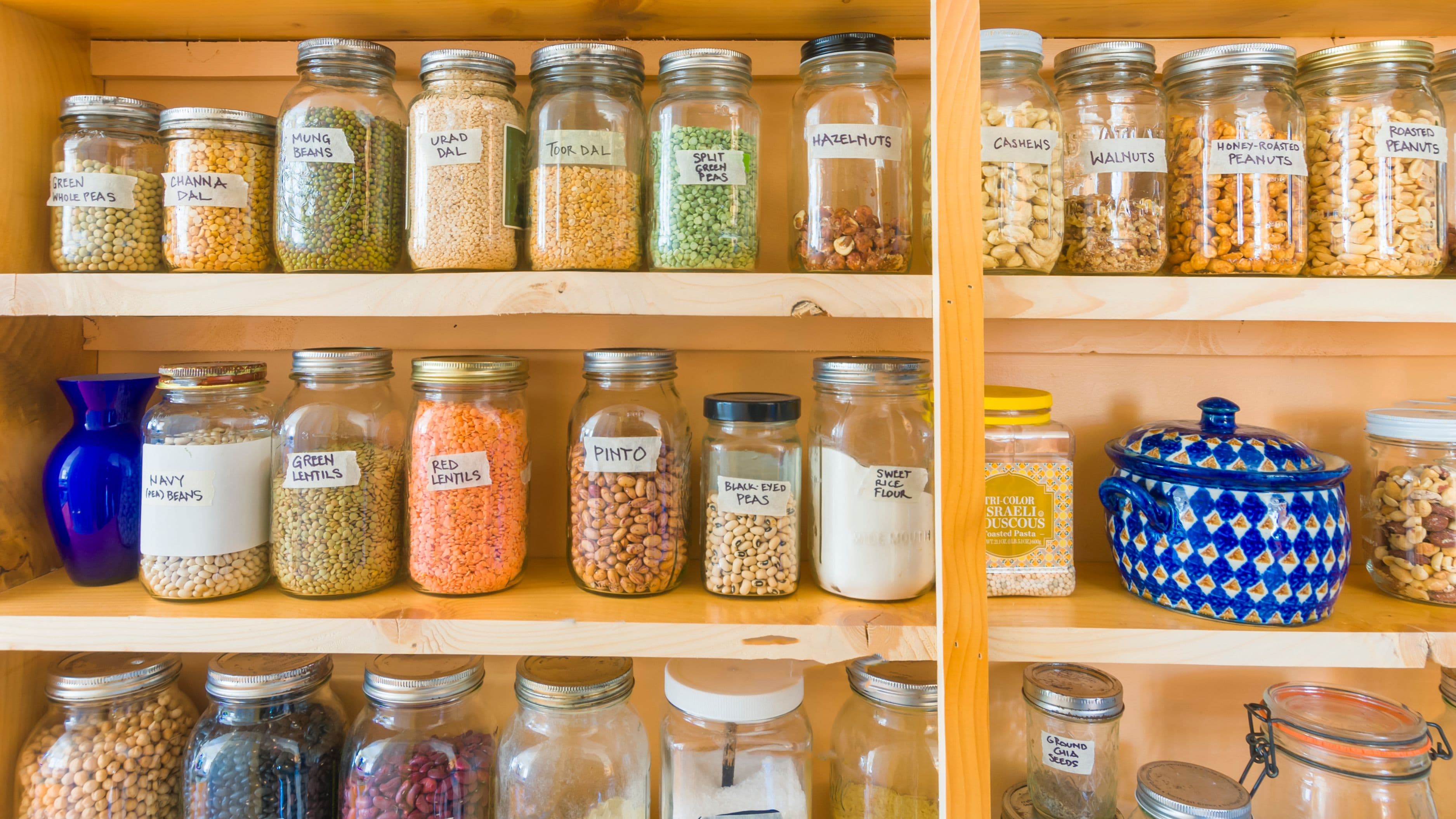
This is a practical, one-time project that pays off every single day afterward, since you're changing your environment once rather than relying on repeated daily willpower to make better choices.
Start With an Honest Inventory, Not a Purge
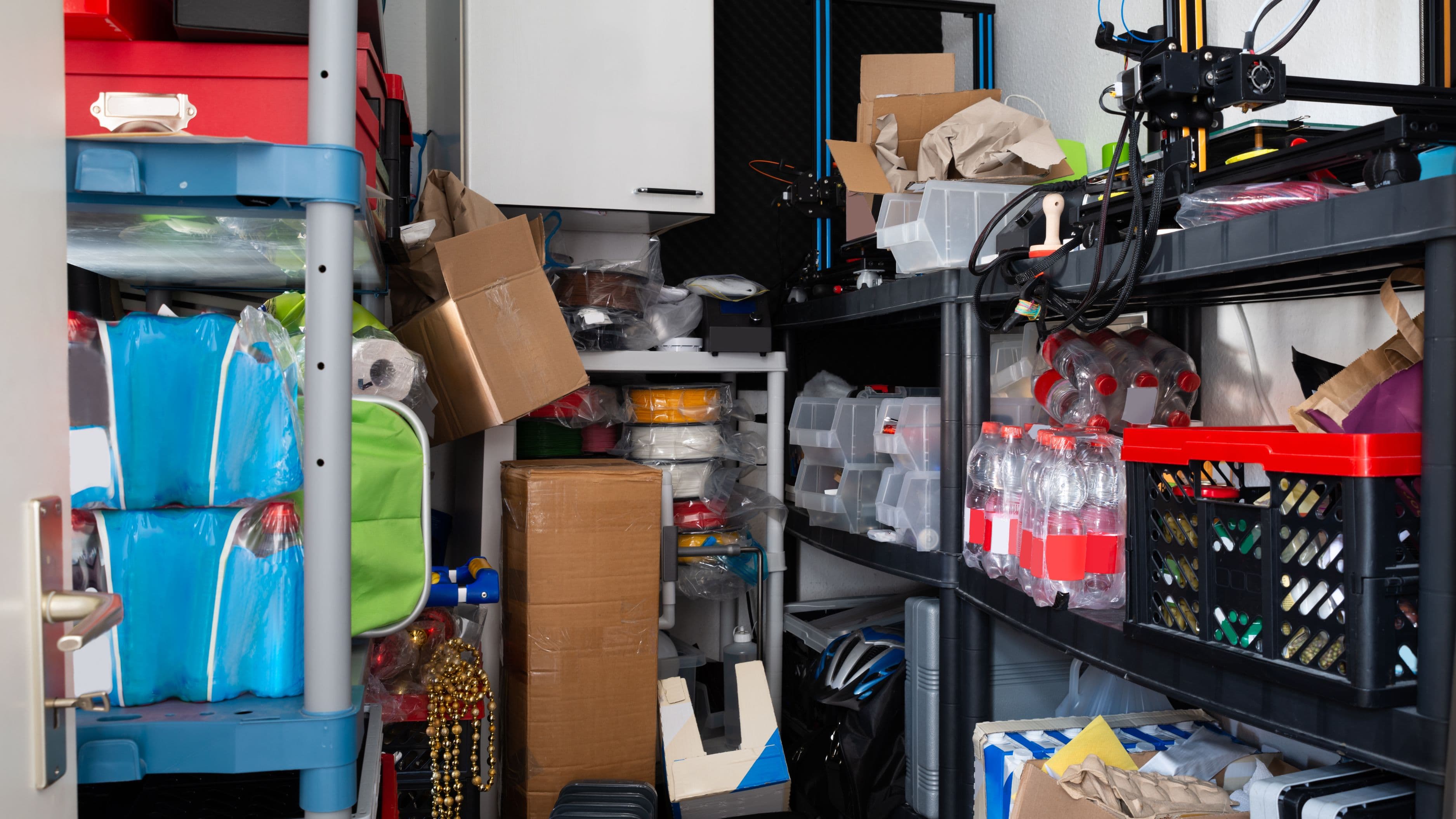
Before changing anything, take everything out of your pantry and actually look at what you have. You're not trying to throw everything unhealthy away immediately, you're getting a clear, honest picture of what's actually in there, including items you forgot you had, things that are expired, and patterns in what you tend to buy and not use.
This step alone often reveals useful information: maybe you have three half-used bags of pasta because you keep buying more without checking what's already there, or several sauces and condiments you bought with good intentions but never actually incorporated into regular meals. Understanding these patterns helps you make more realistic decisions about what to actually keep stocked going forward.
Organize by "Ready to Grab" Accessibility
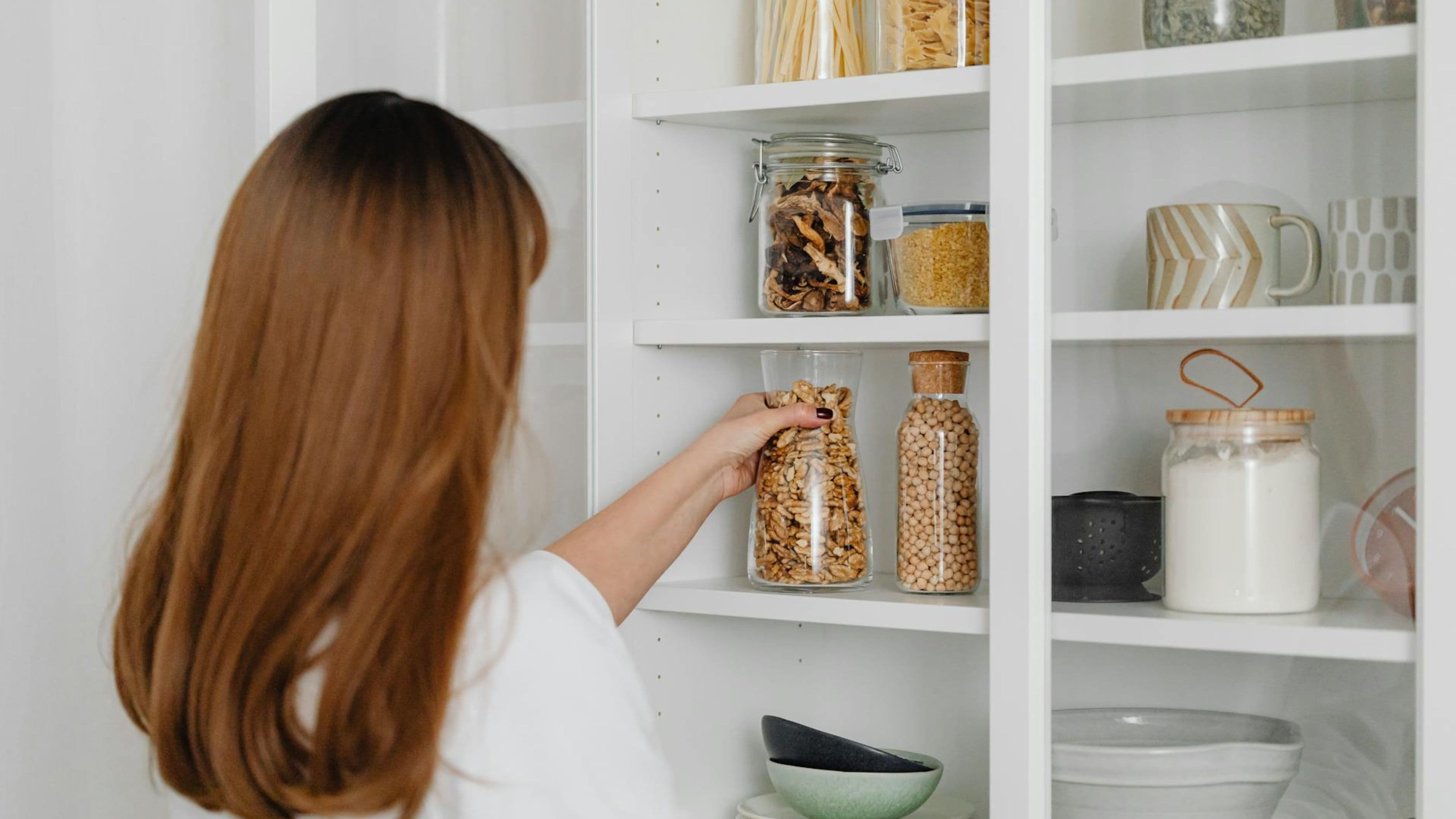
Put the foods you want to eat more of at eye level and within easy reach, and move less healthy or less useful items to harder-to-reach spots, like a high shelf or the back of a cabinet. This isn't about hiding anything or restricting yourself entirely, it's about making the easiest, most visible option in your kitchen align more often with what you're actually trying to eat more of.
Apply the same logic to your refrigerator. Store cut vegetables, prepared proteins, or other healthy grab-and-go items at eye level in clear containers, front and center, rather than buried behind less healthy options or hidden in opaque containers where you might forget they exist entirely.
Build a Base of Versatile Staples
Stock your pantry with a core set of versatile staples that can form the base of multiple different meals, rather than single-use ingredients that only work for one specific recipe. Good examples include canned beans, whole grains like rice or quinoa, canned tomatoes, a variety of spices, and shelf-stable proteins, all of which can be combined in dozens of different ways depending on what you're in the mood for.
Having these staples reliably on hand means you're less likely to default to takeout or a less healthy convenience option simply because you don't have the ingredients for anything else readily available. The goal is removing "I don't have anything to make" as a common excuse that leads to less intentional food choices.
Prep a Few Ready-to-Use Components Weekly
You don't need to fully meal prep every single meal for the week to make a real difference. Simply having two or three components prepped and ready, like a batch of cooked grains, washed and cut vegetables, or a prepared protein, dramatically reduces the friction involved in putting together a healthy meal on a busy weeknight.
Pick a consistent time each week, even just 30-45 minutes, to prep these components. You're not trying to cook entire meals in advance, just removing the most time-consuming steps so that assembling an actual meal later in the week takes minutes rather than requiring a full cooking process from scratch every single time.
Rethink Your Snack Situation Specifically
Snacking is often where healthy eating intentions break down most easily, largely because convenient snacks are frequently the least healthy options by default. Stock a few genuinely convenient healthy snack options, pre-portioned nuts, cut fruit, yogurt, or hummus with vegetables, so that reaching for something healthy takes the same amount of effort as reaching for something less healthy.
If less healthy snacks are a genuine trigger for you, it's fine to simply not keep them in the house regularly, rather than relying on willpower to resist something that's sitting right in front of you every time you open a cabinet. This isn't deprivation, it's just removing unnecessary daily decision points around something you've already decided you want to change.
Label and Date Everything as You Go
As you restock your pantry and refrigerator, label and date items, particularly anything you've prepped yourself or transferred out of original packaging. This small habit prevents food waste from items getting pushed to the back and forgotten, and it also helps you actually use what you have before it expires, rather than repeatedly buying duplicates of things you already own but couldn't easily identify.
This is a small step that's easy to skip, but it meaningfully supports the overall goal of this overhaul, since a disorganized pantry where you can't quickly tell what you have and how fresh it is tends to slide back into its previous state within a few weeks without this kind of ongoing structure.
What to Avoid
Don't try to completely eliminate every less healthy food from your kitchen in one dramatic purge, especially if you live with other people who may have different preferences or needs. This approach often backfires, leading to feelings of restriction that make the whole effort feel unsustainable rather than a genuine long-term shift in how your kitchen supports your goals.
Also avoid buying a large volume of new pantry staples all at once without a realistic plan for actually using them. An overstocked pantry with good intentions but no actual usage plan just becomes clutter and eventual food waste, rather than a genuinely useful resource supporting easier, healthier cooking.
Frequently Asked Questions
How long does a full pantry overhaul typically take? A thorough first pass, including sorting, reorganizing, and restocking, usually takes 2-4 hours depending on how much you currently have and how disorganized your starting point is, though you can break this into a couple of shorter sessions if needed.
Do I need to buy special containers to make this work? Not necessarily, though clear containers do make it easier to see what you have at a glance, which supports the overall goal. Start with what you already own and add specific containers gradually if you find genuine value in them.
How often should I redo this kind of organization? A quick 15-20 minute check-in every month or two helps maintain the system, while a more thorough reorganization once or twice a year is usually enough to keep things working well without becoming a constant chore.
📚 Sources
U.S. Department of Agriculture – MyPlate Kitchen and Food Storage Guidance, https://www.myplate.gov/
Academy of Nutrition and Dietetics – Healthy Kitchen Organization Tips, https://www.eatright.org/
Centers for Disease Control and Prevention – Healthy Eating Tips, https://www.cdc.gov/nutrition/index.html