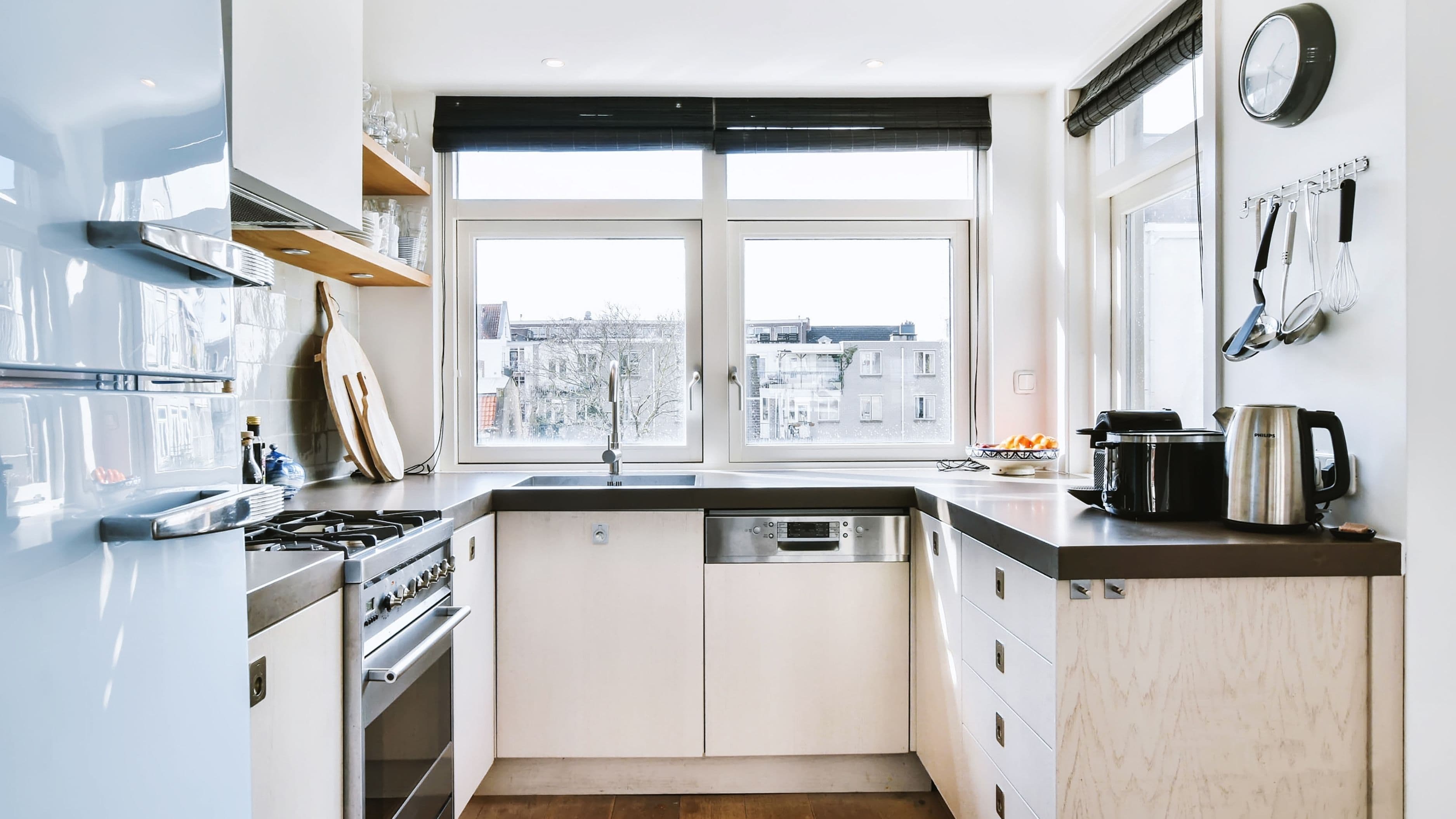
The good news is that a well-organized small kitchen functions better than a cluttered large one. You don't need to renovate, buy expensive storage systems, or spend a weekend turning your home upside down. Most of the changes that make the biggest difference are straightforward, take an hour or two, and cost very little.
Here's how to actually do it.
Step 1: Start with a Clear-Out, Not a Shop
The single most impactful thing you can do before buying any organizer, rack, or storage solution is remove everything that doesn't belong in the kitchen. This sounds basic, but most small kitchens are full of things that crept in and stayed – mail on the counter, chargers plugged into kitchen outlets, decorative items on limited shelf space, and drawers full of tools for appliances you no longer own.
Go through your kitchen with a box and pull out everything that hasn't been used in the past six months. Duplicate items, expired pantry goods, gadgets that seemed useful but never get touched, and items that belong in another room all qualify for removal. The goal isn't minimalism for its own sake – it's making space for the things you actually use so they can be stored accessibly rather than buried under things you don't.
This step alone often creates 20–30% more usable space without adding a single organizer. Do this before you shop, because buying storage solutions for clutter is the most common small kitchen mistake. You don't need more places to store things you don't need.
Step 2: Organize by Frequency of Use
Once you know what stays, the organizational principle that makes the biggest difference in a small kitchen is simple: the things you use most often should be the easiest to reach. The things you use occasionally should be stored out of prime real estate.
Prime real estate in a small kitchen is the counter near the stove, the eye-level cabinets, and the drawer nearest to your prep area. This is where everyday cooking tools – your go-to knife, cutting board, spatula, wooden spoon – should live. Things you use once a week go in accessible but not prime spots. Things you use once a month or for special occasions go in high shelves, deep cabinets, or under-counter storage.
A common mistake is organizing by category (all the baking things together, all the spices together) without accounting for frequency. Grouping things by category is fine, but the location of each group should be driven by how often you actually use it. Baking supplies used twice a year don't deserve a shelf at eye level.
Step 3: Fix the Counter Clutter Problem
Counter clutter is the fastest way a small kitchen feels chaotic, and it's almost always the first thing people notice. The counter in a small kitchen has a very specific job: it's a workspace for food prep and cooking in progress. It's not a storage surface.
The practical way to reclaim counter space is to evaluate every item currently living on your counter and ask whether it genuinely needs to be there, or whether habit and convenience have just left it there. The coffee maker often makes the cut because it's used daily. The bread box may or may not, depending on your habits. The knife block can frequently move into a drawer with a knife organizer insert, freeing up significant counter space.
Appliances that aren't used every day can usually go into a cabinet or lower shelf. A stand mixer, blender, or toaster oven that comes out two or three times a week doesn't need to take up permanent counter space. The brief effort of taking it out and putting it away is worth the visual and physical breathing room you get in return.
One practical rule that helps: if you have to move something to prep food, it doesn't belong in your prep area. Clear the counter to the point where you can start cooking without first relocating anything.
Step 4: Make Vertical Space Work for You
Small kitchens have the same vertical space as large ones. The walls, the backs of cabinet doors, and the space between the counter and the cabinets are all usable storage real estate that most small kitchen setups ignore.
A simple magnetic knife strip mounted on the wall near the stove frees up an entire drawer or knife block's worth of space. Over-the-door organizers on cabinet doors can hold spices, cleaning supplies, or small items that otherwise clutter drawers. A wall-mounted shelf in a gap between cabinets can hold cookbooks, frequently used pantry items, or a small herb garden if light allows.
Stackable containers in pantry cabinets and the refrigerator make better use of vertical space than items stored in their original packaging, which rarely stacks efficiently. Clear containers have the additional benefit of letting you see what you have at a glance, which reduces the "I didn't realize I was out of that" problem that leads to duplicate purchases crowding limited cabinet space.
Inside cabinets, adding a second shelf with a simple wire shelf riser doubles your storage capacity for items like dishes, canned goods, and pantry staples. These cost $10–$20 and take about two minutes to install.
Step 5: Sort Out the Junk Drawer (Without Eliminating It)
Most kitchens have a catch-all drawer – the place where batteries, pens, takeout menus, rubber bands, and mystery keys have been accumulating for years. This drawer exists for a reason, and the goal isn't to eliminate it but to make it functional.
Empty the drawer completely. Sort what's in it into three categories: things that belong in another room, things that are genuinely useful to have in the kitchen, and things that serve no clear purpose and can be discarded. Most junk drawers contain at least one category of thing from all three. The items that survive should be organized in a simple drawer divider – adjustable compartment dividers are inexpensive and turn a chaotic drawer into a usable one in about 15 minutes.
The key to keeping a junk drawer from reverting is deciding in advance what it's for and keeping the category defined. A drawer for tools, batteries, tape, pens, and charging cables is functional. A drawer that's open to "anything I don't know where else to put" becomes cluttered again within weeks.
Step 6: Rethink Your Pantry Storage
Pantry organization in a small kitchen makes a large practical difference because it affects how quickly you can find things and whether you inadvertently buy duplicates of things you already own. The key principles are visibility and grouping.
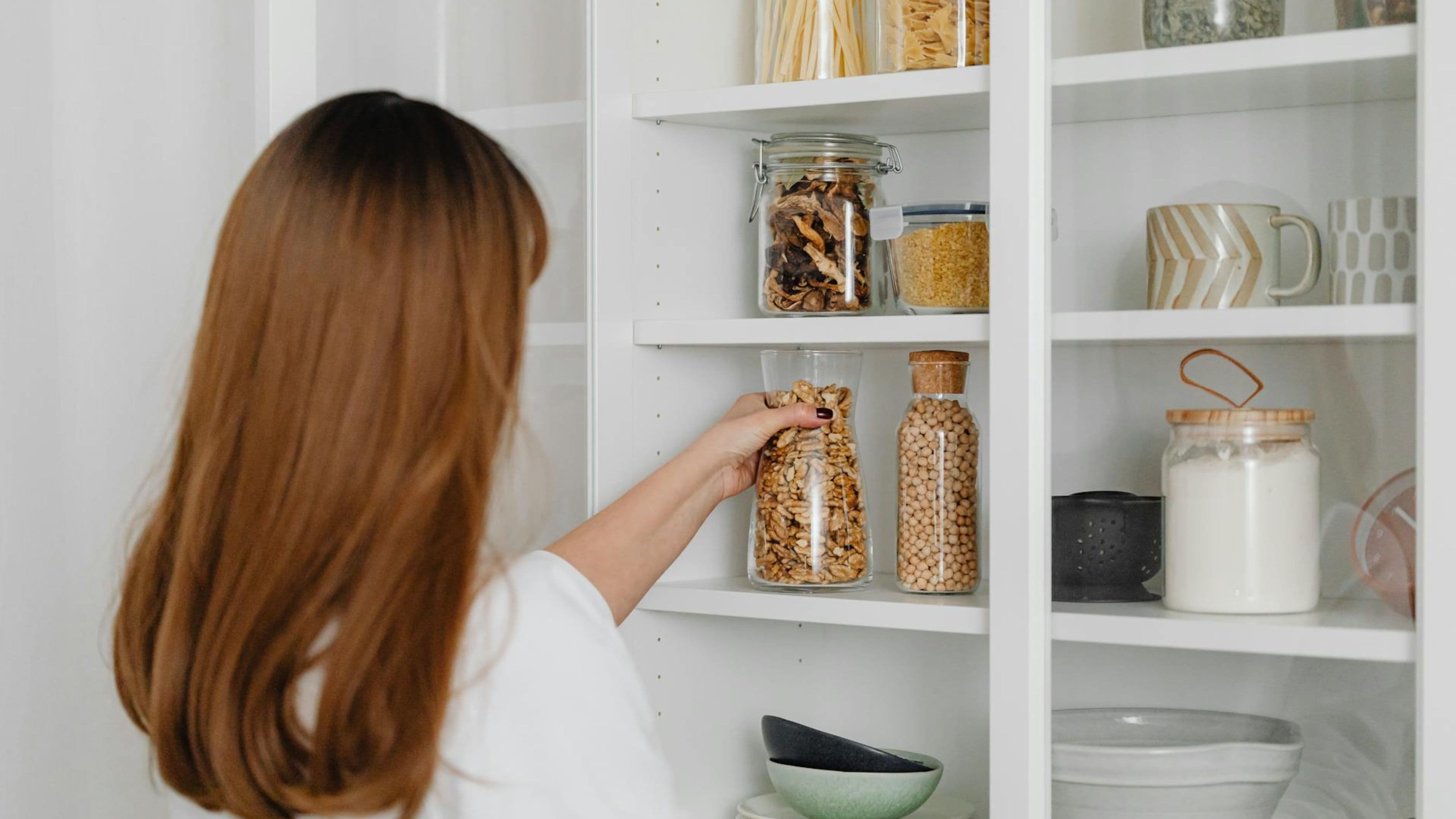
Store frequently used pantry items at eye level and front of shelf. Canned goods, grains, pasta, and cooking oils – the things you reach for several times a week – should be easy to access without moving other things. Group them loosely by type so you know where to look. Less frequently used items go at the back or on higher shelves.
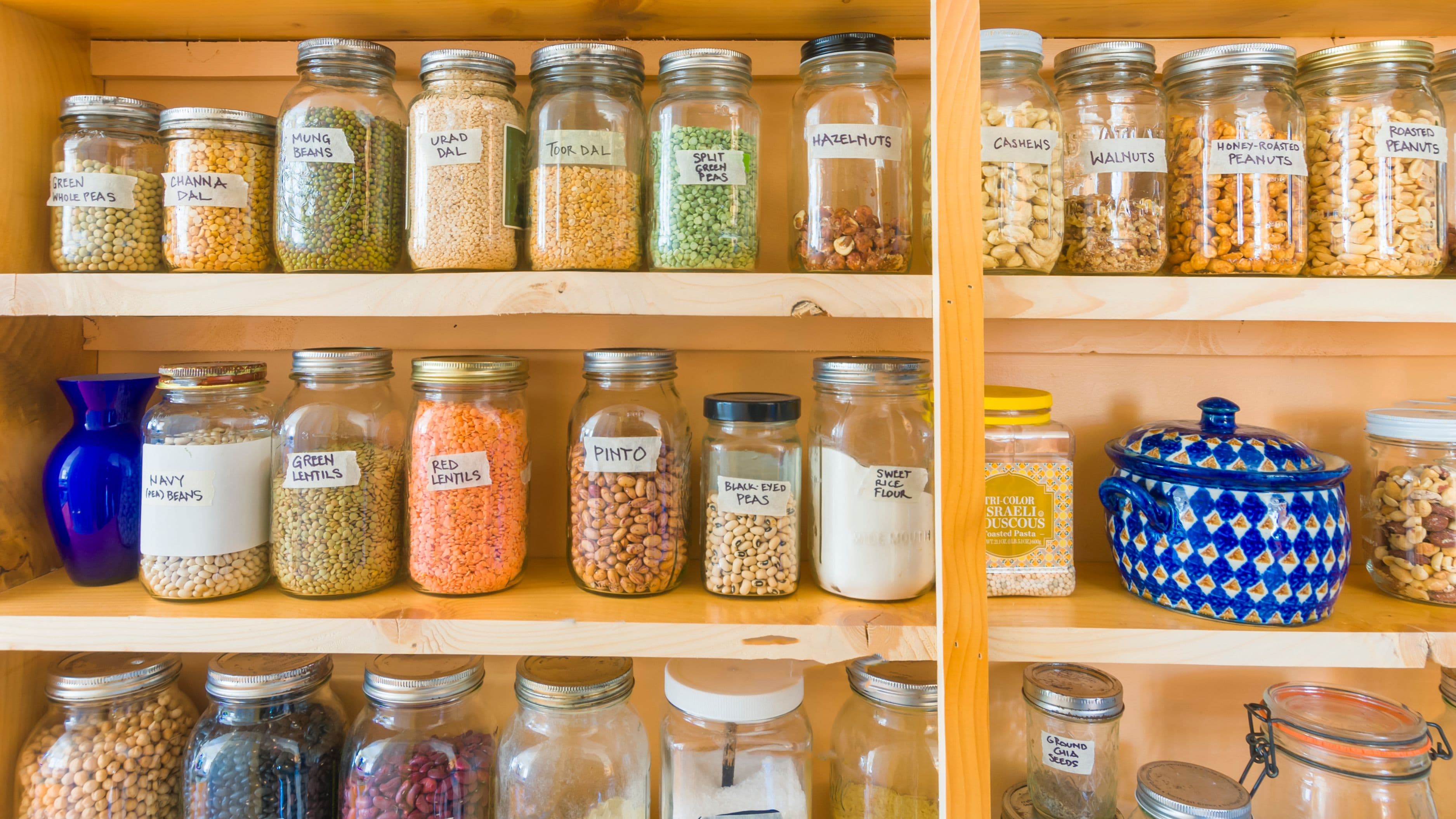
Clear storage containers for bulk items like flour, sugar, pasta, and rice solve several problems simultaneously: they're airtight (extending shelf life), they stack efficiently, they let you see quantities at a glance, and they look significantly less chaotic than a cabinet full of partially open bags and boxes. A set of uniform containers isn't a luxury purchase – in a small pantry, it's a genuine functional improvement.
Rotating stock matters in a small pantry where things can easily get pushed to the back and forgotten. New items should go behind existing ones, and a quick monthly check of what's at the back of shelves catches expired items before they become a problem.
Step 7: Streamline Your Cooking Tool Storage
Most kitchen drawers contain more than they need to. A common pattern is accumulating multiple versions of the same tool – three wooden spoons, two sets of tongs, spatulas from three different kitchen sets – none of which are exactly right, so nothing ever gets used up.
Go through your cooking tools and keep the best version of each type you actually use. If you have multiple spatulas, keep the one you reach for first every time and find a home for or donate the rest. Cooking in a small kitchen works much better with fewer, better tools than with an overflowing drawer of redundant ones.
A simple drawer organizer for cooking tools – either a bamboo or plastic insert with divided compartments – keeps things findable without requiring you to dig through a pile. The specific organizer matters less than the principle: each tool has a defined spot, and it returns to that spot after use.
Realistic Expectations
Getting a small kitchen genuinely organized from start to finish – the clear-out, the reorganization, the new storage setup – typically takes about three to four hours for an average kitchen. It doesn't need to happen in a single session. Tackling one section per evening over a week is a completely effective approach and tends to produce more thoughtful decisions than trying to do everything at once.
The result won't be a perfectly curated kitchen. It'll be a kitchen where things are where they should be, the counter is clear enough to work on, and cooking doesn't require a minor excavation project before it can begin. That's the actual goal – not aesthetics, but function.
What to Avoid
Buying storage solutions before completing the clear-out is the most common mistake, and it almost always produces disappointment. Storage products solve organization problems; they don't solve "I have too much stuff" problems. Do the clear-out first, then assess what storage you actually need.
Over-organizing to the point where the system requires too much maintenance is another trap. If putting things away becomes so complicated that it's easier to leave things on the counter, the system won't last. Aim for organization that's easier than the disorganized alternative, not more work.
Ignoring the back of cabinets is a missed opportunity in a small kitchen. Deep shelves are only useful if you can access what's at the back. Lazy Susans (turntables) in corner or deep cabinets are inexpensive and transform inaccessible back-of-cabinet space into genuinely usable storage.
FAQ
Do I need to buy specific storage products to organize a small kitchen? Not necessarily. The most impactful steps – clearing out unused items, reorganizing by frequency of use, clearing the counter – cost nothing. Some inexpensive additions like a drawer organizer insert or a shelf riser ($10–$20 each) can help, but expensive matching storage sets aren't required to get a functional result.
How do I keep a small kitchen organized once I've done the initial work? The key habit is the "one in, one out" principle – if something new comes into the kitchen, something else should leave. And returning items to their designated spots after use, rather than leaving them out "for now," prevents the gradual drift back to clutter. It takes about two weeks for the new habits to feel automatic.
What's the single most impactful change I can make to a small kitchen? Clearing and maintaining a counter workspace that's free for cooking. Everything else – better storage, better organization – serves this purpose. If you can start cooking without first moving things off the counter, the kitchen is functioning.
Is it worth buying a small kitchen island or cart? It depends on your layout. A small rolling cart can add both counter space and storage in a kitchen with enough floor room to accommodate it without blocking movement. In a very tight kitchen, it can make navigation worse. Measure your movement paths before buying.
How often should I redo my kitchen organization? A full clear-out once a year is sufficient for most households. A lighter review of the pantry and fridge every few months catches expired items and prevents gradual recrowding. The initial organization does the heavy lifting; maintenance is much lighter.
A small kitchen that functions well isn't about perfect organization – it's about removing the friction that makes cooking harder than it needs to be. Clear the counter, put things where you actually use them, and remove what you don't need. Those three things, done consistently, make more difference than any storage product you could buy.
📚 Sources
The Spruce – Small kitchen organization ideas that actually work: https://www.thespruce.com/small-kitchen-organization-ideas-4172566
Real Simple – Best kitchen organization tips from professional organizers: https://www.realsimple.com/home-organizing/kitchen/kitchen-organization-tips
Consumer Reports – Kitchen storage products tested and reviewed: https://www.consumerreports.org/home-garden/kitchen-organization
Better Homes & Gardens – How to declutter your kitchen in one afternoon: https://www.bhg.com/homekeeping/house-cleaning/tips/declutter-your-kitchen
The Container Store – Kitchen organization guide: https://www.containerstore.com/s/kitchen/c/kitchen-organization