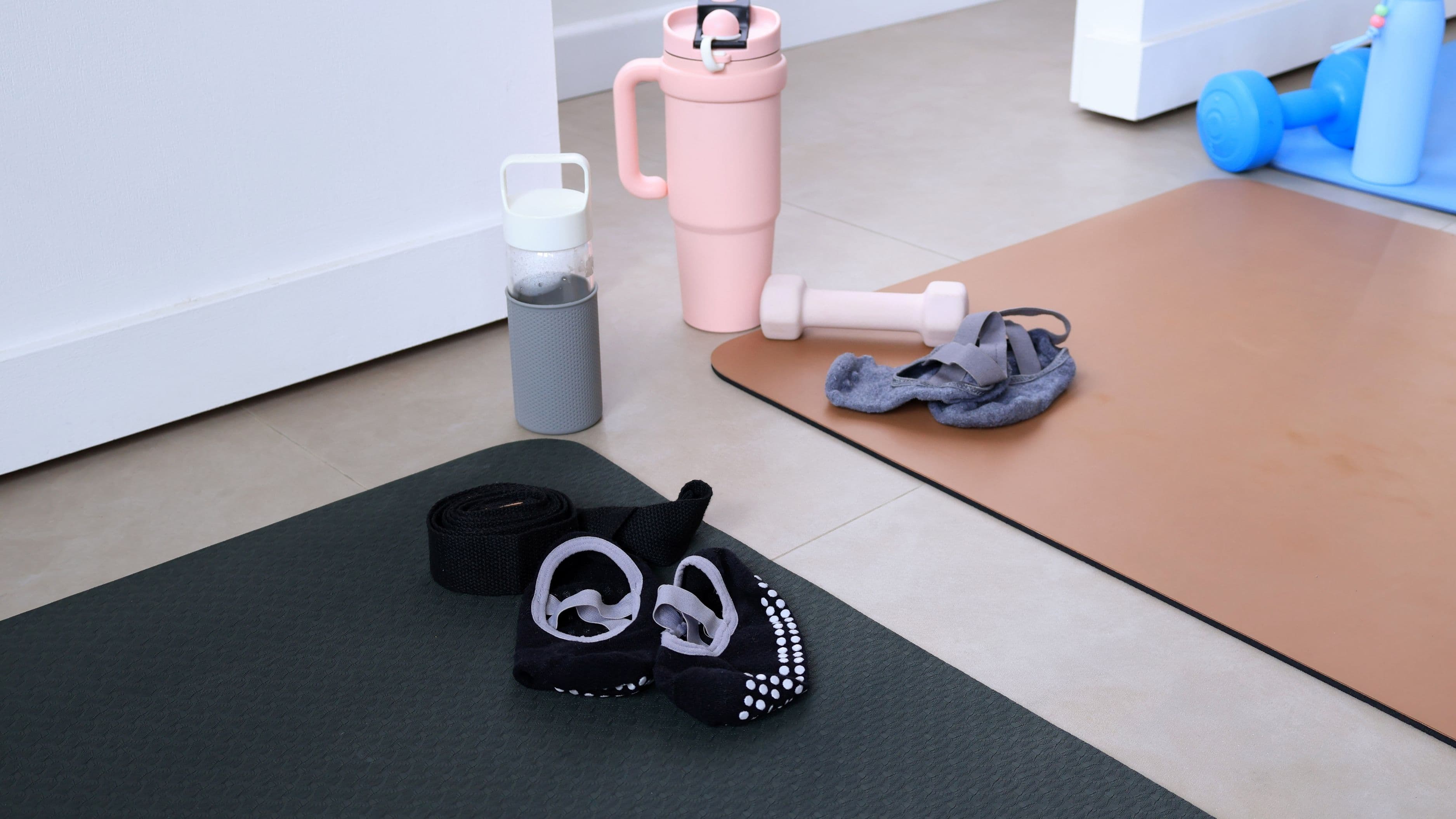

Building a morning workout habit that actually sticks is less about willpower and more about setup. The right structure, a realistic starting point, and a three-week timeline that gradually raises the bar is all it takes to go from "I keep meaning to work out in the morning" to doing it automatically, without the internal negotiation every day.
This guide walks you through exactly how to do that.
Why Three Weeks?
The popular idea that habits form in 21 days is a simplification, but it points at something real. Research from University College London suggests the average time to reach automaticity – where a behavior starts to feel routine rather than effortful – is around 66 days for more demanding habits. But the first three weeks are where the foundation gets built. If you can string together consistent behavior for three weeks, the habit has enough traction to survive the inevitable missed day or low-energy week that follows.
Three weeks also works psychologically. A three-week commitment feels manageable in a way that "building a lifelong habit" doesn't. You're not signing up for forever – you're signing up for 21 days, with the reasonable expectation that you'll want to keep going by the end of it.
The key is how those three weeks are structured. Each week should feel slightly different from the last, with the habit getting easier to start (because the behavior is becoming more ingrained) even as the sessions themselves get slightly longer or more intentional. That progression is what makes the habit compound rather than stall.
Before You Start: Set Up Your Environment
The biggest predictor of whether you'll actually get up and work out in the morning isn't your alarm time or your motivation level – it's how much friction stands between waking up and starting. Every decision you have to make in a half-awake state is an opportunity to talk yourself out of it.
Eliminate those decisions the night before. Lay your workout clothes out so they're the first thing you reach for when you get up. Put your water bottle next to them. If you're going outside for a walk or run, know exactly where you're going and for how long. If you're doing a home workout, have the space ready and the video or app already queued up. If you're going to a gym, have your bag packed and your car keys ready.
This preparation takes about five minutes the night before and removes the most common friction points that derail morning workouts before they start. The person who has to find their gym shorts, fill their water bottle, and decide what workout they're doing while still groggy in the morning is the person who goes back to bed. The person who just has to put on what's already laid out in front of them is the person who makes it to the session.
Set your alarm 10–15 minutes earlier than you think you need. The first few days of any new morning habit involve a slightly slower start than you'd expect once it's established. Building in buffer time prevents the panicked, rushed morning that makes you not want to repeat the experience.
Week One: Start Smaller Than You Think You Should
The first week's goal isn't fitness improvement. It's simply proving to yourself that this is something you do in the morning. The session length and intensity are almost irrelevant at this stage – what matters is consistency.
Start with 15–20 minute sessions, every single morning, for all five weekdays (or six if you want to include one weekend day). The content of those sessions should be genuinely manageable – a brisk walk, a short yoga flow, a light bodyweight circuit, or even stretching with some low-intensity movement. You should finish feeling good, not depleted.
This matters because the most common week-one mistake is treating day one like a fitness test. Starting too hard means you're sore by day two, dreading day three, and skipping by day four. A habit that gets interrupted in its first week is far harder to restart than one that was easy but consistent.
The psychological win from completing five or six mornings in a row – even with gentle sessions – is real and compounds. You're building the identity of someone who works out in the morning, and that identity forms through repetition, not intensity.
Keep your alarm time consistent across all seven days of week one, including the weekend. Sleeping in on Saturday and Sunday disrupts your circadian rhythm and makes Monday morning harder than it needs to be. You don't need to do a formal workout on weekend mornings, but waking up at the same time and doing some light movement keeps the biological clock stable.
Week Two: Add Structure and Slightly More Effort
By week two, getting up and moving in the morning should already feel slightly easier than day one. You've done it five or six times. The decision fatigue is reducing. This is the week to add a bit more intention to what you're doing.
Extend your sessions to 25–30 minutes and introduce a consistent format that you'll repeat throughout the week. This doesn't need to be complicated – a simple structure that you follow on most mornings is more valuable than a varied and sophisticated routine that requires thinking. Something like: 5 minutes of movement to warm up, 15–20 minutes of your main workout, 5 minutes of stretching or cool-down. That's it.
Choose a workout type that you can progress slightly week-over-week without needing new equipment or a new learning curve. If you chose walking in week one, add an incline or a longer route. If you did bodyweight exercises, add a few reps to each set or introduce one new movement. If you were doing yoga, try a slightly more challenging sequence. The specific progression matters less than the principle of it: you're doing something that's slightly more than last week, which creates a sense of forward momentum.
This is also the week to pay attention to how your mornings feel before and during your workout. If you're waking up and still dreading the alarm, examine whether the session itself is enjoyable enough to repeat voluntarily. The best morning workout is one you genuinely look forward to – or at least don't strongly resist. If you hate running, don't run. There are enough options that you don't have to start your day with something you dislike.
Week Three: Lock In the Routine
By week three, the goal shifts from building the habit to making it automatic. The session length can extend to 30–40 minutes if that feels appropriate for your fitness level, but the more important work is about the surrounding routine.
Most successful morning exercisers have a consistent set of behaviors that frame the workout – a pre-workout ritual that signals to your brain that this is happening. It might be making coffee or tea first, changing into your workout clothes before your brain has fully woken up, doing a two-minute stretch while your phone finishes loading. These micro-rituals aren't wasted time; they're cues that make the workout feel like part of a sequence rather than a standalone decision that requires fresh motivation every morning.
In week three, also pay attention to how the workout affects the rest of your morning. Most people who maintain morning workout habits long-term do so because of how the rest of the day feels afterward, not because of the workout itself. Energy, focus, mood stability, and a sense of having accomplished something before 8am are the real benefits that make people protective of their morning routine. When those benefits become personal and tangible, the habit stops requiring willpower to maintain.
If you miss a morning in week three – and you might – the response matters as much as the miss. The habit-breaking event isn't missing one day; it's missing two days in a row. One missed morning is a blip. Two consecutive missed mornings is the start of a pattern. If something disrupts your week three morning, do whatever version of the workout you can the following morning, even if it's only 10 minutes.
What to Do When Motivation Runs Out
Motivation is useful for getting started, but it's a poor long-term fuel source. It's inconsistent, emotion-dependent, and tends to disappear precisely when you need it most – when you're tired, stressed, or running low on sleep. The goal of the three-week structure is to get you to a point where the habit doesn't require motivation because it's just what you do.
On low-motivation mornings, the most effective tool is lowering the bar temporarily. Tell yourself you only have to do 10 minutes. Not because 10 minutes is the goal, but because 10 minutes is enough to get moving, and once you're moving, you'll almost always complete more. The hardest part of any morning workout is the transition from horizontal to vertical. After that, momentum takes over.
It also helps to keep a simple record of your streak during the three weeks. A calendar on the wall, a habit tracker app, or even a note in your phone with the dates you completed a session gives you something to protect. Breaking a visible streak feels worse than not having started one, which provides a small but real behavioral incentive on the mornings when enthusiasm is low.
Common Mistakes to Avoid
Setting the alarm too early for week one is the most reliably counterproductive mistake. If you currently wake up at 7am and your plan is to start waking up at 5am on day one, you're creating a 2-hour sleep deprivation that will make every morning harder until your body adapts. Move your alarm back 30 minutes at a time, over a few days, before adding the workout. Gradual shifts are far more sustainable than cold-turkey early alarms.
Skipping the pre-session preparation the night before creates a friction problem that compounds over time. A week of finding your workout clothes, deciding what to do, and thinking through the logistics while half-asleep is exhausting in a way that's easy to mistake for not wanting to exercise. It's not that you don't want to exercise – it's that the setup is too hard. Fix the environment first.
Comparing your week one to someone else's fully established routine is a fast track to discouragement. A person who has exercised every morning for three years isn't operating on willpower anymore – they're operating on routine. That's what you're building toward. It doesn't look the same from the outside while you're building it as it will once it's established.
FAQ
What time should I set my alarm? The specific time matters less than the consistency. The best alarm time is one that gives you enough sleep (7–9 hours for most adults) and still allows for your workout before your other morning obligations begin. Work backward from when you need to leave for work or when your household wakes up, and set your workout time to fit within that window. Starting with 30 minutes of workout time in week one is sufficient.
What if I can't work out every morning due to my schedule? Consistency matters more than daily frequency. If three or four mornings per week is what's realistic, build the habit around those specific mornings rather than trying for every day and failing. The structure still works – it just takes a few additional days to reach the same level of automaticity.
Should I eat before a morning workout? For sessions under 30–40 minutes at moderate intensity, most people can exercise fasted without issue. If you're doing more intense or longer sessions and feel lightheaded or low-energy, a small snack beforehand – a banana, a few dates, a small amount of yogurt – provides enough fuel without needing a full meal. Experiment to find what works for your body.
What if I miss a day? Miss one, don't miss two. One missed morning is not the end of the habit; it's a recovery opportunity. Treat it neutrally, return the next morning, and continue. The habit's resilience isn't measured by perfection – it's measured by your response to imperfection.
Three Weeks From Now
The version of you three weeks from now who has completed this structure will have a different relationship with mornings than the one reading this now. Not because three weeks changes everything – it doesn't – but because consistent action over 21 days provides real evidence that you can do this, which changes how you think about what's possible. That's the real return on the investment.
Start tomorrow. Start small. Build from there.
📚 Sources
Lally, P. et al. (2010). How are habits formed: Modelling habit formation in the real world. European Journal of Social Psychology – https://onlinelibrary.wiley.com/doi/abs/10.1002/ejsp.674
Harvard Health Publishing. Exercise and mental health: What the research shows. – https://www.health.harvard.edu/mind-and-mood/exercise-is-an-all-natural-treatment-to-fight-depression
National Sleep Foundation. How sleep affects your morning routine. – https://www.thensf.org/sleep-facts-and-statistics/
Fogg, B. J. (2019). Tiny Habits: The Small Changes That Change Everything. Houghton Mifflin Harcourt. Referenced via Google Books – https://books.google.com/books?id=tUM9DwAAQBAJ
American Council on Exercise. The importance of warm-up and cool-down. – https://www.acefitness.org/resources/everyone/blog/6466/the-importance-of-warm-up-and-cool-down/