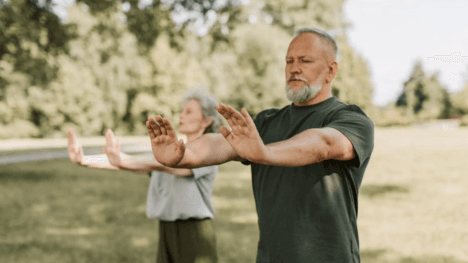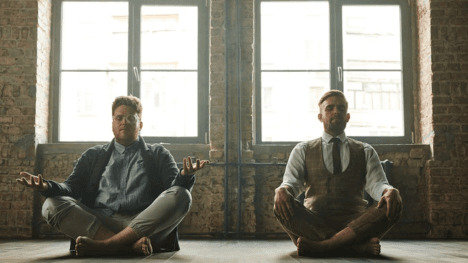

Here's the thing: mindfulness and meditation aren't the same thing. Meditation is one way to practice mindfulness. There are dozens of others that work just as well – and for a lot of people, work considerably better. You don't have to sit still to build a mindfulness habit. You just have to learn to pay attention.
What Mindfulness Actually Is (Without the Zen Packaging)
Mindfulness is simply the practice of being present with your current experience – noticing what's happening around you and inside you, right now, without immediately judging or reacting to it. That's the whole definition. Nothing about sitting cross-legged, nothing about clearing your mind, nothing about a specific duration or technique.
The benefits people associate with meditation – reduced stress, better focus, improved emotional regulation, a general sense of being less reactive – come from this practice of present-moment attention, not from the sitting-still format specifically. Research on mindfulness-based interventions consistently shows that the format matters far less than the consistency of the practice. Five minutes of genuine attention, repeated daily across weeks, produces measurable changes in how the brain processes stress and manages attention. That five minutes can happen during a walk, while washing dishes, or while drinking your morning coffee.
Why the Standard Meditation Approach Fails So Many People
Formal seated meditation has a few structural problems for beginners that are rarely acknowledged honestly. First, it asks you to do something completely unfamiliar in a way that's easy to fail – if you're sitting there and your mind is racing, you feel like you're doing it wrong, even though mind-wandering is exactly what minds do and the whole practice is about noticing that rather than preventing it. The failure experience is baked into the most common beginner format.
Second, formal meditation requires clearing dedicated time and space, which makes it a relatively high-friction habit for busy people. Any habit that requires a special time, a special setting, and a specific posture is harder to maintain than one that attaches to something you're already doing. The research on habit formation consistently shows that lower-friction habits have dramatically higher adherence rates. This isn't a character flaw – it's just how behavior change works.
Third, the benefits of meditation are largely invisible in the short term. It's genuinely hard to feel whether a five-minute morning session is doing anything until you've been doing it for weeks. High-friction practice with invisible short-term rewards is a hard combination to sustain.
Mindfulness woven into existing activities solves all three of these problems simultaneously.
Practical Mindfulness That Doesn't Require Sitting Still
Mindful Walking
Walking is one of the easiest entry points for mindfulness practice because the activity itself gives you an anchor for attention. During any walk – commute, lunch break, around the block in the evening – spend five minutes directing your attention to physical sensations rather than your thoughts. What do your feet feel like when they contact the ground? What sounds are immediately around you? What's the temperature of the air? When you notice your mind has drifted to planning or problem-solving, just bring it back to the physical experience of walking.
You're not trying to think about nothing. You're just repeatedly choosing to bring attention back to the present moment rather than letting it run automatically toward past or future. That returning is the practice. The drifting is expected and fine.
Mindful Eating (Even One Meal or Snack Per Day)
Most people eat while scrolling, watching something, or working. Eating with full attention – even once a day, even for just a few bites – is a surprisingly powerful mindfulness practice. Notice the flavors, the textures, the temperature of the food. Chew more slowly than usual. Notice when you're actually hungry versus eating from habit or boredom. This isn't about eating "correctly" – it's about being present with an experience you usually run on autopilot.
The reason this works well as a mindfulness anchor is that eating is already a fully sensory experience. There's a lot to actually pay attention to, which makes sustaining present-moment attention easier than when you're sitting with nothing to engage the senses.
The Two-Minute Transition Practice
Every day you move from one activity to another dozens of times – from sleep to morning routine, from home to commute, from one work task to the next, from work to evening. Most of these transitions happen automatically, with your mind already three steps ahead into the next thing. A two-minute mindfulness practice built into transitions requires almost no extra time and provides regular resets throughout your day.
The practice is simple: before you move into the next activity, pause for 60–120 seconds. Notice your breath without changing it. Notice what you're feeling physically and emotionally right now. Let go of the previous activity mentally before picking up the next one. That's it. Over time, these transition pauses reduce the accumulated stress carry-over that makes afternoons feel like they're dragging the weight of the whole day behind them.
Sensory Grounding Throughout the Day
Sensory grounding is a technique borrowed from anxiety treatment that works equally well as a general mindfulness practice. The classic version is called 5-4-3-2-1: name five things you can see, four things you can hear, three things you can physically feel right now, two things you can smell, one thing you can taste. The whole exercise takes about 90 seconds and dramatically anchors attention to the present moment.
You don't have to do the formal counting version. The simpler version is just periodically directing attention to your immediate sensory environment for 30–60 seconds. What's in front of you right now? What sounds are happening? What does your chair feel like? These micro-practices take almost no time but interrupt the automatic mind-wandering that most people live in most of the day.
Single-Tasking
In a world that fetishizes multitasking, single-tasking is a radical mindfulness practice. When you're doing one thing, you're only doing that thing – not listening to a podcast while cooking, not checking your phone while watching TV, not planning your response while someone is still talking. The practice of giving one thing your complete attention is both a mindfulness practice and a productivity practice, and it creates a quality of presence in daily life that most people haven't experienced since childhood.
Start with one activity per day that you commit to doing single-task: your morning coffee, a walk, cooking dinner. Just that one. The goal isn't to eliminate all multitasking – it's to introduce regular windows of genuine attention that reset your relationship with the present moment.
How to Build This Into a 30-Day Practice
The structure below is designed to feel genuinely manageable rather than like a wellness curriculum you have to keep up with.
Week 1: Awareness only. Your only goal is to notice when you're on autopilot. No new practices yet – just observe when you're eating without tasting, walking without noticing, listening without really hearing. Noticing is the beginning of all mindfulness practice, and doing only this for a week builds the awareness muscle without adding any burden.
Week 2: Add one anchor. Pick one activity from the options above that already exists in your daily life and commit to doing it mindfully for five minutes per day. Morning coffee. One walk. One meal. Don't add more than one. The point is consistency with something small, not completeness.
Week 3: Layer in transitions. Add the two-minute transition practice to one or two natural pause points in your day. Before you start work. After you get home. Before bed. These short pauses take almost no extra time and compound quickly in their effect on daily stress levels.
Week 4: Reflect and adjust. By now you have two or three small practices running. Look back at the month: which ones actually worked? Which felt forced? Keep what helped, drop what didn't, and consider whether you want to add something or simply solidify what you've built. Sustainable beats comprehensive every time.
What to Avoid
Don't judge your progress by how "calm" you feel in the moment. Mindfulness practice frequently surfaces thoughts and feelings that were already running in the background but that you were too distracted to notice. Early in practice, some people feel more aware of their mental noise, not less. That's not failure – it's the point. You're becoming more aware of your inner experience, which is exactly what the practice is for.
Don't add so many practices that the approach becomes another obligation on your list. Two small things done consistently are worth ten things done sporadically and dropped. If you notice you're skipping your mindfulness practices regularly, the practices are probably too ambitious or too high-friction. Scale back to something truly easy and rebuild from there.
Avoid using apps as a crutch if you find yourself unable to practice without them. Apps like Calm and Headspace are excellent on-ramps, especially for people who want guided instruction. But genuine mindfulness practice is ultimately about developing your own capacity for present-moment awareness – not a dependency on guided audio. Use apps when they help, but practice without them too.
Realistic Expectations
After about two weeks of consistent practice with any of the approaches above, most people notice they're slightly less reactive in small moments – the traffic jam, the slow checkout line, the frustrating email. That's the first sign the practice is working. It's not dramatic, but it's real.
After four to six weeks, the practice starts to feel natural in the activities you've attached it to. You'll start doing it automatically because your nervous system has started to associate those activities with a different quality of attention. This is the habit forming.
Over months, the effects accumulate into something genuinely significant: better focus, lower baseline anxiety, more space between stimulus and response in difficult moments, and a richer experience of ordinary life. None of this requires meditation. It just requires showing up, regularly, with a little intention to pay attention.
FAQ
What if I've tried mindfulness before and it didn't seem to work? The most common reason mindfulness "doesn't work" is that the format didn't fit the person – usually formal meditation with high expectations. If you've tried sitting meditation and found it miserable, that's useful information: that's not your format. The activity-based practices in this guide operate on the same principles through completely different entry points.
How long before I notice a real difference? Two to four weeks of consistent daily practice typically produces noticeable changes in reactivity and stress levels. The changes are usually quiet rather than dramatic – you notice you handled something slightly better, or you caught yourself spiraling and chose differently. These small shifts are the change, not a build-up to some bigger transformation.
Can I use mindfulness apps instead of these practices? Yes, and they're a genuinely good option for people who like guided instruction. Headspace, Calm, Insight Timer, and Ten Percent Happier all offer programs that go well beyond formal meditation into exactly the kind of daily life mindfulness covered here. The key is using them as a support tool rather than the only way you practice.
What if I forget to do it for a few days? Start again the same day you remember. There's no streak to protect and no ground to "make up." Mindfulness is an inherently non-judgmental practice, which means applying it to yourself when you miss a few days is actually part of the practice. Missing days is normal and completely okay.
Is mindfulness a religious or spiritual practice? Mindfulness has roots in Buddhist meditation, but the secular practice that's been developed over the past 40 years – primarily through Jon Kabat-Zinn's Mindfulness-Based Stress Reduction (MBSR) program – is entirely non-religious and is the form that virtually all the current research is based on. You don't need any spiritual framework to practice or benefit from mindfulness.
📚 Sources
Kabat-Zinn, J. – Mindfulness-Based Stress Reduction Program Overview, UMass Memorial – https://www.umassmed.edu/cfm/mindfulness-based-programs/mbsr-courses/about-mbsr/
Greater Good Science Center – What Is Mindfulness? – https://greatergood.berkeley.edu/topic/mindfulness/definition
Harvard Health Publishing – Mindfulness Practice and Its Benefits – https://www.health.harvard.edu/staying-healthy/mindfulness-meditation-may-ease-anxiety-mental-stress
American Psychological Association – Mindfulness Research Summary – https://www.apa.org/monitor/2012/07-08/ce-corner
Langer, E.J. (2014). Mindfulness Forward and Back. Psychological Inquiry – referenced via Harvard Faculty page – https://scholar.harvard.edu/langer/mindfulness
Insight Timer – Free Guided Mindfulness App – https://insighttimer.com/meditation-topics/mindfulness