Two hours is enough time to prep five days of real, decent meals. Not exciting restaurant meals. Solid, nourishing food that saves you from bad decisions when you're tired and hungry on a Tuesday night. Once you have a system that fits in your schedule, meal prepping stops feeling like a project and starts feeling like a habit.
Here's exactly how to do it.
Why Most Meal Preps Fail Before They Start
The biggest mistake is over-planning. You find a new recipe, decide to make four different dishes, write a grocery list longer than your arm, and then Sunday comes around and you're overwhelmed before you've even started. You order food instead, feel guilty, and the whole thing gets abandoned.
The fix is to accept that effective meal prep is boring in the best possible way. You're not cooking for a dinner party – you're building a system. The goal is repeatable, low-friction, and done in two hours or less. That means fewer recipes, smarter overlap, and working everything at the same time instead of one dish at a time.
Step 1: Plan Around a Formula, Not a Menu
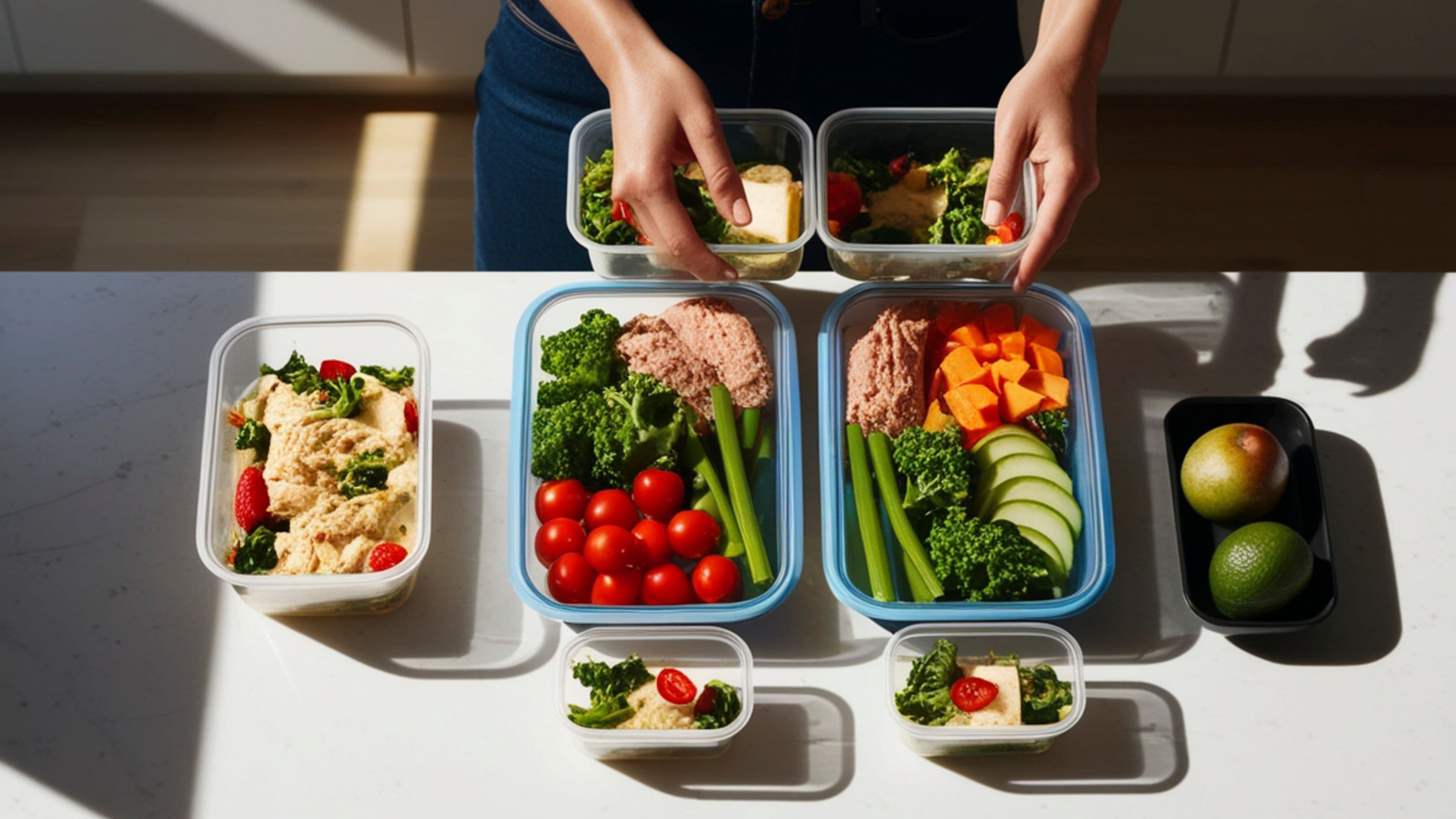
Before you ever open a recipe website, decide on a simple formula and stick to it every week. A reliable one that works for most people: one protein, one grain, one roasted vegetable, and one sauce or dressing. That's it. Those four components mix and match into almost infinite combinations across five days without feeling repetitive.
For example: grilled chicken, brown rice, roasted broccoli, and a lemon-tahini dressing. That becomes a rice bowl on Monday, stuffed into a wrap on Tuesday, served over salad greens on Wednesday. The same prep, three different meals. Once you internalize this formula, grocery shopping gets faster too – you're buying one protein, one grain, one vegetable, and a handful of sauce ingredients, not a different ingredient list every single week.
If you're newer to meal prep, resist the urge to plan more than this. Two proteins, three vegetables, and four recipes sounds efficient in theory and exhausting in practice when you're standing in your kitchen at 11am.
Step 2: Grocery Shop with a Tight List the Day Before
Meal prep and grocery shopping on the same day is a recipe for running out of energy before you've even started cooking. Shop on Saturday, prep on Sunday. Keep your list short and specific – quantity matters here. You need enough protein for five lunches or dinners, not a vague "some chicken."
Stick to ingredients you already know how to cook. This isn't the week to try a new grain or an unfamiliar cut of meat. The more familiar your ingredients, the faster and more confident you'll be once you're in the kitchen. Buy pre-washed greens, pre-cut vegetables, or other small conveniences if they save you meaningful time – there's no prize for doing everything from scratch.
Step 3: Set Up Before You Start Cooking
Five minutes of setup before you turn on a single burner will save you twenty minutes of chaos later. Pull out everything you need: cutting board, knives, sheet pans, pots, storage containers, and all your ingredients. Check that your containers are clean and dry. Preheat the oven before you start chopping anything.
This step also means reading through your recipe (or your mental plan) before you begin, not while you're halfway through chopping. You want to know exactly what's going in the oven first, what can simmer unattended, and what needs your active attention. The goal is to have multiple things cooking at the same time, not to finish one dish before starting another.
Step 4: Work in Parallel, Not in Sequence
This is the single biggest time-saver in meal prep. While something is in the oven, something else is on the stove. While the grain is simmering, you're chopping vegetables for tomorrow's salad. Nothing in your kitchen should be idle while you're standing around waiting.
A practical order that works for most prep sessions: start the oven first (it takes time to preheat), put your grain on the stove second (rice and quinoa are largely hands-off once they're going), then prep and load your roasted vegetables onto sheet pans while those two things cook. Your protein can go on the stove or into the oven depending on what you're making. By the time your grain is done, your vegetables are roasted, and your protein is cooked, you've done most of the work with almost no downtime. Sauces and dressings take under five minutes and can be done at any point while something is simmering.
Step 5: Cool, Portion, and Store Correctly
This step gets rushed, and it shouldn't. Putting hot food directly into airtight containers traps steam, makes food soggy, and can affect how long it keeps. Spread everything out to cool for 10–15 minutes before portioning. Use that time to wipe down your counter, wash the pots you've finished with, and start cleaning up.
Once everything is cooled, portion into individual containers if that's what works for your week, or store in larger batches and assemble meals when needed. Label your containers with the day or contents if you're likely to forget. Cooked proteins, grains, and roasted vegetables generally keep well in the fridge for four to five days. If you're prepping for the full five days, consider freezing portions for Thursday and Friday rather than refrigerating everything at once.
A Simple 2-Hour Timeline
Here's how the two hours break down when everything is working efficiently:
0:00–0:10 – Set up: preheat oven, gather equipment, pull out all ingredients.
0:10–0:20 – Start the grain on the stove. Chop and season vegetables while it begins to cook.
0:20–0:30 – Load vegetables onto sheet pans and put them in the oven. Season and start cooking your protein.
0:30–1:00 – Make your sauce or dressing. Prep any raw components (salad greens, sliced fruit, anything uncooked). Tend to the protein as needed.
1:00–1:20 – Remove vegetables from the oven. Check that grain is done. Let everything cool. Begin washing used equipment.
1:20–1:45 – Portion food into containers. Store everything properly.
1:45–2:00 – Final cleanup, wipe surfaces, put away remaining equipment.
That's it. Two hours and your week is covered.
Tips That Make It Faster Each Week
The first time you follow a system is always the slowest. By week three or four, the same prep takes 90 minutes because you've stopped second-guessing the order, you know where everything is, and you're not reading anything as you cook. The habit is doing most of the work.
Batch-making your sauce or dressing in a larger jar once every two weeks cuts one small task from your weekly prep entirely. Keeping a few pantry staples stocked consistently – olive oil, stock, canned legumes, dried herbs – means your grocery list stays short and you rarely have to make extra trips. And if you want to add variety without adding complexity, rotate your protein and vegetable every two weeks rather than every week. You get enough change to stay interested without redesigning the system each time.
What to Avoid
Starting too ambitious. Three proteins and five recipes in week one is a beginner mistake that leads to an exhausting session and an abandoned habit. Start with the minimum viable prep and scale up only once the system feels automatic.
Skipping the cooling step. It feels like wasted time, but hot food stored immediately becomes soggy and spoils faster. Ten minutes of cooling is worth it.
Prepping things that don't store well. Dressed salads, cut avocado, and anything crispy that goes soft in a container should be assembled fresh. Build those into your prep as components (undressed greens, a separate dressing, whole avocado) rather than finished dishes.
Waiting until you're hungry to decide what you're eating. The entire point of meal prep is to remove that decision when your willpower is low. If you're reaching into the fridge at 7pm still wondering what to make, the prep worked – you just have to use it.
Frequently Asked Questions
Do I need special containers? Not really. Glass containers with locking lids are the gold standard because they don't absorb smell or stain, but any clean, airtight container works. A matching set makes stacking easier, but it's not a requirement for getting started.
What if I get bored eating the same thing all week? That's what the formula is for. One protein, one grain, one vegetable gives you three or four distinct meal combinations even without additional prep. Changing the sauce or dressing is often enough to make the same ingredients feel different day to day.
Can I meal prep if I have dietary restrictions? Yes – the formula works for almost any eating pattern. Swap the protein for tofu, legumes, or eggs. Use a gluten-free grain like quinoa or rice. The structure is flexible; the ingredients are up to you.
How do I stay consistent with this habit? Treat it like an appointment, not an aspiration. Put it in your calendar, keep your formula simple enough that it never feels optional, and accept that some weeks will be imperfect. A mediocre prep that actually happens is more valuable than a perfect one that doesn't.
Start Small, Stay Consistent
Meal prepping isn't a lifestyle overhaul. It's a two-hour investment that pays back dozens of small decisions across the week – fewer bad food choices, less money spent on convenience meals, less stress on nights when you have nothing left to give. You don't need to become someone who loves cooking. You just need a system simple enough to actually follow.
Try the formula once this weekend. Keep it minimal. See what two hours of prep does for your week.
📚 Sources
Academy of Nutrition and Dietetics – What Is Meal Prepping?: https://www.eatright.org/food/planning-and-prep/cooking-tips-and-trends/what-is-meal-prepping
USDA FoodKeeper App – Safe food storage guidelines: https://www.foodsafety.gov/keep-food-safe/foodkeeper-app
Harvard T.H. Chan School of Public Health – The Nutrition Source: Meal Prep: https://www.hsph.harvard.edu/nutritionsource/meal-prep
American Heart Association – Healthy Eating: Cooking at Home: https://www.heart.org/en/healthy-living/healthy-eating/cooking-skills/cooking/cooking-at-home
Mayo Clinic – Nutrition and healthy eating: https://www.mayoclinic.org/healthy-lifestyle/nutrition-and-healthy-eating/basics/nutrition-basics/hlv-20049477