
It doesn't have to work that way. The goal of tracking is awareness and gentle accountability, not performance. Here's how to set up a habit tracking system that actually supports you rather than adding pressure to your day.
Why Most Habit Tracking Goes Wrong
The most common mistake in habit tracking is treating the tracker as the goal. When you start optimizing for a perfect streak instead of the actual behavior you're trying to build, you've already lost the plot. A streak is a useful motivational tool — it's not the reason you're trying to sleep better or exercise more. The moment you skip a workout and feel worse about the broken chain than you do proud of the twenty-three days before it, the tracker has become counterproductive.
There's also the setup trap — spending more energy designing the perfect tracking system than actually doing the habits it's meant to track. Elaborate color-coded spreadsheets, premium apps with custom categories, and beautifully formatted bullet journal spreads all look great in screenshots. But if the system takes ten minutes a day to maintain and makes you feel anxious whenever you open it, it's working against you. The friction of an overly complex system quietly kills the very habits you're trying to build.
The other common issue is tracking too many things at once. Monitoring fifteen habits simultaneously turns your daily check-in into a performance review with a lot of red marks. Research on habit formation consistently points to focused effort — working on a small number of behaviors at a time rather than attempting a wholesale life overhaul — as the approach most likely to produce lasting results.
What Healthy Habit Tracking Actually Looks Like
A good habit tracker does two things: it creates a small moment of daily awareness about your behaviors, and it gives you a gentle, honest reflection of your patterns over time. That's it. It doesn't need to be motivational, aspirational, or visually impressive.
Healthy habit tracking is also flexible rather than all-or-nothing. Instead of tracking whether you did something perfectly, you track whether you showed up in some way. A workout that was shorter than planned still counts. A meditation that lasted four minutes instead of ten still counts. A healthy meal among an otherwise imperfect day still counts. Partial credit isn't weakness — it's an accurate reflection of real life, and it keeps you connected to the habit on days when you can't give it full effort.
The tone of the system matters too. A tracker that uses checkboxes you can simply tick off feels neutral and low-pressure. A tracker with streaks, scores, and performance percentages constantly reminds you of what you haven't done. If your current system is generating more anxiety than momentum, changing the format — not your habits — is the right first step.
Choose the Right Format for Your Personality
There is no universally correct way to track habits, and the format you choose should match how your brain responds to information rather than how productive it looks on social media.
Paper trackers work best for people who benefit from the physical act of writing something down and who don't want to open an app every time they need to check in. A simple grid in a notebook — dates across the top, habits down the side, checkmarks where they intersect — is all you need. Paper trackers don't send notifications, don't show streaks in red, and don't connect to anything else on your phone. That simplicity is a feature.
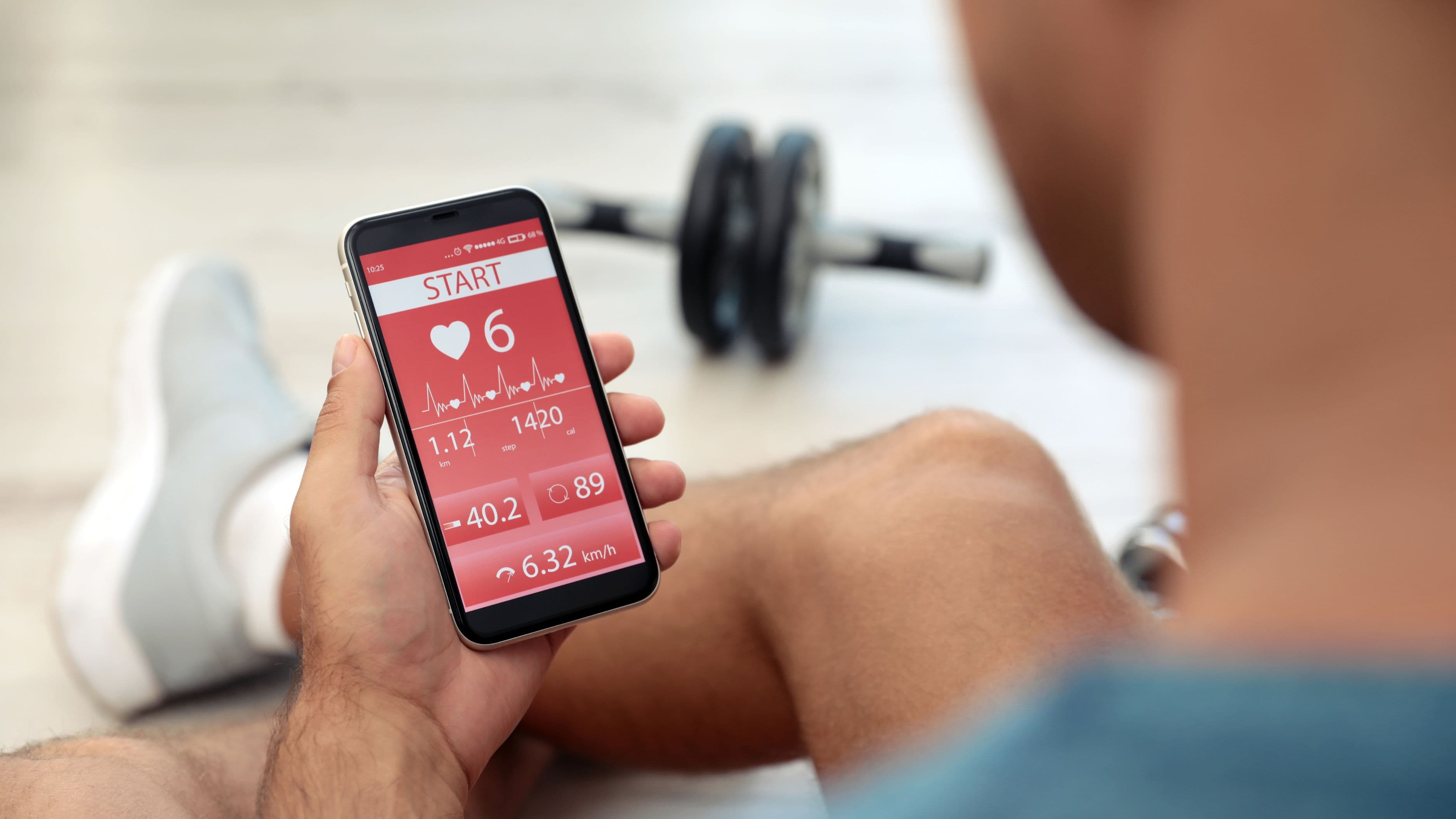
Apps work best for people who are already on their phone frequently and want their tracking to be fast and low-effort. Habitica gamifies tracking in a way some people find motivating. Streaks (iOS) keeps things clean and minimal. Way of Life lets you log habits as positive, negative, or skipped, which builds in nuance that purely binary trackers miss. The key when choosing an app is picking one with the simplest interface that covers your needs — not the one with the most features.
A simple note on your phone works surprisingly well for people who get anxious about structured systems. A note titled "Weekly Habits" with a date and a few words each evening — "walked, no coffee after 2pm, read before bed" — is a legitimate tracking system. It captures the important information without the weight of a formalized structure.
Pick whichever format you're most likely to actually use for thirty days in a row without it feeling like a chore.
How Many Habits to Track at Once
Start with three, maximum. If you're new to tracking, two is better. This isn't a lack of ambition — it's a realistic acknowledgment of how change actually works. Your brain has a limited capacity to run new behavioral loops simultaneously, and trying to build ten habits in parallel typically means building none of them reliably.
Choose habits that matter most to you right now, not habits that seem most impressive. If better sleep, daily movement, and reduced phone use are genuinely the things you care about most, track those — not the morning cold shower and journaling habit you saw someone post about online. The habits worth tracking are the ones whose absence you actually feel in your daily life.
Once two or three habits are running reliably — meaning you're hitting them four or five out of seven days most weeks without much conscious effort — that's when you might consider adding something new. Not before.
Build in Permission to Miss Days
This is the step most habit tracking advice skips, and it makes an enormous difference in long-term sustainability. Before you start tracking, decide in advance how you'll handle missed days — because you will miss days, and having a plan for that in place before it happens prevents the spiral of guilt that ends most tracking attempts.
A useful framing is the "never miss twice" rule, originally popularized by James Clear in Atomic Habits. Missing one day is an accident. Missing two days in a row is the beginning of a new habit. When you miss a day, the only goal is to show up the next day in any capacity. Smaller than usual is fine. The point is continuity, not perfection.
You can also build "rest days" directly into your system. If you're tracking daily walking, you might track it five days a week by design, with two days marked as intentional rest rather than missed obligations. Treating your days off as planned rather than failed creates a much healthier relationship with your tracking system over time.
Separate Tracking From Self-Worth
This is the most important mindset shift in sustainable habit tracking, and it's worth spending a moment with. Your tracker reflects your behavior — it does not reflect your value as a person. A week with three missed habits is data about your week, not a verdict on who you are. Read that again when you need to.
The purpose of looking at your tracker is to spot patterns, not to feel good or bad about yourself. If you consistently skip your evening reading habit on Thursdays, that's useful information — maybe Thursday evenings are consistently too busy and you need to shift the habit to mornings, or reduce it to five minutes instead of twenty. That's what the data is for. It's a map of your behavior, not a performance evaluation.
If you notice your tracker is consistently making you feel guilty or anxious rather than informing and encouraging you, that's a signal to simplify — fewer habits, a lower-friction format, or a break from formal tracking altogether. Awareness of your habits doesn't require a system. Sometimes just pausing to notice your day is enough.
A Simple 30-Day Tracking Experiment to Try
If you want to test a low-pressure approach, here's a 30-day setup worth trying:
Pick two or three habits. Choose the ones that most directly impact how you feel day-to-day — not the most impressive-sounding ones.
Choose a format that requires almost no effort. A small notebook you keep on your desk, a single sticky note on your bathroom mirror, or a one-screen app with no streaks and no scores. The less friction, the better.
Check in once a day, at the same time. Morning habit tracking tends to work better for planning-focused people. Evening tracking works better for reflection-focused people. Pick one time and stick to it for the first two weeks.
At the end of week two, review without judgment. Look at what you actually did. Not what you hoped to do — what you did. Note any patterns (missed on busy evenings, stronger on weekends, skipped when tired). Adjust one thing based on what you see.
At the end of 30 days, decide whether tracking is helping. Not whether you did the habits perfectly — whether the tracking itself made the experience better or worse. Keep what helped. Let go of what didn't.
That's a complete first experiment in healthy habit tracking. It's not complicated. It's not comprehensive. And it's likely to teach you more about how your habits actually work than any elaborate system you could design in advance.
FAQ
What should I do when I break a long streak? Acknowledge it without drama, and show up the next day in any capacity. The streak is a motivational tool, not the goal itself. Restarting a streak is not a failure — it's just day one again, which is always available to you.
Is it okay to track the same habits forever, or should I change them? It's completely okay to track the same foundational habits indefinitely if they remain meaningful. Habits like sleep, movement, hydration, and limited screen time are worth maintaining indefinitely. As some habits become fully automatic — running without checking your tracker feels natural — you may naturally stop needing to track them, which is actually the goal.
What if I feel more anxious with a tracker than without one? That's important feedback. Some people genuinely feel better without formal tracking — their habits are more flexible and intuitive without the structure. If tracking is adding net stress to your life, it's okay to stop. Habit tracking is a tool, not a requirement. A simple monthly review of how your key habits are going, without daily logging, is a perfectly valid alternative.
Do I need a special app or journal to track habits effectively? No. Some of the most consistent habit trackers use a basic notes app, a cheap notebook, or just a calendar they mark with a pen each day. The format is secondary to the act of showing up and checking in. Start with the simplest option available and only upgrade the system if you find yourself genuinely needing more structure.
Habit tracking works best when it stays in its lane — a tool that creates awareness and continuity, not a judge keeping score on your worth. Keep it simple, keep it flexible, and make sure the system is working for you rather than the other way around. Progress is still progress even when it's quiet, imperfect, and not color-coded.
📚 Sources
Clear J – Atomic Habits: never miss twice concept: https://jamesclear.com/atomic-habits
Lally P et al. – How are habits formed: Modelling habit formation in the real world. European Journal of Social Psychology, 2010: https://onlinelibrary.wiley.com/doi/abs/10.1002/ejsp.674
Psychology Today – The Problem With Habit Tracking: https://www.psychologytoday.com/us/blog/ulterior-motives/202101/the-problems-habit-tracking
Harvard Health – How to Break Bad Habits and Change Behaviors: https://www.health.harvard.edu/mind-and-mood/how-to-break-bad-habits
Greater Good Magazine, UC Berkeley – What Makes Habits Stick: https://greatergood.berkeley.edu/article/item/what_makes_habits_stick