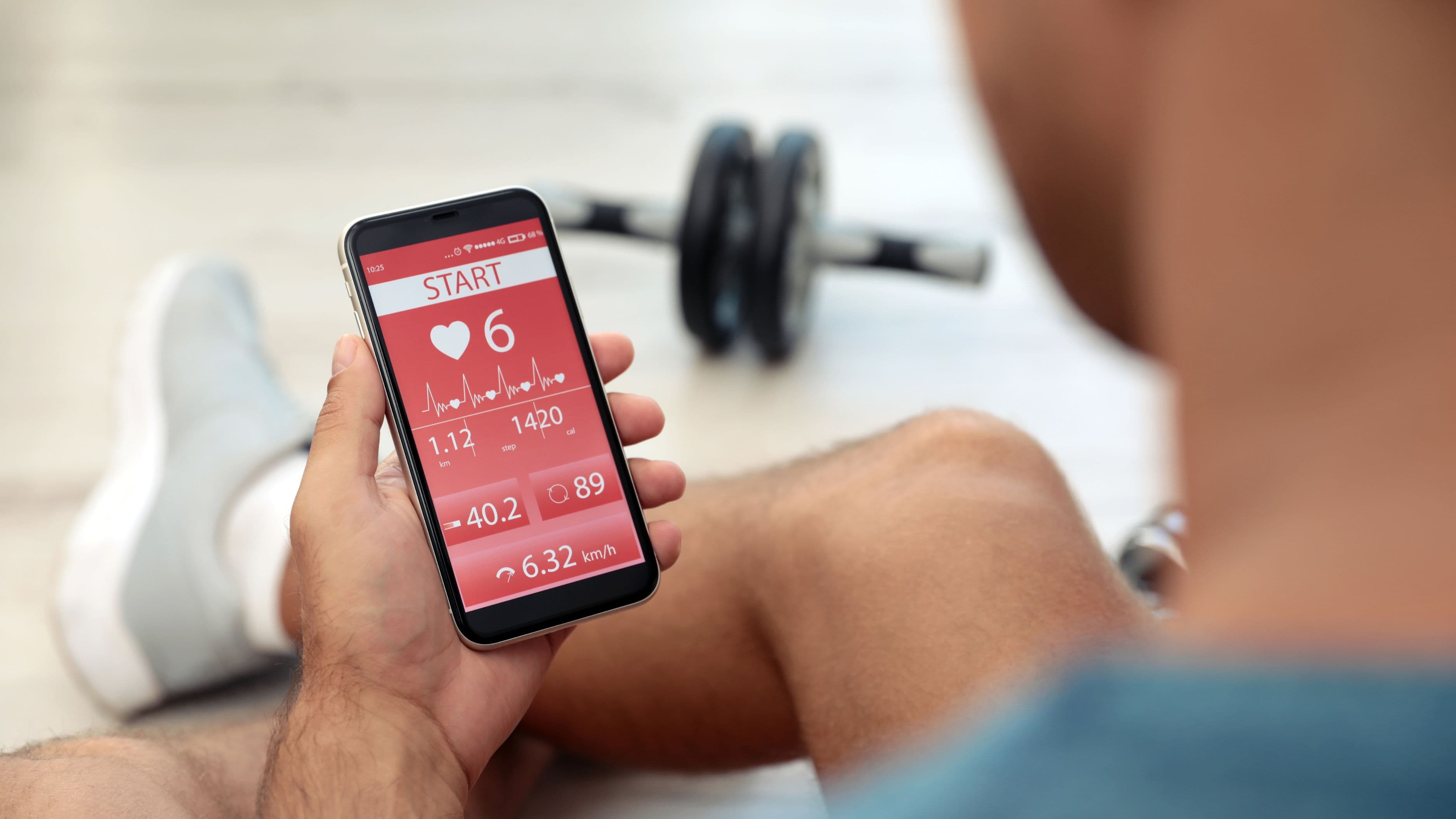
But does any of it actually work? Or are these apps just a more satisfying way to feel productive without doing the hard part?
The honest answer is: it depends. Apps can genuinely help you build habits – but not in the way most people use them, and not for the reasons the marketing suggests. Here's what the research actually says, and how to use these tools in a way that makes a real difference.
What Habit Apps Actually Do Well
Before getting into the limitations, it's worth being clear about where apps genuinely add value – because they do have a real role to play for the right person at the right stage.
The strongest evidence is for habit tracking as a form of self-monitoring. Research published in the American Journal of Preventive Medicine found that people who kept daily food logs lost twice as much weight as those who didn't – and the mechanism wasn't magic, it was awareness. Tracking creates a feedback loop between your intentions and your actual behavior. When you can see that you've meditated three days out of the last seven, that information is more useful and more honest than how you feel like you've been doing.
Apps also provide a low-friction implementation of what behavioral scientists call "commitment devices" – structures that make it slightly easier to follow through on something you've already decided to do. A notification that says "time to journal" at 8pm isn't nagging; it's a cue that removes the mental overhead of remembering to start. For habits in the early formation stage, that kind of gentle scaffolding is genuinely useful.
Where They Fall Short
Here's the part the app store reviews don't tell you: the vast majority of people who download a habit app stop using it within a few weeks. A 2022 analysis by mobile data firm Sensor Tower found that average 30-day retention for health and fitness apps is around 6%. That means roughly 94 out of 100 people who download these apps have stopped using them within a month.
That's not entirely the apps' fault – but it does tell you something important about where the tool ends and the real work begins. Apps are good at providing structure. They're not good at providing motivation when the novelty wears off, resolving the underlying reasons why a habit hasn't stuck, or replacing the environmental and identity-level changes that research consistently identifies as the real drivers of long-term behavior change.
There's also a subtler problem. Some people use habit apps as a form of avoidance – a way of engaging with the idea of building habits without doing the actual thing. Downloading a meditation app feels like progress. Buying a running tracker feels like progress. Designing your perfect habit stack in a productivity app feels like progress. None of it is the same as actually sitting down, closing your eyes, and breathing for ten minutes.
What the Research Says About Habit Formation
To use any tool well, it helps to understand what it's actually supporting. Habit formation research gives us a fairly clear picture of what makes new behaviors stick.
The habit loop – cue, routine, reward – has been a framework in behavioral science for decades, made widely accessible by James Clear's Atomic Habits and Charles Duhigg's The Power of Habit. A habit forms when a behavior becomes automatic in response to a specific cue, reinforced by a consistent reward. Repetition is what builds the neural pathway; the average time for a behavior to become automatic is around 66 days according to a 2010 study published in the European Journal of Social Psychology – not the "21 days" you often see quoted.
Two factors consistently outperform willpower in the research: environmental design and identity. Making the cue for a desired behavior visible and easy (leaving your running shoes by the door, keeping a book on your pillow) reduces the friction that causes people to skip. Framing the habit as part of who you are rather than something you're trying to do ("I'm someone who exercises" vs. "I'm trying to exercise") correlates strongly with follow-through, according to research from the University of Hertfordshire.
Apps support the cue part of this equation reasonably well. They're less useful for environmental design, and they do almost nothing for identity.
The Apps With the Most Evidence Behind Them
Not all habit apps are built the same way. Some are essentially digital sticker charts. Others are built on behavioral science principles with meaningfully better track records.
Streaks and Habitica are popular for their gamification approach – turning habit completion into points, streaks, and rewards. The gamification literature is mixed. For some personality types, external rewards strengthen consistency in the short term. For others, they can actually undermine intrinsic motivation over time – a phenomenon researchers call the "overjustification effect." If you find gamification energizing rather than stressful, these can work well. If a broken streak makes you want to quit entirely, the gamification model probably isn't right for you.
Finch takes a gentler approach, built explicitly around self-compassion rather than streaks and performance. You care for a virtual pet bird by completing personal goals – but the app actively discourages guilt and rewards effort over outcomes. This design philosophy aligns with research showing that self-compassion after a lapse (missing a day, breaking a streak) is significantly more predictive of long-term behavior change than self-criticism.
Bearable focuses specifically on health habit tracking – mood, sleep, symptoms, medications – and is popular among people managing chronic conditions or trying to identify patterns in their wellbeing. Its strength is in correlation tracking: after a month of logging, it can show you whether your energy levels consistently dip after poor sleep or whether your mood tracks with exercise frequency. That kind of personal data is genuinely actionable.
Streaks (iOS) is minimal and well-designed with a hard cap of twelve habits, which forces prioritization. Research on goal pursuit consistently shows that spreading attention across too many goals at once undermines all of them. Being forced to choose your most important habits is a feature, not a limitation.
How to Use a Habit App So It Actually Works
The difference between someone who builds a habit with an app and someone who abandons it after three weeks usually isn't the app – it's how they use it. A few principles from behavioral science make a significant difference.
Start with one habit, not five. The temptation is to use a new app as the launch pad for a total life overhaul. Resist it. Research on habit formation consistently shows that attempting multiple new behaviors simultaneously reduces the success rate of all of them. Pick the single habit most likely to have a positive cascade effect on everything else – for most people, that's sleep, exercise, or a morning routine – and give it your full attention for at least 30 days before adding another.
Make the cue obvious and the barrier tiny. Your app notification is a cue, but it's a weak one compared to environmental anchors. Stack the app reminder with a physical cue: "I'll open the habit app every morning after I pour my coffee." The app becomes part of a trigger sequence rather than an interruption you can dismiss and forget.
Use the data, don't just collect it. If you track seven habits daily but never look back at the patterns, you're generating data with no feedback loop. Set a weekly check-in – five minutes on Sunday evening – to review the past week. Where did you follow through? Where did you skip? What got in the way? This reflection step is where the app actually starts earning its keep.
Treat a missed day as information, not failure. The research on habit maintenance is clear: it's not the occasional lapse that breaks a habit, it's the response to the lapse. Quitting after a missed day ("I already broke the streak, what's the point") is the most common reason people abandon new habits. If your app makes you feel guilty about a missed day, adjust your settings or switch to one that doesn't. Progress is nonlinear, and your tools should reflect that.
The 30-Day Honest Test
If you want to put this to the test properly, here's a simple 30-day approach that gives habit apps a fair shot without setting yourself up for the usual crash.
In the first week, choose one habit only. Something small enough that you genuinely can't fail on a normal day – two minutes of stretching, one glass of water before coffee, a single sentence in a journal. Download one app (not three) and use it to track just this one thing. Don't redesign your whole life yet.
In week two, pay attention to when you skip and why. Is it a specific day of the week? A particular time? A certain mood? Write down one observation at the end of the week. This is more valuable than any app feature.
In week three, make one environmental adjustment based on what you noticed. If you skipped the stretch every morning you woke up late, put the mat somewhere you can't miss it when you stumble out of bed. If you forgot the water, put the glass on the counter the night before.
In week four, evaluate honestly. Did the habit feel more automatic than it did on day one? That's the marker – not whether you hit 30 out of 30 days, but whether it's starting to require less conscious effort. If yes, consider adding a second habit. If not, stay with this one.
The Bottom Line
Yes, an app can help you build better habits – but it works best as a supporting tool, not a solution. The research on behavior change points consistently toward environmental design, identity, self-compassion after lapses, and starting smaller than feels necessary. Apps support the tracking and cue-setting part of that equation well. The rest is still on you.
The best habit app is the one you'll actually open tomorrow. Start there.
FAQ
How many habits should I track at once in an app?
One to three at most, especially when you're starting out. Research on goal pursuit shows that each additional simultaneous goal reduces the success rate of all of them. Many behavioral scientists recommend focusing on a single keystone habit – one that makes other positive behaviors easier – before expanding.
Do habit streaks help or hurt motivation?
For some people, streaks are a powerful motivator. For others, the anxiety of maintaining a streak or the devastation of breaking one is counterproductive. Know your personality type. If a broken streak makes you want to quit rather than restart, choose an app that doesn't emphasize streaks – Finch or a simple calendar tracker are better fits.
Is there a difference between habit apps and to-do list apps?
Yes, meaningfully. To-do lists are for one-off tasks. Habit apps are designed specifically for recurring behaviors you want to automate over time. Mixing them tends to muddy both – your habit feels like a chore when it lives next to "email the landlord," and your to-do list feels never-ending.
What's the minimum time needed to use a habit app for it to be effective?
The check-in itself can be 30 seconds. The weekly review that makes it meaningful takes about five minutes. The limiting factor isn't time – it's consistency. A 30-second daily log done every day for 60 days is far more effective than a detailed log done sporadically.
Should I use a free app or pay for a premium one?
Start free. Most free-tier habit apps provide everything you need for the core tracking function. Premium features (detailed analytics, multiple habit categories, coaching) are worth considering once you've proven to yourself that you'll actually use the app consistently – not before.
📚 Sources
Hollis, J. et al. – "Weight Loss During the Intensive Intervention Phase of the Weight-Loss Maintenance Trial" – American Journal of Preventive Medicine https://www.ajpmonline.org/article/S0749-3797(08)00374-7/fulltext
Lally, P. et al. – "How are habits formed: Modelling habit formation in the real world" – European Journal of Social Psychology https://onlinelibrary.wiley.com/doi/abs/10.1002/ejsp.674
Wiseman, R. – "As Good As It Gets: The Study of New Year's Resolutions" – University of Hertfordshire https://www.richardwiseman.com/resources/The_Luck_Factor.pdf
Deci, E. et al. – "A meta-analytic review of experiments examining the effects of extrinsic rewards on intrinsic motivation" – Psychological Bulletin https://psycnet.apa.org/doi/10.1037/0033-2909.125.6.627
Breines, J. & Chen, S. – "Self-Compassion Increases Self-Improvement Motivation" – Personality and Social Psychology Bulletin https://journals.sagepub.com/doi/10.1177/0146167212445599
Clear, J. – Atomic Habits – jamesclear.com https://jamesclear.com/atomic-habits