This isn't a promise that twenty minutes a day turns you into an athlete. But the honest answer to whether it's enough to meaningfully improve your fitness is, for most people, yes. With the right structure.
What "Getting Fit" Actually Means
Before looking at the research, it helps to define what fitness actually involves, because "getting fit" means different things depending on what you're measuring. The main dimensions are cardiovascular fitness (how efficiently your heart and lungs deliver oxygen during effort), muscular strength and endurance, flexibility and mobility, and body composition. Different types of exercise affect these differently, and what twenty minutes can realistically accomplish varies by which dimension you're targeting.
The good news for time-constrained exercisers is that cardiovascular fitness – arguably the most important dimension for long-term health – responds well to shorter, higher-intensity efforts. You don't need hour-long runs to improve your VO2 max or lower your resting heart rate. Strength, too, can be meaningfully developed in shorter sessions if the programming is sound. The areas where short sessions show the most obvious limitations are flexibility and skill-based movement, which tend to respond better to longer, slower practice.
What the Research Actually Shows
The strongest evidence for short workouts comes from research on High-Intensity Interval Training, commonly known as HIIT. HIIT alternates between periods of high-effort exercise and recovery, allowing you to accumulate a significant cardiovascular and metabolic training stimulus in much less time than steady-state cardio.
A frequently cited 2016 study published in PLOS ONE compared twelve weeks of traditional moderate-intensity cycling (45 minutes, three times per week) with a HIIT protocol that involved just 10 minutes of total exercise time, including warm-up and cool-down – with only one minute of true all-out effort per session. The HIIT group achieved comparable improvements in cardiovascular fitness, insulin sensitivity, and muscle adaptation to the group doing four and a half times more exercise by duration. The researchers noted this doesn't mean one minute of exercise is sufficient in isolation, but it demonstrated that intense brief efforts produce adaptations that longer moderate efforts achieve through volume.
A separate body of research has examined what happens when people do no exercise versus short-burst exercise. A study from McMaster University found that three sessions per week of twenty-minute HIIT produced significant improvements in cardiorespiratory fitness, body fat percentage, and blood pressure in previously sedentary adults over twelve weeks. These weren't small changes – they were the kinds of improvements associated with meaningfully reduced cardiovascular disease risk.
On the strength side, research consistently shows that frequency and progressive overload matter more than session length for building and maintaining muscle. Three sets of a compound exercise performed three times a week – something easily accomplishable in twenty minutes – is sufficient stimulus for meaningful strength gains in beginners and recreational exercisers. Advanced athletes need more volume to continue progressing, but for most people's fitness goals, they are nowhere near the ceiling where twenty minutes becomes a limiting factor.
Why It Works: The Intensity-Duration Trade-Off
The core principle behind short effective workouts is that intensity and duration operate on a trade-off. You can work at low intensity for a long time, or high intensity for a short time, and both can produce significant fitness benefits – they just do it through different mechanisms.
Long, lower-intensity exercise primarily develops aerobic base, burns a higher proportion of fat as fuel during the session, and is easier to sustain and recover from. Short, higher-intensity exercise triggers a stronger hormonal response, elevates post-exercise oxygen consumption (meaning you continue burning calories after the session ends), produces greater cardiovascular adaptation per minute of effort, and creates more muscle fiber recruitment. Neither approach is universally superior – the best one for you depends on your goals, fitness level, and what you'll actually do consistently.
The reason twenty-minute workouts often fail for people isn't that they're too short. It's that people don't use them intensely enough to produce the adaptation they're looking for. A casual twenty-minute walk has different effects than twenty minutes of circuit training. Both are beneficial – but they're solving different problems.
What a Good 20-Minute Workout Actually Looks Like
If you're going to make twenty minutes count, structure matters. Here are three formats that the research supports as genuinely effective within that time window.
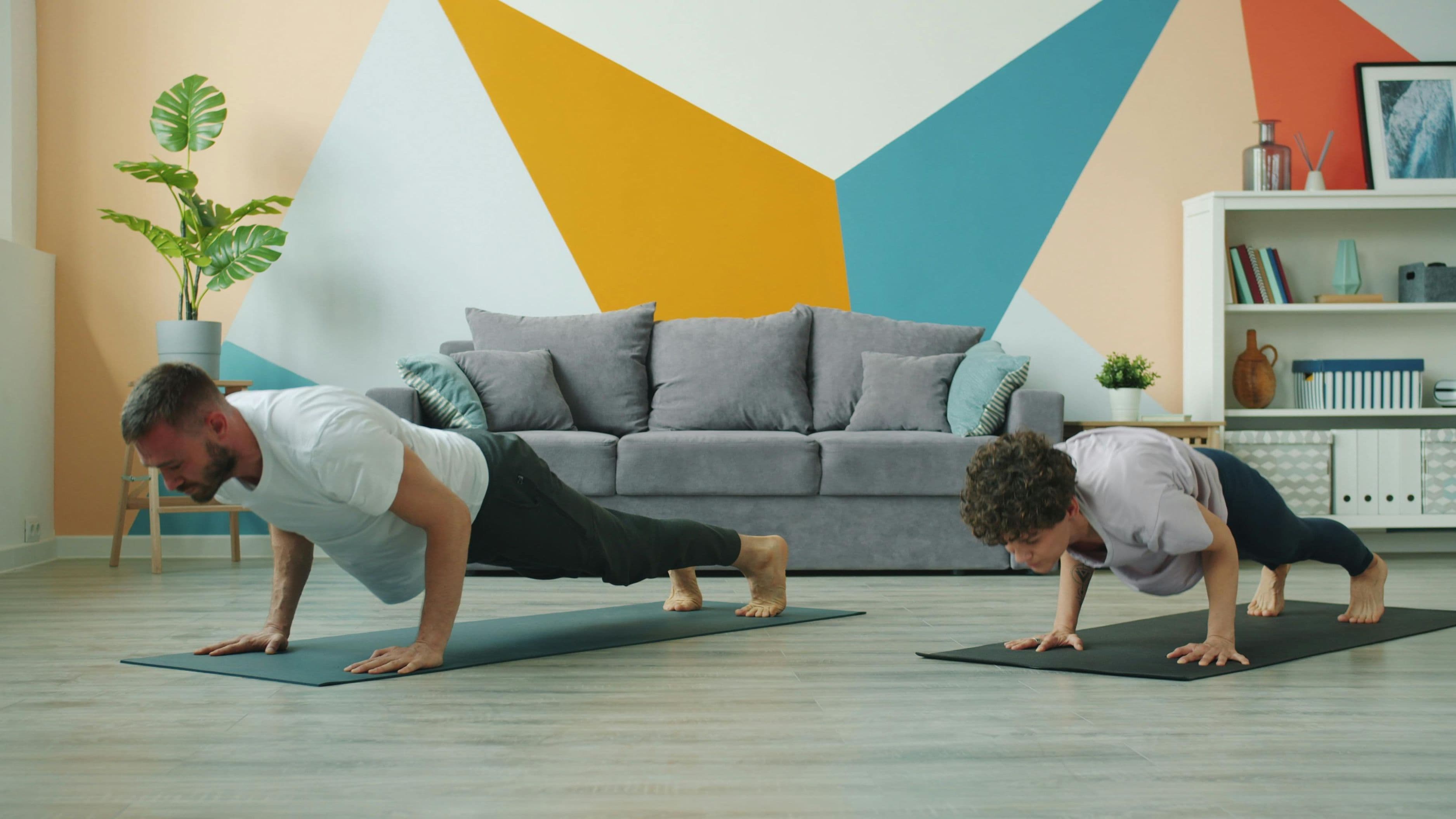
HIIT Format: 5-minute warm-up, then alternate 40 seconds of hard effort with 20 seconds of rest for 8–10 rounds, finishing with a 2-minute cooldown. For the "hard effort" rounds, use exercises like jump squats, burpees, high knees, push-ups, or any movement that genuinely challenges you. The key is that the effort intervals have to be actually hard – around a 7–8 out of 10 perceived exertion. If you can hold a comfortable conversation throughout, you're not working at the intensity that makes the research applicable.
Strength Circuit Format: Choose 4–5 compound exercises that hit different muscle groups – a squat pattern, a hinge pattern (deadlift variation), a push (push-up or press), a pull (row), and a core exercise. Do 3 rounds of 10–12 repetitions of each with minimal rest between exercises. This hits your whole body, builds strength and muscular endurance simultaneously, and can be done entirely with bodyweight or dumbbells.
Steady-State Cardio: Twenty minutes of sustained moderate-intensity cardio – jogging, cycling, rowing at a pace where you can talk but are breathing harder than normal – produces real cardiovascular adaptation over time, especially for beginners. It's less time-efficient than HIIT for the adaptations discussed above, but it's more sustainable, lower-impact, and appropriate for people who aren't ready for high-intensity intervals.
For most people, rotating between these formats across the week – rather than doing the same thing every day – produces broader fitness development and reduces the monotony that kills consistency.
What Twenty Minutes Can't Do
Being realistic about the limits is as important as understanding what's genuinely possible.
Twenty minutes a day will not build the physique of someone who trains for an hour or more six days a week. Volume of training matters for body composition changes beyond a moderate level of development – if your goal is significant muscle mass or very low body fat, short sessions alone won't get you there.
If your goal is training for an endurance event – a marathon, a long-distance cycling event – twenty minutes a day is insufficient preparation. Endurance sports require building aerobic base over extended training sessions, and there's a floor of volume below which you can't safely prepare for these demands.
Short sessions also don't address all dimensions of fitness equally. Flexibility and mobility develop more efficiently through sustained stretching and movement practice that twenty minutes doesn't comfortably fit alongside everything else. If mobility is a significant concern, it merits dedicated time beyond a twenty-minute all-purpose workout.
And finally – quality is the qualifier for everything above. Twenty minutes of actual work produces the outcomes research describes. Twenty minutes that includes a lot of standing around, checking your phone, and going through the motions produces much less. The claim that short workouts work is contingent on those workouts being deliberately structured and genuinely challenging.
The Consistency Argument
There's an argument for short workouts that goes beyond the physiological and is arguably more important for most people: they're sustainable. The most effective workout is the one you actually do, consistently, for months and years. A forty-five-minute session that you can't fit into your day three times a week is objectively less useful than a twenty-minute session you do four or five times a week.
Research on exercise adherence consistently shows that the biggest barrier to fitness isn't motivation – it's time and complexity. People don't stop exercising because they stopped caring. They stop because the logistics break down, the session feels too long to fit in on difficult days, and one missed workout becomes a week becomes a month. Short workouts lower the logistics barrier significantly. When a workout is twenty minutes, there are very few days where you genuinely can't find the time.
There's also a psychological aspect that research on habit formation supports. Shorter commitments are easier to start, easier to recover from when missed, and easier to maintain as a daily practice. A twenty-minute workout done 250 times in a year is, by every meaningful measure, better than a ninety-minute workout done 40 times.
A Realistic Starting Point
If you're currently doing little or no structured exercise, twenty minutes three times a week is a completely legitimate starting point that the evidence supports as sufficient for meaningful health and fitness improvement. You don't need to start at five days a week. You don't need to commit to anything intense immediately.
Start with three sessions of twenty minutes – any combination of the formats described above. Give it four weeks without changing anything else. Most people notice real changes in energy, sleep quality, and general physical capability within that window, which provides the natural motivation to continue and gradually increase.
The goal at the beginning isn't transformation. It's establishing the habit and demonstrating to yourself that you'll actually show up. Once showing up is automatic, everything else – more days, more intensity, more variety – can be added from a stable base.
FAQ
Is twenty minutes of exercise a day enough for overall health? The World Health Organization recommends 150 minutes of moderate-intensity activity or 75 minutes of vigorous activity per week as the minimum for health benefits. Twenty minutes a day of vigorous exercise (140 minutes per week) exceeds the vigorous-activity recommendation. Twenty minutes of moderate activity falls slightly short of the moderate recommendation, though any consistent exercise produces health benefits above zero.
How quickly will I see results from twenty-minute workouts? Most people notice improved energy and better sleep within two to three weeks. Visible physical changes – particularly changes in muscle tone and body composition – typically take eight to twelve weeks of consistent training to become clearly apparent. Cardiovascular improvements are measurable within four to six weeks for most beginners.
Should I do the same workout every day? No. Different workout types stress different systems, and recovery is when adaptation actually happens. A good pattern is alternating between cardio-focused and strength-focused sessions, with at least one or two genuine rest days per week. Doing high-intensity exercise every day without recovery days increases injury risk and actually slows progress.
What if I can only manage ten minutes some days? Ten minutes of genuine effort is significantly better than nothing. Research on very short exercise bouts shows measurable benefits from sessions as short as ten minutes of vigorous activity. On days where twenty minutes isn't available, do what you can. Consistency over months matters more than any individual session length.
Do I need equipment for effective twenty-minute workouts? No. Bodyweight exercises – push-ups, squats, lunges, burpees, mountain climbers, plank variations – are sufficient to produce the training stimulus described in this article. Equipment like resistance bands or a set of dumbbells expands your options and allows more progressive overload over time, but they're not a prerequisite for effective short workouts.
📚 Sources
Gillen JB et al. – Twelve Weeks of Sprint Interval Training Improves Indices of Cardiometabolic Health. PLOS ONE, 2016: https://journals.plos.org/plosone/article?id=10.1371/journal.pone.0154075
World Health Organization – Physical Activity Fact Sheet: https://www.who.int/news-room/fact-sheets/detail/physical-activity
McMaster University – Research on HIIT and Cardiovascular Health: https://www.science.mcmaster.ca/bms/component/content/article/7-research/2039-short-on-time-and-want-to-get-fit-go-hard.html
Mayo Clinic – Exercise: 7 Benefits of Regular Physical Activity: https://www.mayoclinic.org/healthy-lifestyle/fitness/in-depth/exercise/art-20048389
American College of Sports Medicine – HIIT Training Position Stand: https://www.acsm.org/education-resources/trending-topics-resources/physical-activity-guidelines