
Here's what 30 days of small, intentional daily practice can realistically do for your anxiety, and exactly how to do it.
What This Challenge Is Actually About
This isn't about eliminating anxiety. Some anxiety is normal, useful even – it's your brain trying to protect you. The goal here is to reduce the background noise of chronic anxiety: the low-level hum of worry that follows you through the day, the tension in your shoulders, the difficulty switching off at night.
The approach is built around one central idea from anxiety research: the nervous system learns through repetition. When you repeatedly respond to stress in a calm, grounded way, your brain gradually updates its default response. The physiological term for this is neuroplasticity, and it's why consistent small practices work better than occasional big ones. You're not just learning to feel better temporarily – you're slowly retraining how your body handles stress at a baseline level.
Thirty days is long enough to see real change and short enough to feel achievable. You don't need an hour a day. You need about 10 to 15 minutes, reliably.
The Daily Practice: Three Simple Parts
The practice has three components, each taking only a few minutes. They work individually, but together they create a consistent signal to your nervous system that you're safe, present, and in control. Do all three daily for the best results. If you miss a day, just pick back up the next morning without making a big deal of it.
Part 1: Morning grounding (3–5 minutes)
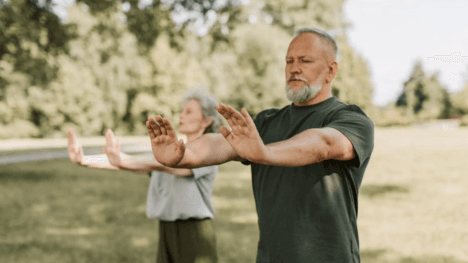
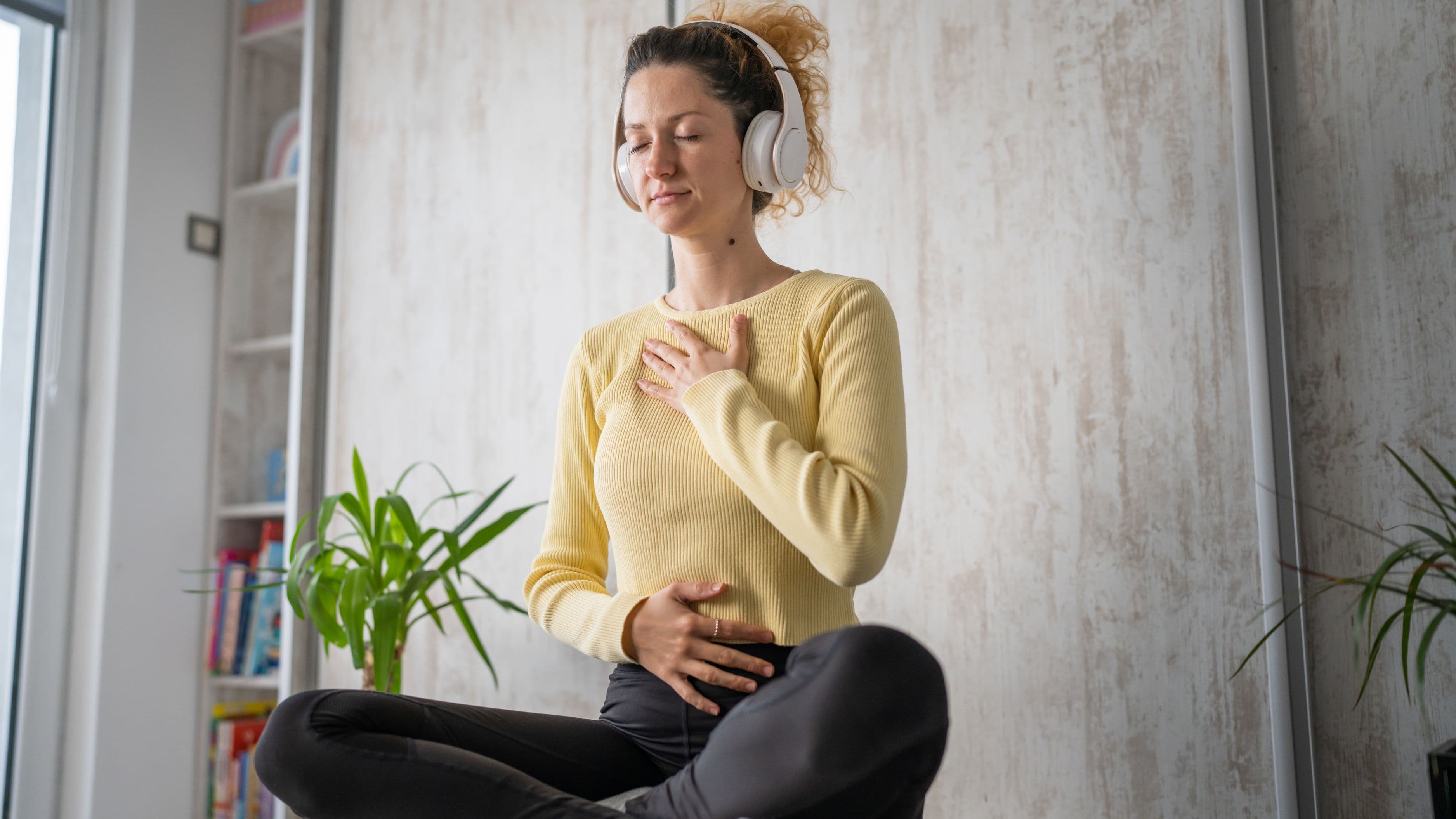
Before you check your phone, before you review your to-do list, take three to five minutes to ground yourself in your body. The simplest version is box breathing: inhale for four counts, hold for four counts, exhale for four counts, hold for four counts. Repeat this four to five times. This activates your parasympathetic nervous system – the "rest and digest" system that counteracts the stress response. It tells your body, before the day has even started, that right now things are okay.
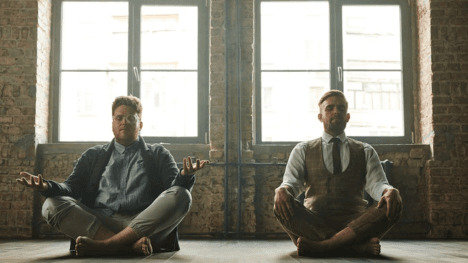
If breathing exercises feel too clinical, try a body scan instead. Lie still for three minutes and simply notice physical sensations moving from your feet to the top of your head. No judgment, no fixing – just noticing. This pulls your attention into the present moment and out of the anticipatory worry loops that fuel anxiety.
Part 2: Midday check-in (2 minutes)
At some point in the middle of your day – ideally around lunchtime – stop for two minutes and ask yourself three questions. What am I feeling right now? What's my body doing (tense, tired, wired)? What's one thing I can let go of in the next 15 minutes? You don't need to write this down, though a short note in your phone is helpful for tracking patterns. This check-in interrupts the autopilot state that lets anxiety build unnoticed throughout the day.
The key is genuinely pausing, not rushing through it. Even 90 seconds of real attention to how you're actually feeling is more useful than five minutes of distracted half-awareness.
Part 3: Evening wind-down (5 minutes)
Before bed, spend five minutes on a practice that signals the transition from active thinking to rest. The most effective options for anxiety are: slow, extended exhales (inhale for four counts, exhale for six to eight counts, which directly activates the vagus nerve and calms the nervous system), journaling three things you handled today without catastrophizing, or a brief progressive muscle relaxation where you tense and release muscle groups from feet to face.
The goal isn't to solve whatever's worrying you. It's to signal to your nervous system that the day is done and it's safe to downregulate. Anxiety thrives when the nervous system can't distinguish between "there's an immediate threat" and "tomorrow's meeting makes me nervous." The wind-down practice helps draw that line.
Week-by-Week Expectations
Week one (days 1–7): Getting used to it
The first week is about building the routine more than seeing results. You'll probably forget the midday check-in several times. You might feel like the morning breathing isn't doing much. That's normal. Consistency matters more than perfection here. By the end of week one, you'll have established the habit loop – and that's the whole point of the first week.
Week two (days 8–14): Noticing patterns
By week two, most people start noticing things they didn't notice before: specific times of day when anxiety peaks, physical sensations that precede anxious thoughts, patterns in what triggers the most tension. This awareness is itself a form of progress. You can't change what you don't notice, and the daily check-ins create the attentional space to start seeing patterns clearly.
Week three (days 15–21): Feeling the shift
This is typically when people start reporting actual changes in how they feel. The morning practice starts to feel less like a chore and more like something the body wants. The baseline tension – the background hum – often starts to quiet slightly. Sleep quality frequently improves in week three for people who've been using the evening wind-down consistently, which itself further reduces anxiety since sleep deprivation significantly amplifies anxious response.
Week four (days 22–30): Building the foundation
The final week is about consolidating what you've built. You're not finishing a challenge – you're establishing a practice that serves you beyond the 30 days. By day 30, the combined 10 to 15 minutes of daily practice should feel integrated into your routine rather than something you're adding to it.
What Actually Makes This Work
The single most important factor is consistency, not duration. Ten minutes every day produces dramatically more change in anxiety levels than 60 minutes twice a week, because the nervous system learns through repetition and regularity rather than intensity. This is counterintuitive for people who are used to "working harder" to get results, but anxiety reduction really does respond better to steady gentle input than to occasional big effort.
Tracking matters more than most people expect. You don't need an elaborate journal – even a one-line note each evening rating your anxiety from 1 to 10 and noting what you did gives you data to work with. Most people find that their anxiety scores vary more than they thought, which is itself reassuring, and that certain practices correlate reliably with lower scores, which tells them what to prioritize.
Removing the expectation of perfection is essential. Anxiety already produces a lot of self-criticism in most people who experience it. Adding "I'm doing this challenge wrong" to the list doesn't help. The practice works imperfectly and incompletely – and that's still vastly better than not doing it at all.
Common Mistakes to Avoid
Trying to do too much is the most common way this kind of challenge gets abandoned. Three short practices per day sounds easy until you're also trying to add meditation, cold showers, gratitude journaling, and a new workout routine at the same time. Do this challenge on its own for 30 days. You can layer in other habits once these three are established.
Skipping the midday check-in most often is a pattern worth watching. The morning and evening practices feel significant; the midday one feels less dramatic. But it's arguably the most important because it breaks the daytime buildup of tension before it compounds. Put a phone reminder on until the habit is set.
Using the evening wind-down to process worries rather than release them is another common trap. The journaling component is specifically for noting what you handled, not for open-ended worry processing. If you find yourself writing problem lists at 10pm, redirect to the breathing or progressive relaxation instead.
Expecting to feel less anxious immediately is a setup for discouragement. Real change in baseline anxiety takes two to four weeks of consistent practice. The first week is not the place to evaluate whether this is working.
What to Do After Day 30
The 30-day structure is a scaffold, not the destination. After day 30, you have a few options. You can continue all three practices as a permanent daily routine – many people find they genuinely miss them if they stop. You can simplify down to one or two that made the most difference for you, using the others as needed during high-stress periods. Or you can use the practices seasonally – running through the full 30-day challenge again during particularly anxious periods in your life.
What you probably won't want to do is return entirely to how things were before. Most people who complete this challenge find that the 10 to 15 minutes per day they invested produced changes that are hard to give up. That's the goal: not a temporary fix, but a new baseline.
FAQ
Is this a substitute for therapy or medication? No. Daily self-regulation practices like these are a valuable complement to professional mental health support, not a replacement. If your anxiety is significantly affecting your daily functioning, speaking with a therapist or doctor is the right step. These practices can still help alongside professional support.
What if I already meditate – do I still need this? If you already have a consistent meditation practice, you're likely already getting some of these benefits. You might use this challenge to add the midday check-in and evening wind-down if those aren't already part of your routine, or simply to bring more intentionality to what you're already doing.
How do I handle a day when my anxiety is very high? On high-anxiety days, extended exhale breathing (inhale 4, exhale 8) is the fastest physiological intervention available. Do three to five minutes of this as soon as you notice anxiety spiking. Then continue with your normal daily practice. Don't skip the practice on hard days – those are exactly when it matters most.
Do I need any apps or equipment? No. Everything in this practice requires only a few minutes and your own attention. Apps like Insight Timer or Calm can provide guided versions of breathing and body scan practices if you find guidance helpful, but they're not required.
What if I miss several days in a row? Pick back up where you are without replaying the missed days. The challenge doesn't need to be completed perfectly to be effective – what matters is the overall pattern across 30 days, not that every single day was completed. Starting again from day one when you miss a few days is unnecessary and often leads to abandoning the whole thing.
📚 Sources
Harvard Health Publishing – Relaxation Response and Anxiety: https://www.health.harvard.edu/mind-and-mood/the-relaxation-response-how-it-helps
NIH – Diaphragmatic Breathing and Stress Reduction: https://www.ncbi.nlm.nih.gov/pmc/articles/PMC5455070/
American Psychological Association – Mindfulness for Anxiety: https://www.apa.org/topics/mindfulness/meditation
NIH – Neuroplasticity and Anxiety Regulation: https://www.ncbi.nlm.nih.gov/pmc/articles/PMC4428189/
Anxiety and Depression Association of America – Lifestyle Changes That Help: https://adaa.org/tips-manage-anxiety-stress/exercise-stress-and-anxiety
Sleep Foundation – Sleep and Anxiety: https://www.sleepfoundation.org/mental-health/anxiety-and-sleep