
So are they actually worth it? The honest answer is: it depends on who you are and what you actually need from your meditation practice. Here's a clear-eyed look at what these devices actually do, who they genuinely help, and who would be better served saving their money.
What Meditation Wearables Actually Do
Most meditation wearables fall into a few distinct categories, each measuring something different and promising a different kind of benefit.
EEG headbands like the Muse S and Muse 2 use electroencephalography to measure electrical activity in your brain during meditation. They translate those signals into real-time audio feedback – sounds that change based on how settled or active your mind is – so you can hear when your focus deepens or when your thoughts are running hot. The idea is biofeedback: the device gives you information about what's happening internally so you can make small adjustments in real time.
HRV-focused wearables like the Apollo Neuro take a different approach. Rather than measuring what your brain is doing, they deliver gentle vibration patterns to your wrist or ankle designed to influence your nervous system through tactile stimulation. Apollo's claim is that specific vibration frequencies shift your autonomic nervous system toward a parasympathetic (calm, rest-and-digest) state rather than a sympathetic (stress, fight-or-flight) state. It doesn't track your meditation – it actively tries to change your physiological state.
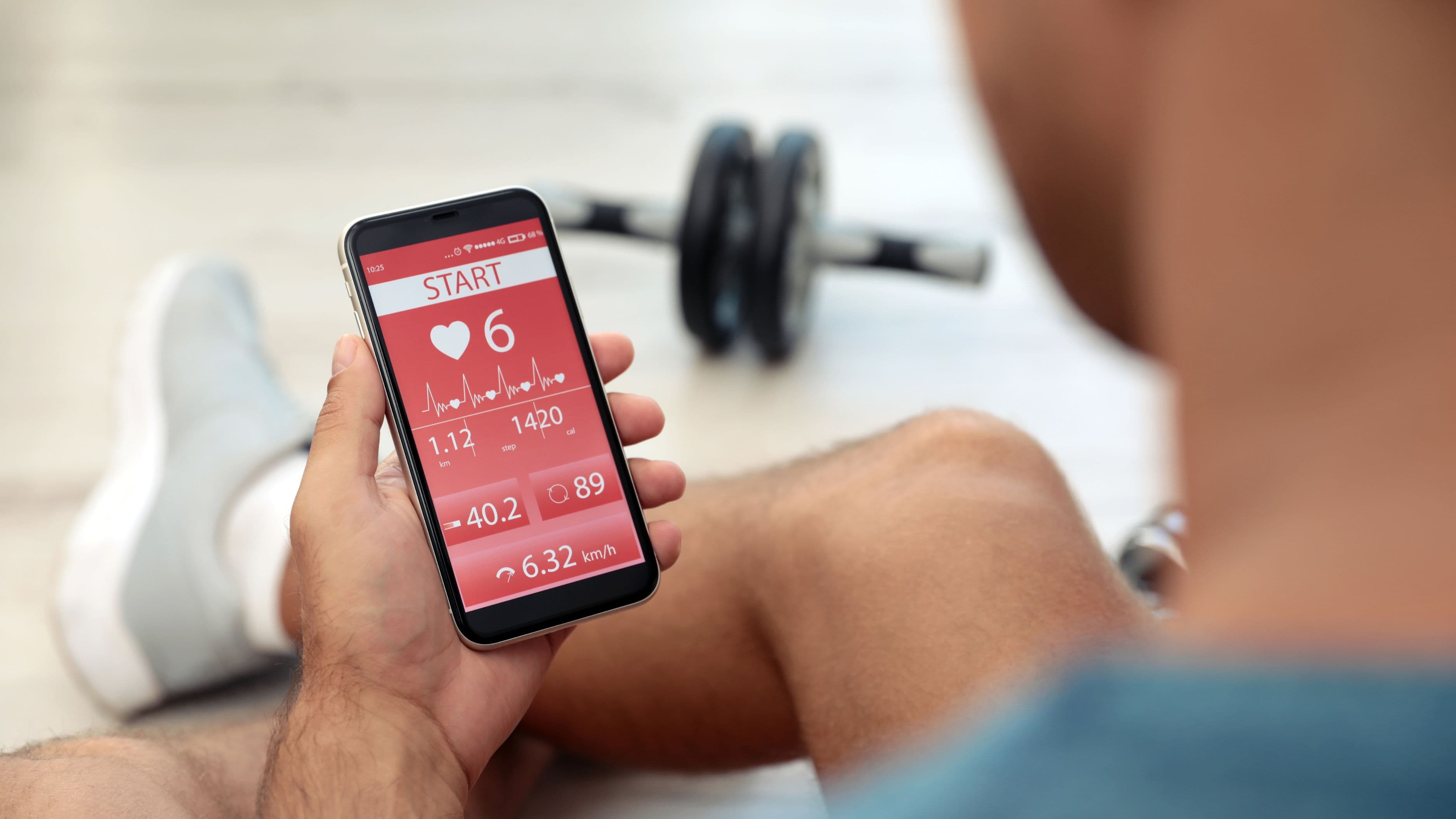
Smartwatch meditation features (Apple Watch, Fitbit, Garmin) sit at the accessible end of this category. They're not dedicated meditation devices, but they offer guided breathing exercises, HRV monitoring, stress scores, and mindfulness reminders as part of a broader health tracking package. If you already own one of these, you have basic meditation support tools without spending anything extra.
Each of these devices is doing something real. The question is whether what they're doing is something you actually need.
The Case For: Where Wearables Genuinely Help
There's a real use case for these devices, and it's worth being fair about it before getting to the skepticism.
For beginners who struggle with the "am I doing this right?" doubt that derails so many new meditators, biofeedback can be genuinely clarifying. The Muse headband's audio feedback makes abstract internal states more tangible – when the soundscape settles, something in your brain activity has actually shifted. That's not placebo. EEG-based feedback gives you a data point in a practice that otherwise produces nothing external to assess. Some people find that early concrete evidence that something is working is exactly what they need to keep going through the first few weeks.
For people who are highly analytical or performance-oriented by nature – the type who responds well to metrics and data – a wearable can turn meditation from a vague, uncomfortable practice into something trackable and improvable. That reframing can make the difference between building a consistent habit and abandoning it after a week. If seeing your session scores improve over 30 days motivates you to keep sitting down every morning, that's a real benefit regardless of whether the underlying measurement is perfectly precise.
The Apollo Neuro sits in a slightly different category because it isn't asking you to meditate at all – it's a wearable you can use throughout your day, including during stressful work hours, exercise, or sleep. Some users report measurable improvements in HRV scores and perceived stress over consistent use. The published research on it is still developing, but the mechanism (vagal nerve stimulation via vibration) has theoretical underpinning in the neuroscience literature even if the product-specific claims are ahead of the evidence.
The Case Against: What You're Actually Paying For
Now for the honest part. Most of what these devices promise – stress reduction, deeper meditation, better sleep, improved focus – is achievable without them, at zero cost, through consistent practice of techniques that have decades of research behind them.
The Muse headband costs $200–$350 and requires a subscription for full app access. The same outcome – a calmer, more focused meditation practice – is available through consistent use of a free app like Insight Timer for eight to twelve weeks. The feedback loop the Muse provides is useful, but it isn't magic, and it isn't necessary for most people to develop a functional, meaningful meditation practice.
There's also a subtle problem with tracking-heavy meditation: it can shift the practice from an inward, non-judgmental orientation to a
performance orientation. Meditation isn't a sport. The point isn't to improve your score. When you're sitting down to be with your experience – whatever it is – and part of your attention is on whether the audio is settling or whether your HRV is trending in the right direction, you've introduced a evaluative quality that the practice is specifically designed to release. Some meditators find the tracking quietly undermines the thing they're trying to cultivate.
The subscription model adds another layer. Several of these devices require ongoing monthly or annual subscriptions to unlock full functionality. That means a device that already cost you $250 is effectively a recurring expense. Over two years, a Muse setup with subscription could run $400+. That's a meaningful sum for a practice you can do well with nothing but a free app and a timer.
The Honest Middle Ground
The most useful way to think about meditation wearables isn't "worth it or not worth it" but "worth it for whom, and at what stage."
If you've been meditating consistently for at least two or three months with a free tool and you find yourself genuinely curious about what's happening internally during your practice – if you want a deeper layer of feedback and the cost isn't a strain – then a device like Muse S is a legitimate next step worth trying. Many devices offer trial periods or have secondary market availability that makes testing less financially risky.
If you're a beginner who hasn't yet established a regular meditation habit, buying a wearable is putting the cart before the horse. The device won't solve the consistency problem. Consistency is built through starting small, making it easy, and removing friction – none of which a $300 headband addresses. Start with five minutes a day on Insight Timer. Do that for 30 days. Then reassess whether you want more.
If you're specifically interested in the passive HRV and nervous system support angle – not meditation itself, but physiological stress regulation throughout the day – devices like Apollo Neuro are in a different category worth evaluating on their own terms rather than comparing to meditation tools.
A 30-Day Test Before You Spend
If you're genuinely considering a meditation wearable, run this experiment first. Spend 30 days meditating daily with a free app – Insight Timer, Smiling Mind, or the guided sessions available through your phone's built-in wellness features – for 10 minutes per session. Keep it simple and consistent. No tracking required, no subscription, no gear.
At the end of 30 days, ask yourself three questions. Am I still meditating consistently? Has anything shifted in how I feel day to day? Do I have a specific, named thing I wish the practice gave me that it currently doesn't?
If the answer to the first two questions is yes and you can name something specific for the third – "I want to know what my brain is actually doing during the settled moments" or "I want real-time feedback when I drift" – then a wearable is worth exploring. If you struggled to maintain the habit without the device or the free practice gave you what you needed, you have your answer.
Wearables work best as enhancements to an established practice, not as shortcuts to starting one.
What to Avoid
Buying based on marketing language alone. Terms like "neurofeedback," "HRV optimization," and "brainwave entrainment" sound impressive and are grounded in real science, but the gap between the underlying research and specific product claims can be significant. Look for peer-reviewed studies that test the device specifically, not just the general mechanism it relies on.
Mistaking novelty for effectiveness. A new device is engaging in a way that your existing practice might not feel. That engagement is real but temporary. Most devices lose their novelty effect within a few weeks, and if the underlying habit isn't strong, the device won't maintain it.
Letting the device become a crutch. If you find that you can only meditate when you have the headband on, or that you feel anxious about your practice without the feedback, that's worth noticing. The goal of any meditation tool – wearable or app – is to support a practice that eventually becomes self-sustaining. Dependence on the technology points in the opposite direction.
FAQ
Do meditation wearables actually improve meditation quality? For some people, yes – particularly beginners who benefit from biofeedback to understand what a settled state feels like, and analytical types who respond well to measurable data. For experienced meditators or those who've already built a consistent habit, the benefit is less clear and often unnecessary.
Is HRV tracking useful for stress and wellness? HRV (heart rate variability) is a well-supported biomarker for nervous system health and stress resilience. Tracking it over time can surface useful patterns – noticing that certain lifestyle factors correlate with lower HRV, for example. However, HRV tracking is available for free through many smartwatches and doesn't require a dedicated meditation wearable.
Are there any free or cheap alternatives that provide similar feedback? Yes. Smartwatch breathing exercises with HRV monitoring (Apple Watch, Fitbit, Garmin) provide basic biofeedback at no additional cost if you already own the device. Apps like Elite HRV offer HRV tracking with compatible chest straps at much lower cost than dedicated meditation wearables. For brainwave feedback specifically, there isn't a genuinely cheap alternative – EEG hardware is expensive to produce.
What's the best meditation wearable for beginners? Most meditation experts and researchers suggest beginners don't start with wearables at all – the fundamentals of sitting, breathing, and gently redirecting attention are better built without the distraction of technology. If you're set on trying one, starting with smartwatch features you may already have access to is the lowest-cost entry point before considering a dedicated EEG device.
Can I try a meditation wearable before committing to the price? Some devices have trial periods. Amazon and other retailers allow returns within a window that may be long enough for a meaningful test. Looking for refurbished or second-hand options on platforms like eBay can cut the cost significantly, especially for devices like Muse where older models still function well for basic biofeedback.
📚 Sources
Muse EEG headband research and overview – InteraXon: https://choosemuse.com/muse-research/
Apollo Neuro clinical research summary – Apollo Neuroscience: https://apolloneuro.com/pages/science
Heart rate variability as a stress biomarker – National Institutes of Health: https://www.ncbi.nlm.nih.gov/pmc/articles/PMC5624990/
Insight Timer free meditation platform – Insight Timer: https://insighttimer.com
Smiling Mind free mindfulness program – Smiling Mind: https://www.smilingmind.com.au
Neurofeedback and meditation – Frontiers in Human Neuroscience overview: https://www.frontiersin.org/articles/10.3389/fnhum.2019.00450/full