Healthy eating doesn't require becoming a home chef. It requires having good food available when you're hungry, making decent choices by default, and not relying on willpower alone to do the heavy lifting. Here's how to build that foundation – even if your idea of cooking is making toast.
Start by Accepting That Simple Counts
The first thing to let go of is the idea that healthy eating has to look a certain way. Food culture tends to celebrate elaborate meals, beautiful plates, and complex recipes – none of which are necessary for eating well. A bowl of Greek yogurt with fruit and a handful of walnuts is a genuinely good breakfast. A bag of pre-washed salad greens with canned tuna, olive oil, and lemon is a solid lunch. Microwaved sweet potato with a fried egg on top is a real dinner. None of these require technique, enthusiasm, or significant time.
When you accept that simple counts, the whole problem of healthy eating becomes a lot smaller. You're not trying to make restaurant-quality food at home every night. You're trying to have something reasonably nutritious available that isn't ultra-processed or fast food. That's a much more achievable bar, and it frees you to build habits around that lower bar rather than an aspirational version of yourself who loves being in the kitchen.
Step 1: Build a Default Grocery List
The biggest reason people who hate cooking end up eating poorly isn't lack of willpower – it's lack of available food. When there's nothing easy and nutritious in the house, reaching for takeout or packaged snacks is the obvious path. The solution isn't discipline; it's stocking your kitchen so that good options are always within reach.
Build a short default grocery list of items that require zero or minimal preparation and can be combined in different ways throughout the week. The goal is coverage across the main categories – protein, produce, healthy fats, and something to base meals around – without requiring you to plan specific recipes. A practical starting list might include: eggs, canned chickpeas or beans, canned tuna or salmon, pre-washed bagged greens, cherry tomatoes, bananas, apples, Greek yogurt, nuts or nut butter, frozen vegetables, pre-cooked grain packets (microwavable rice or quinoa), and hummus.
With that list stocked, you can eat reasonably well for a week without cooking a single proper meal. It's assembling, not cooking – and that's fine. Once this becomes your default grocery run, you stop making last-minute decisions about what to eat when you're already hungry, which is when the worst food decisions happen.
Step 2: Learn Three Genuinely Easy Meals
Even if you dislike cooking, knowing how to make a small handful of simple meals gives you something to fall back on that feels more like a real meal than assembly. Three is enough. You don't need variety in your regular rotation – you need reliability. Most people eat the same five to eight things on repeat anyway without realizing it.
Pick meals that involve minimal steps, minimal equipment, and minimal cleanup. Scrambled eggs with vegetables and toast takes ten minutes. Pasta with olive oil, canned tomatoes, and any protein you have on hand takes fifteen. A grain bowl with microwaved rice, whatever vegetables are in the fridge, and a store-bought sauce takes eight. These aren't exciting, but they're nutritious, fast, and repeatable. Practice each one until it feels effortless, and that becomes your foundation.
The point isn't to love making these meals. It's to have something that qualifies as cooking that you can do on autopilot on days when takeout would otherwise be the default.
Step 3: Outsource the Parts You Actually Don't Like
Cooking involves multiple steps: planning what to make, shopping for ingredients, prepping (chopping, marinating, portioning), the actual cooking, and cleanup. If you hate cooking, you probably hate most or all of those steps – but often a few of them are more tolerable than the others. Identifying which parts are the real friction and outsourcing those specifically is more efficient than overhauling your entire relationship with food.
Pre-cut vegetables, pre-washed salad bags, pre-marinated proteins, and rotisserie chicken from the grocery store eliminate a significant amount of the prep work that makes cooking feel tedious. Microwavable grain packets remove the boiling step. Canned beans and legumes mean you skip soaking and long cooking times. Meal delivery services like Hello Fresh or Every Plate send pre-measured ingredients with simple instructions, which removes the planning and shopping entirely and reduces cooking to following a few steps. None of these are perfect solutions, but they each remove a specific friction point without requiring you to enjoy something you don't.
The goal is to close the gap between "effort required" and "effort available." When you're tired, hungry, and uninterested in cooking, that gap is wide. Finding the shortcuts that narrow it without sacrificing nutrition is a more honest strategy than trying to motivate yourself to enjoy something you've never enjoyed.
Step 4: Make Breakfast and Lunch Almost Zero-Effort
One of the easiest ways to improve your eating without adding cooking to your life is to focus your minimal effort on dinner – where a hot meal feels most expected – and make breakfast and lunch almost entirely no-prep. If you're eating well for two of three meals with essentially no effort, your overall nutrition improves significantly even if dinner is imperfect.
Overnight oats take three minutes to assemble the night before and require zero morning effort. Yogurt and fruit takes thirty seconds. A smoothie with frozen fruit, a handful of spinach, and protein powder takes two minutes. For lunch, a bagged salad with canned tuna or leftover protein, or a hummus and vegetable wrap assembled from your default grocery list, requires no cooking at all. These aren't exciting, but they're reliable – and reliability is what builds habits.
Once breakfast and lunch are handled without effort, you have more patience for dinner. And dinner can still be something simple like frozen vegetables and a microwaved grain packet with a protein, or a meal you ordered in, without it undoing the nutritional progress you made in the first two meals.
Step 5: Create a Default Snack Setup
Snacking is where a lot of healthy eating falls apart for people who don't cook, because snack hunger tends to be immediate and impulsive – and if what's available is chips, cookies, or nothing, the choice is easy and not great. Creating a default snack setup means having grab-and-go whole food options at eye level in your fridge and on your counter at all times.
A practical snack setup: a bowl of fruit on the counter, cut vegetables and hummus at eye level in the fridge, nuts in a visible spot in the pantry, and Greek yogurt or string cheese stocked consistently. None of these require preparation. The single change of having them available and visible – rather than buried behind other things – is often enough to shift what you actually reach for when hungry between meals. Behavioral research consistently shows that the most accessible food is the most consumed food, regardless of nutritional content. Making the good options the easy-to-reach options does most of the work for you.
Building This Into a 30-Day Habit
The changes above don't all need to happen at once. A practical 30-day approach spreads them across four weeks, which gives each change time to settle before the next one is added.
In the first week, focus only on updating your grocery list and stocking your kitchen with the default items described above. Don't change anything else yet. Just make sure the right things are available. In the second week, establish your no-prep breakfast routine and stick to it every day. Pick one option and repeat it – variety can come later. In the third week, add your default lunch option on most days, and practice one of your three simple meals for at least two dinners. In the fourth week, set up your snack station and start connecting all the pieces into a consistent daily pattern.
By the end of 30 days, you haven't built a love of cooking. You've built a system that makes eating reasonably well the path of least resistance – which is what actually determines what most people eat most of the time.
What to Avoid
Don't start by overhauling everything at once. Buying a bunch of new kitchen equipment, planning an elaborate weekly meal plan, and committing to cooking from scratch every night is the approach that collapses by day five for someone who genuinely dislikes cooking. Small, sustainable changes layered over time are what stick.
Avoid treating imperfect days as failures. If you had takeout twice this week and you're frustrated with yourself, the useful response is to look at why – probably not enough food ready to grab at home – and fix that, not to restart from scratch. The habit you're building is the system, not perfect eating.
Don't confuse healthy with complicated. A simple meal made from real ingredients beats a complex meal you're too tired to make and so don't. Simplicity and consistency are the two things that actually produce lasting change, and both of them are available to people who hate cooking.
FAQ
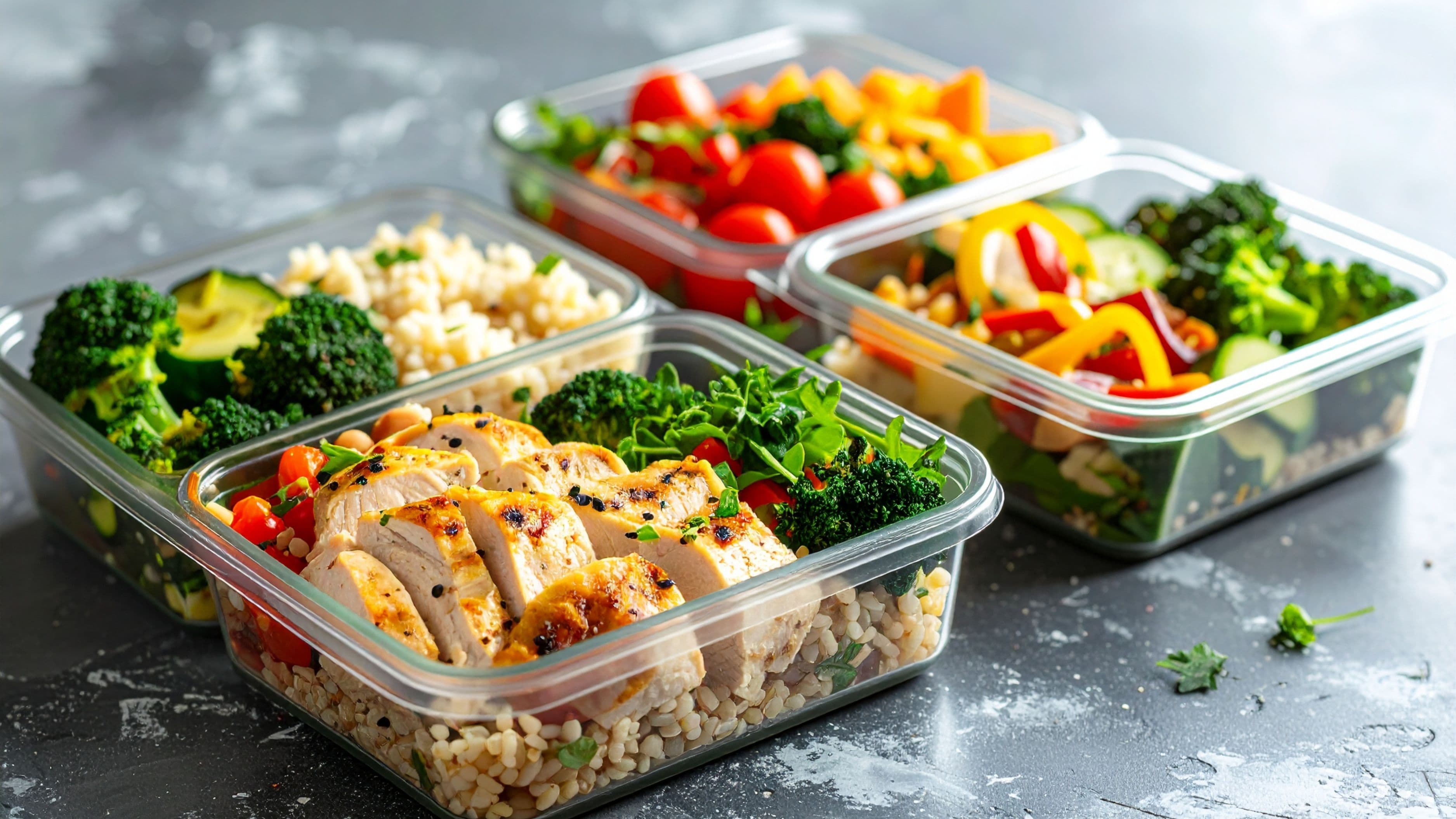
Do I need to meal prep to eat healthy without cooking? Not necessarily. Light assembly – combining items from your stocked grocery list without cooking them – works just as well for most meals. If you find it helpful to spend 20 minutes on Sunday portioning snacks, hard-boiling eggs, or cooking one batch of grain, that counts as prep without requiring full meal planning.
What if I'm too busy to even assemble food most days? Start even smaller. One no-prep meal per day that you're consistent about – the same yogurt and fruit breakfast every morning – is a real improvement and a starting point. Add the next element when that one feels automatic. You don't need to fix everything at once.
Are pre-made healthy options from the grocery store okay? Absolutely. Rotisserie chicken, pre-made grain salads, store-bought soups with whole ingredients, and packaged hummus and vegetable trays are all legitimate shortcuts. Reading labels to choose options without excessive sodium, added sugars, or long lists of unfamiliar additives takes about 30 seconds and helps you make the best choice within the convenience category.
How do I handle eating out without cooking? Identify two or three restaurants near you where you can order something reasonably nutritious and make those your defaults for eating out. Most restaurants have options that lean toward whole ingredients – grilled proteins, vegetable sides, salads with dressing on the side. Having a default go-to for your most frequented spots removes the decision-making in the moment.
What if I live alone and can't finish groceries before they go bad? Buy smaller quantities more frequently, lean on frozen vegetables and canned items that have long shelf lives, and focus your fresh produce on items with longer viability – apples, carrots, cabbage, and citrus keep much longer than leafy greens or berries. Frozen fruit is nutritionally comparable to fresh and dramatically easier to manage in single-person households.
You don't have to love cooking to eat well. You just have to make the good options easier to access than the bad ones, have a few reliable fallbacks for when you need something more substantial, and give yourself enough grace to build these habits imperfectly over time. Thirty days of simple, consistent choices will do more for your eating than one week of ambitious cooking followed by two weeks of burnout. Keep it simple, keep it realistic, and let the system do the work.
📚 Sources
Harvard T.H. Chan School of Public Health. The Nutrition Source: Healthy Eating Plate. https://www.hsph.harvard.edu/nutritionsource/healthy-eating-plate/
Centers for Disease Control and Prevention. Healthy Eating for a Healthy Weight. https://www.cdc.gov/healthyweight/healthy_eating/index.html
American Heart Association. Simple Cooking Tips for Heart-Healthy Eating. https://www.heart.org/en/healthy-living/healthy-eating/cooking-skills/cooking/cooking-to-lower-cholesterol
Wansink, B. Slim by Design: Mindless Eating Solutions. https://www.slimbydesign.org
Mayo Clinic. Healthy-eating tips: Simple strategies for better eating. https://www.mayoclinic.org/healthy-lifestyle/nutrition-and-healthy-eating/in-depth/healthy-eating/art-20048506