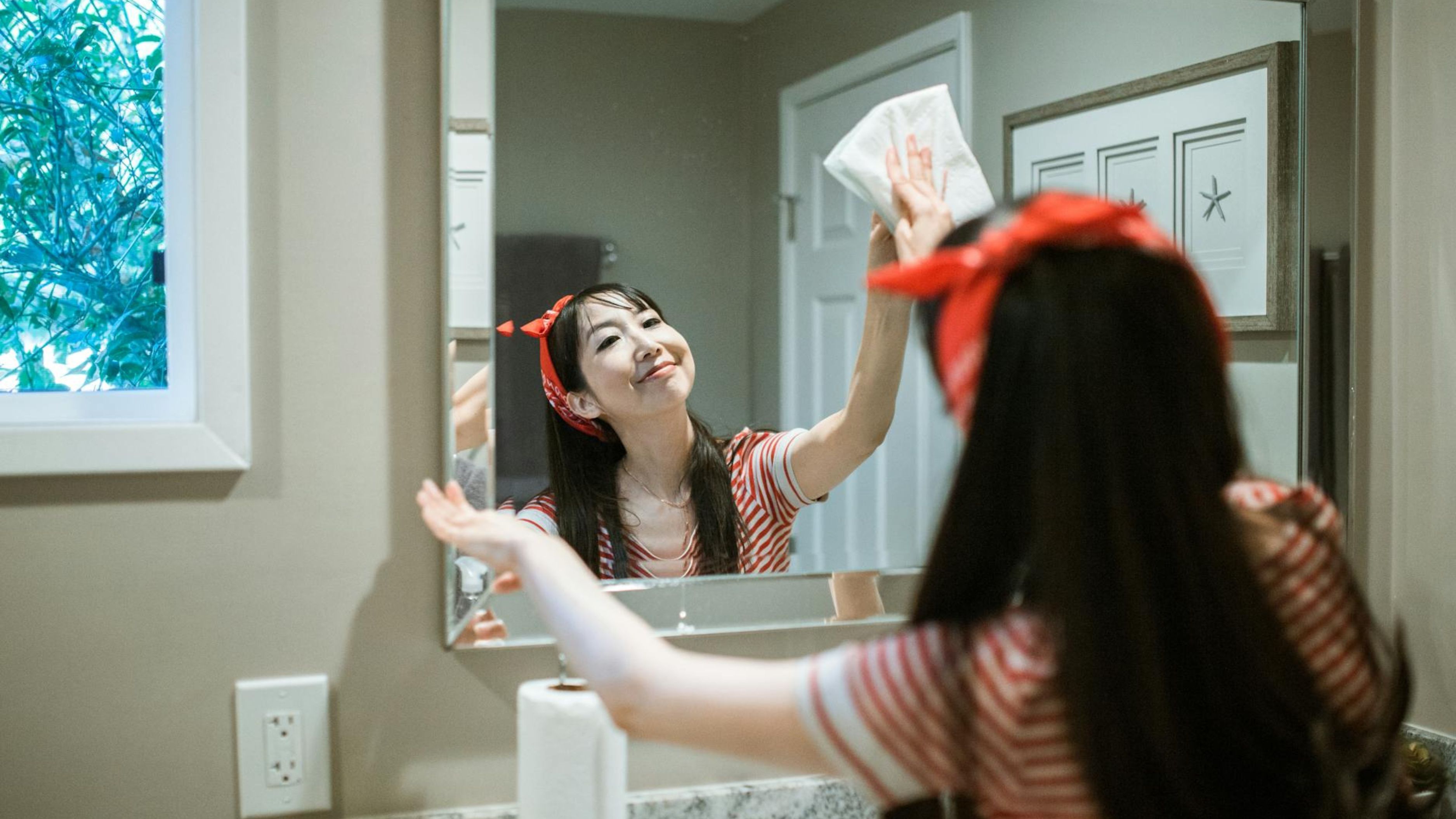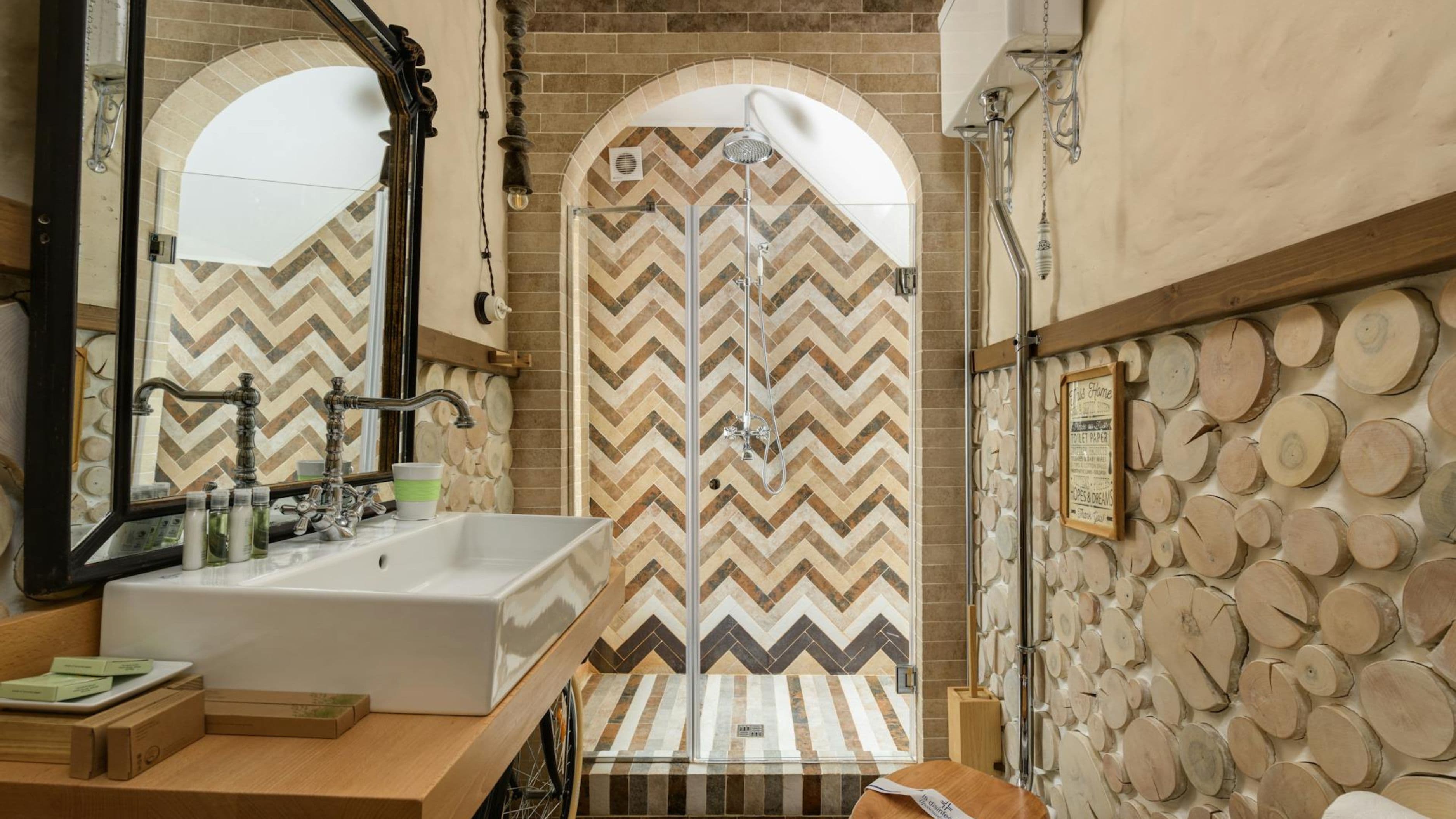

None of these upgrades require a renovation. They're low-cost, practical changes that pay off in daily comfort and calm – the kind of improvements that are easy to overlook until you experience them, and then wonder why you waited so long.
1. Swap Your Harsh Overhead Lighting for Warm, Dimmable Bulbs
Standard bathroom lighting – usually a bright, cool-white overhead fixture – is designed for visibility, not wellbeing. Harsh blue-spectrum lighting at 6am puts your nervous system on high alert before you've even had your first sip of coffee, and the same light late at night actively interferes with your body's ability to wind down before sleep. It's a small thing, but the quality of the light you're in during your morning and evening routines has a measurable effect on how you feel.
Switching to warm-white LED bulbs (look for 2700K–3000K on the colour temperature scale) and, ideally, adding a dimmer switch to your bathroom circuit changes the entire atmosphere of the space. Dimmer switches for bathrooms cost $20–$40 and are a relatively simple DIY installation for anyone comfortable with basic electrical work, or a quick job for an electrician. At minimum, swapping the bulb to a warmer tone is a $5–$10 change that makes the room noticeably softer and less clinical.
The real-life benefit shows up immediately – particularly in the morning. A warm, lower-intensity light helps you wake up gradually rather than being startled into full alertness, and in the evening it signals to your body that the day is winding down rather than keeping your circadian rhythm in daytime mode. It's one of the simplest and most underrated quality-of-life changes in the home.
2. Add a Small Diffuser and a Simple Scent Routine
Smell is one of the most direct routes to the limbic system – the part of the brain that processes emotion and memory. A bathroom that smells good triggers a subtle but real shift in mood that doesn't require any conscious effort. You don't need elaborate aromatherapy knowledge to use this. A small ultrasonic diffuser ($20–$40) with a simple essential oil routine is enough to make entering your bathroom feel noticeably different.
Lavender is the most well-researched scent for calm and relaxation – genuinely useful for your evening routine. Eucalyptus or peppermint adds a sense of clarity and freshness for mornings. Cedarwood or bergamot are good middle-ground options that work in either direction. You don't need all of these – starting with one scent for morning and one for evening is simple and enough. Run the diffuser for 20–30 minutes during your routine rather than continuously; the effect carries without the scent becoming oppressive.
The practical benefit here is that a scent routine creates a sensory cue that your nervous system associates with a particular state – calm for the evening, alert for the morning. Over time, that association builds without any effort, which is why aromatherapy has been part of wellness traditions across cultures for centuries. It's a small habit that compounds quietly into something your body actually responds to.
3. Declutter Your Surfaces and Add One or Two Intentional Objects
Bathroom surfaces – the counter, the edge of the tub, the windowsill – tend to accumulate products, packaging, appliances, and general clutter over time in a way that feels visually noisy without you necessarily noticing the effect. Visual clutter in the first and last spaces you spend time in each day adds low-level cognitive load to a routine that should be simple and calming.
A surface clear of everything except what you actually use every day – your daily skincare, toothbrush, soap – and one or two deliberate items creates a genuinely different atmosphere. The deliberate items are the key: a small plant that tolerates humidity (pothos, a small orchid, a succulent in a bright bathroom), a smooth stone or a candle you like the look of, a simple diffuser. These don't need to be expensive. What they do is signal intentionality rather than accumulation, which makes the room feel curated rather than crowded.
The practical step is a 15-minute declutter: move everything off your bathroom surfaces into a bag, then return only what you use daily. Put the rest under the sink or in a drawer. Keep what earns its place. This won't stay perfectly tidy – it never does – but the baseline will be lower-clutter than before, and resetting it takes much less effort than it did when the default was full.
4. Upgrade Your Shower Experience With a Filtered Showerhead
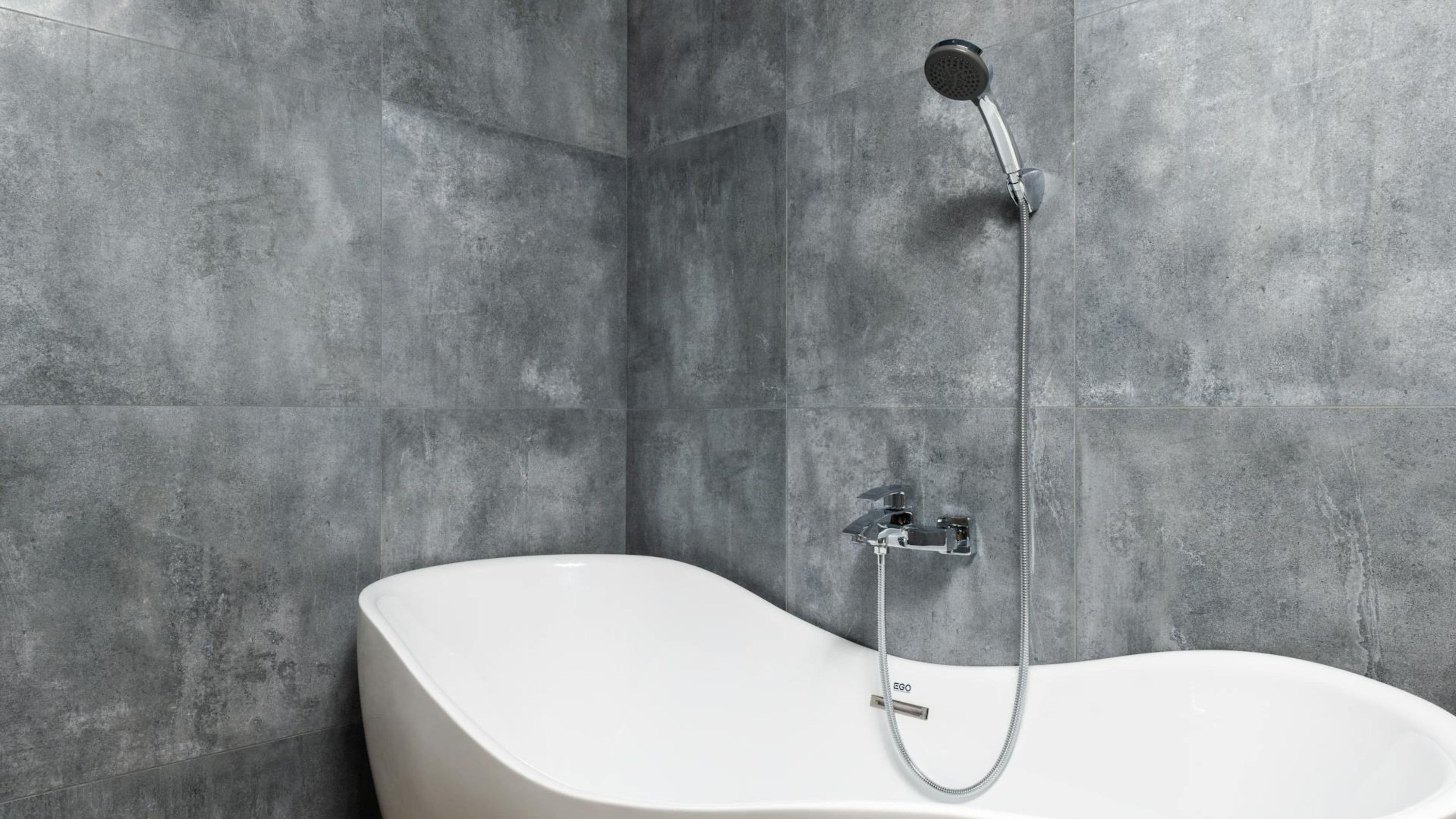
This one gets overlooked because it sounds functional rather than atmospheric, but the shower is the part of your bathroom routine that has the highest potential for genuine sensory pleasure – and the part where cheap infrastructure most consistently underdelivers. Hard water, chlorine, and low water pressure all flatten what could be one of the most restorative parts of your day.
A filtered showerhead with good pressure costs $40–$100 and installs in under ten minutes without any tools beyond adjustable pliers. The filter reduces chlorine and certain hard water minerals, which makes a noticeable difference to how your hair and skin feel after showering – softer, less dry, less stripped. The pressure improvement (most filtered showerheads include a better spray pattern than standard units) makes the physical sensation of showering significantly more satisfying.
Pairing this with a small shower ritual – even something as simple as two minutes of slightly cooler water at the end of your shower – adds a habit that has genuine evidence behind it for mood and alertness. Brief cold water exposure at the end of a warm shower activates the sympathetic nervous system in a way that produces mild alertness and mood lift without requiring a full cold plunge. It doesn't need to be uncomfortable – cool, not cold – to produce a noticeable effect. The upgraded showerhead makes the overall experience good enough that adding this small ritual feels natural rather than like a chore.
5. Introduce a Simple Pre-Bedtime Bathroom Ritual Using What You Already Have
The final upgrade isn't about buying anything new – it's about restructuring how you use your bathroom in the evening. Most people rush through a nighttime routine as something to get done before sleep. Converting it into a ten-minute intentional wind-down changes its function entirely and signals clearly to your body that the day is finishing.
The structure is simple. Start with the lights lower or warmer than usual, diffuser running if you have one, phone on the charger outside the bathroom – this last part matters more than most of the rest. Wash your face with water at a comfortable temperature, noticing the sensation rather than treating it as a task to complete. Apply whatever skincare you use slowly and deliberately rather than quickly. If you have a few minutes, sit on the edge of the bath or simply stand still in the room for two minutes without a phone, without music, without a podcast. Just a brief pause.
The real benefit of this ritual is accumulative rather than immediate. The body learns what sequences of sensory input predict sleep, and a consistent pre-sleep bathroom routine becomes a reliable cue for the nervous system to begin downregulating. The research on sleep hygiene consistently identifies predictable pre-sleep routines as one of the highest-impact, lowest-cost interventions for sleep quality. Your bathroom is the natural place to anchor that routine, and you already have everything you need to start tonight.
What to Avoid
Spending a lot of money before you've tried the smaller changes is the most common mistake with bathroom upgrades. The light bulb swap, the declutter, and the scent addition cost almost nothing and produce a meaningful change in atmosphere. If those work well, you have more context for what else might be worth investing in. Starting with a full bathroom renovation when a $15 bulb and a $25 diffuser would have achieved 70% of what you were after is an expensive way to find out.
Overcomplicating the ritual to the point where it becomes a to-do list rather than a pause is also worth avoiding. The goal is simplicity and calm, not a 15-step skincare routine that requires tracking products and timing. Whatever you add should reduce friction in your routine, not add to it.
Realistic Expectations
None of these changes will transform your life on their own. What they do is make your existing daily routine a little softer, a little more intentional, and a little more restorative than it was before. That's genuinely useful – the cumulative effect of starting your mornings and ending your evenings in a space that feels calm rather than clinical is real, even if it's quiet and gradual.
Give any new habit or upgrade about two to three weeks before evaluating it. The first few days, you're still noticing the newness. After a couple of weeks, the change has either integrated naturally into your routine or it hasn't – and that tells you something useful either way.
FAQ
Do I need to buy all five of these to see a difference? Not at all. Even one change – particularly the lighting or the declutter – can shift how your bathroom feels noticeably. Start with whatever resonates most or is easiest to implement, and go from there. There's no minimum purchase required for this to be worthwhile.
I rent and can't change my lighting. What should I do instead? A warm-toned lamp or a battery-operated LED light placed on the counter can supplement your overhead lighting without any installation. Look for dimmable LED lamps with warm colour temperature. You can achieve a similar effect to a warm bulb replacement without touching the existing fixtures.
What's the best essential oil to start with if I've never used a diffuser before? Lavender is the most forgiving starting point – widely liked, gentle, and well-researched. If lavender isn't to your taste, eucalyptus is a good alternative that most people find pleasant and fresh without being overpowering.
How do I know if I need a water filter for my shower? If your hair feels dry or tangled after washing, your skin feels tight or itchy after showering, or you notice white mineral deposits around your showerhead, you're likely dealing with hard water and would benefit from a filtered showerhead. Many areas with municipal water also have measurable chlorine levels that a shower filter reduces noticeably.
How long does it take for a pre-bed ritual to actually affect sleep? Most people notice some effect within a week of consistency – a slightly easier time falling asleep, feeling more settled before bed. The stronger effect builds over two to four weeks as the routine becomes a reliable cue for the body. Consistency matters more than perfection: doing the routine five nights out of seven is far more effective than doing it perfectly twice.
📚 Sources
Sleep Foundation – Bedtime Routines for Adults: https://www.sleepfoundation.org/sleep-hygiene/bedtime-routine-for-adults
National Institutes of Health – Aromatherapy: What You Need to Know: https://www.nccih.nih.gov/health/aromatherapy
Harvard Health Publishing – Blue Light Has a Dark Side: https://www.health.harvard.edu/staying-healthy/blue-light-has-a-dark-side
Journal of Physiology – Cold Water Immersion and the Sympathetic Nervous System: https://physoc.onlinelibrary.wiley.com/doi/10.1113/jphysiol.2009.185314
Psychology Today – How Clutter Affects Your Brain and What to Do About It: https://www.psychologytoday.com/us/blog/high-octane-women/201203/why-mess-causes-stress-8-reasons-8-remedies